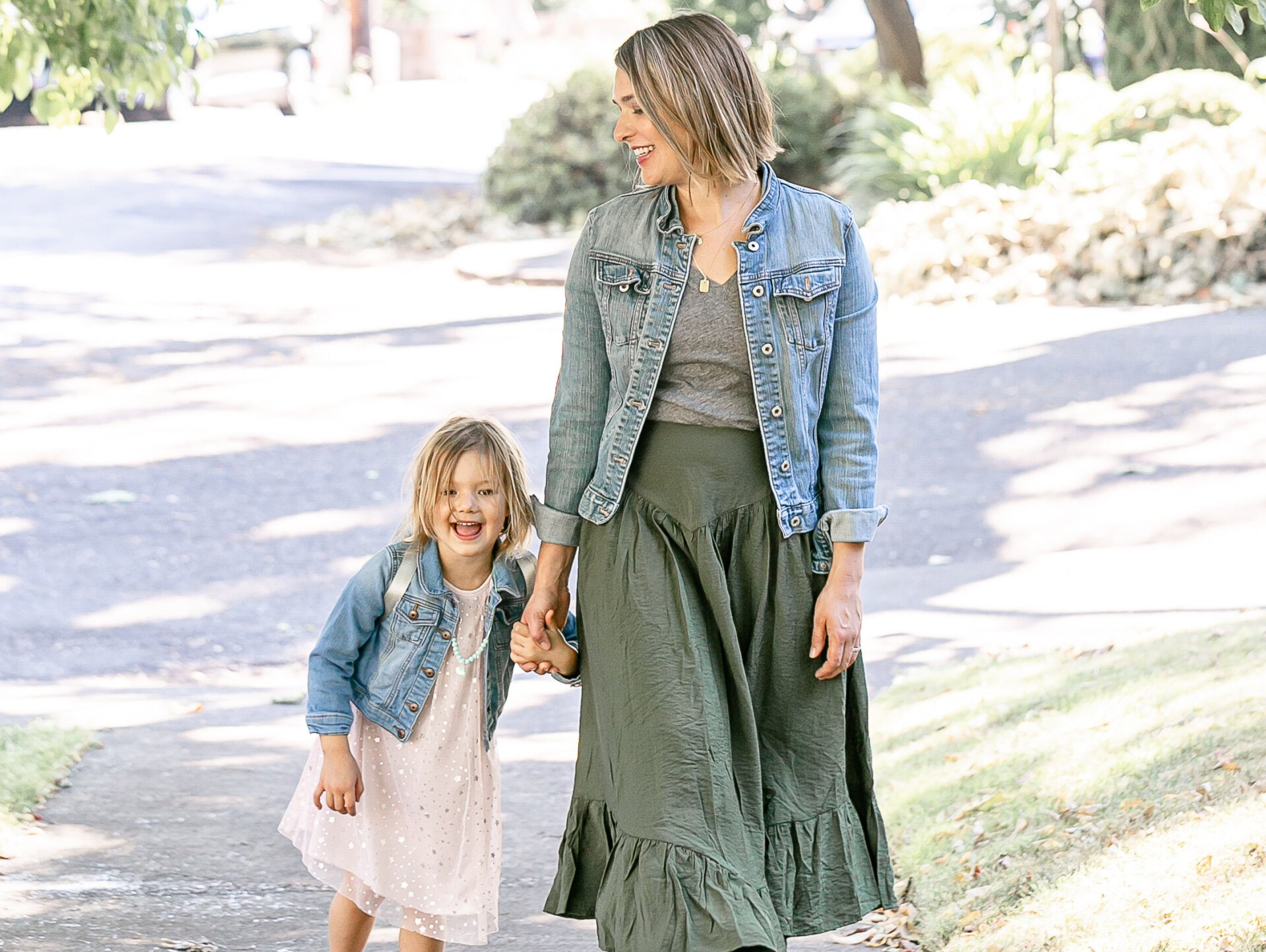
So you want to find an amazing nanny? I get it. I did, too. Kind of desperately. Like, in an “I am really trying to not bawl right now at the thought of leaving my precious baby in the arms of someone else, so if that someone else could be dream-like, it would really help” kind of way (see my article on Mommy Guilt for more). Choosing a care provider is one of the most important choices you make for your kids early on. The people your child are around strongly influence the way they see the world and the place they find within it. I have compiled some tips for finding a nanny.
I’m not going to mince words here. I have the world’s best nanny. She has been with me for four years. She's been there through two very different infants, a remodel and a bout of toddler pinworms (I know, it was very gross). You name it, she has done it. She LITERALLY makes my world go round and she’s gracious enough to not let it go to her head.
But I don’t have the world’s best nanny by accident. I have her by design. I had a really specific plan when I set out to find her. So, when parents ask me for recommendations on this topic, I have plenty of advice.
The most common question I get is, “Where do I find a great nanny/sitter?”
The answer is: there are a ton of places to look for quality caregiver suggestions - care.com, sittercity.com, friends, family, co-workers, social media groups, even professional nanny companies. On the websites specifically designed for finding care, they’ll make it pretty easy for you to go through all the steps. They’ll allow you to create a profile, create a job posting and filter through applicants, then set up in-person interviews. From there, you can do a paid trial where the caregiver watches your child for just an hour or so while you’re still in the house so that you can make sure you feel comfortable.
Here’s the secret, though. It’s not about where. It’s about how. It doesn't matter what site you use or what friend makes an initial suggestion. It matters what process you go through to attract, evaluate and hire potential candidates.
Here are my top four tips for finding a nanny:
1. Be thorough and specific as you outline your needs.
Make sure you’ve covered all of the things that really matter to you as you create your job description so that the standard of applicant is raised from the get-go and you don’t attract people that aren't a good fit. This is my exact job post from four years ago:
My husband and I are currently pregnant with our first baby and are due with our little girl mid-October. I will have about three months off work and then will go back. We are looking for a great nanny to care for our little one at our home on the days I work. We need someone sporadically starting in October and consistently starting in January. In mid October-mid January, it would be for babysitting, to get to know us and her, so I can get a break some days and so I could fill in at my work some days if needed before I officially go back.
We could work out what would work for your schedule but we don't have specific guaranteed hours in mind. Starting mid-January, it would be part time guaranteed 2 days per week (the days I am working, which are Tuesday and Friday) plus whatever works for both parties for extra babysitting/extra days etc. We're looking for someone that could for sure commit to working with us until our daughter is one but possibly for longer depending on our needs plus your needs.
2. Present yourself in a way that attracts the person you want working for you.
Get a contract together so you look professional yourself (you can find free templates here). Plan ahead! My nanny told me that when she saw my job post, she was really impressed because I posted it about three months before I had my baby. I didn’t need regular care for six months from the time of the job posting! She said she loved that (if you are about to have your baby and you are just now trying to find care, please don't freak out! All is not lost).
“If you are a really serious nanny and you’re looking for a transition, you don’t just try to find a position two weeks ahead of time. You look four to six months ahead.”
She also said that she noticed three things in my post. I seemed warm and friendly, I seemed organized and I seemed respectful of a potential candidate’s needs.
3. Feel free to weed out those that don't quite measure up.
This is your kid we’re talking about. You want a caregiver you feel great about. Filter out applicants who don’t present themselves well (by having spelling or grammatical errors), who don’t have the experience you’re looking for or who don’t fit your style. If you start your search early, you’re more likely to allow enough time to find a good pool of applicants to choose from.
Sometimes, when you meet someone in person, it becomes even more clear that they are right (or wrong) for you. Use your gut to make your final decision. Check references. When someone said, “I know this is a big deal and I can tell you without reservation that you will be so happy you chose her- she’s like family at this point,” I knew I found a winner!


4. Get real about the things that really matter to you in a caregiver.
Of course, things like CPR-certified status are important to me. However, the four things that topped my list once I got past my check-boxed items were these:
I wanted someone who was intuitive and confident.
In my experience, this only comes from real experience. As a pediatrician, once you’ve seen 100 ear infections, you can spot one a mile away. The same goes for caregivers. If someone has “over ten years experience” on their resume, but you dig in and it means watching their younger siblings, it doesn’t count as much as someone who has watched four families over the course of 5-10 years, ranging in ages from infancy to fifteen years old. That person probably knows their stuff.
It also comes from being trusted over the years. When we had our in-person interview with our nanny, I told her I was looking for someone who could call me for anything, but who felt comfortable in most situations so that she wouldn’t need to unless there was a real emergency. Turns out that was what our nanny was looking for, too! She told me that one of the main reasons she CHOSE US was because she knew she wouldn’t be micromanaged all day long on things she knew a lot about. She presented herself as a professional and expected to be treated in the same way and she defers to my direction if needed. But, because she is so trustworthy and confident, I hardly ever feel the need to re-direct.
I wanted someone who deeply loved my kids.
I think sometimes this can be one of the most daunting aspects of this whole search. The reality is, however, when you are searching for someone to care for your children on a regular basis, it matters that they are loved on during that time (of course in a way that keeps your kids safe and that has appropriate boundaries), not just “watched.”
This takes a little bit of letting go. It means that your children will form a relationship with someone that is not you. They might one day call your nanny “mom” on accident, that it may sometimes feel like they love them (gulp) more than they love you. I feel your pain. Your children might very well fall in love with their caregiver and that would be the BEST CASE scenario, in the end. When I finally put aside my pride and didn’t let that sabotage my nanny search efforts, I was more successful.
I wanted someone who had a solid understanding of child development.
I knew that, eventually, my nanny would be the one to discipline my kids during the day. At first, it would be all roses and sunshine while they were cute and cuddly but, if I was in this for the long haul (which I was), there would come a time that she would be handling tantrums and time-outs. I wanted this to be like second-nature to her.
Let me be clear: this doesn’t mean a caregiver has to take official courses in child development. It also doesn’t necessarily mean that they can quote experts in the field of behavior management (can you?). It means that they can walk you through what they would do if a tricky situation came up with your child. Make sure their explanation makes you say, “Wow, I would never have thought to do that! That’s a genius idea!”
I wanted someone I actually liked.
This is so important. You really have to make sure that the person that you hire is someone that you would be okay spending time with or, even better, would want to spend time with. They don’t need to be your best friend but, odds are, you will develop a friendship with them as you share the responsibility of raising your kids together. If you are irritated by them half the time, the odds of this all working out will start to wear on you. Spend time in your interview asking a bit about your potential employee so that you have a good sense of the person you are inviting into your home.
Finding a nanny can be stressful but it’s also really exciting. You’re building your village, hiring the person that will be there for your kids alongside you, nurturing, guiding and caring for the person or people you love best! Focus on the how, not the where, and you’ll find amazing people waiting in the wings to work with you.