MMD BLOG


CATEGORY:

NEW MAMA + MAMA WELLNESS

MOTHERHOOD TOOLS | HOW TO GET REALISTIC

 Modern Mommy Doc


PUBLICATION DATE:

May 9, 2017

MOTHERHOOD TOOLS | HOW TO GET REALISTIC

 Modern Mommy Doc

CATEGORY: NEW MAMA + MAMA WELLNESS


It's time to talk about Step 4 in Dealing With Barriers to Self-Care


STEP 4: Getting Realistic


If you’re reading this while holding your newborn and feeling like, “I can barely take a quick shower, let alone plan out a priority list for myself,” remember, there is a season. Even though it’s tempting to wish away this moment, to hurry ahead to more balance, you may just need to be still for now. Your priorities and your bandwidth may change as your kids grow and your work demands change. What seemed impossible to me as a new mom is a daily part of my life now that my kids are a little older. It’s just a fact that our self-care options may change depending on the stage of motherhood we’re in and that’s perfectly okay. 


It’s so normal to wish away the painful parts of parenting.


There are plenty of precious moments at each stage of parenthood but there are also plenty more moments of pure stress and strife. The real danger isn’t just with wishing the nasty or all-consuming parts away. It’s with these two common missteps: (1) trying to fix every natural developmental stage our child goes through and (2) expecting the transition through those stages to progress in a straight line, instead of a messy zig-zag.


Parenting from a “fix-it” mentality is a trap every parent

falls into from time to time.


I see it a lot in my practice. While a lot of new parents understand pretty quickly that feeding troubles and sleepless nights are just part of the game, many have difficulty as each developmental stage (and headache) arises. They look for solutions to problems that can’t be fixed, that have to just be waited out. And, while I’m impressed by their tenacious desire and willingness to problem-solve, sometimes I think they’ve been misled along the way by their friends and by society.


No one tells them this crucial parenting pearl:

yes, we can prevent and address a lot of health issues

that come up for newborns and young kids but some

things (like cluster feeding, sleep regressions and colic)

are more about muddling through with the right

perspective than they are about finding

quick-fix solutions.


Some things just take time to get better. Major caveat here: if you have a serious health concern about your child and are worried about their safety or about potential illness, contact your doctor right away.


We also struggle with set-backs and regressions.


When an elementary school child seems to more and more even-keeled, then has a period of heightened emotions and tantrums akin to the early toddler years, we tend to get immediately stressed. When a child has been sleeping through the night for an extended period of time, then suddenly has a season of sleep regression, it can feel like a major step back. It’s hard to wait on the mini storms and developmental detours of childhood to pass without rushing in to make adjustments. We forget that child development and the parenting experience do not move smoothly along a set curve. Often kids take one step backward before they catapult forward emotionally, physically, and cognitively. Because it’s unpredictable, parenting is painful. 


Please don’t misunderstand me. There are amazing, chart-topping experiences sprinkled in between the pain points. Like last night, when my eldest scampered up the stairs to sit through her baby sister’s bedtime story and song, crooning right alongside me to “Good Night My Someone,” my husband grinning as the two shared a hug and an Eskimo kiss. I tried my hardest to seal our fleeting seconds of peace into my memory, onto my parenting balance sheet.


So why is it so hard for us to get okay with the place we are in our motherhood journeys?


The more I struggle in my own house and watch others do the same, the more clearly I see the true reason. The rest of our lives, on the surface, have some semblance of controllability. All of our two-hour grocery delivery options and pick-up dry-cleaning services trick us into thinking that, if we just complain to the right customer-service agent or do the right google search, we can fix most anything. We can get anything faster if we just pay more for it. Resolution is an easy click away. When we look deeper, though, nothing could be further from the truth when it comes to the challenges of non-consumer life.


There are seasons.


Seasons of struggle. Seasons of celebration. Seasons of muddling through. And, seasons of letting it ride — just being okay with the stage of motherhood we’re in now.




Raising Body-Confident Kids Starts at the Doctor's Office!

START NOW
By Modern Mommy Doc • October 9, 2026
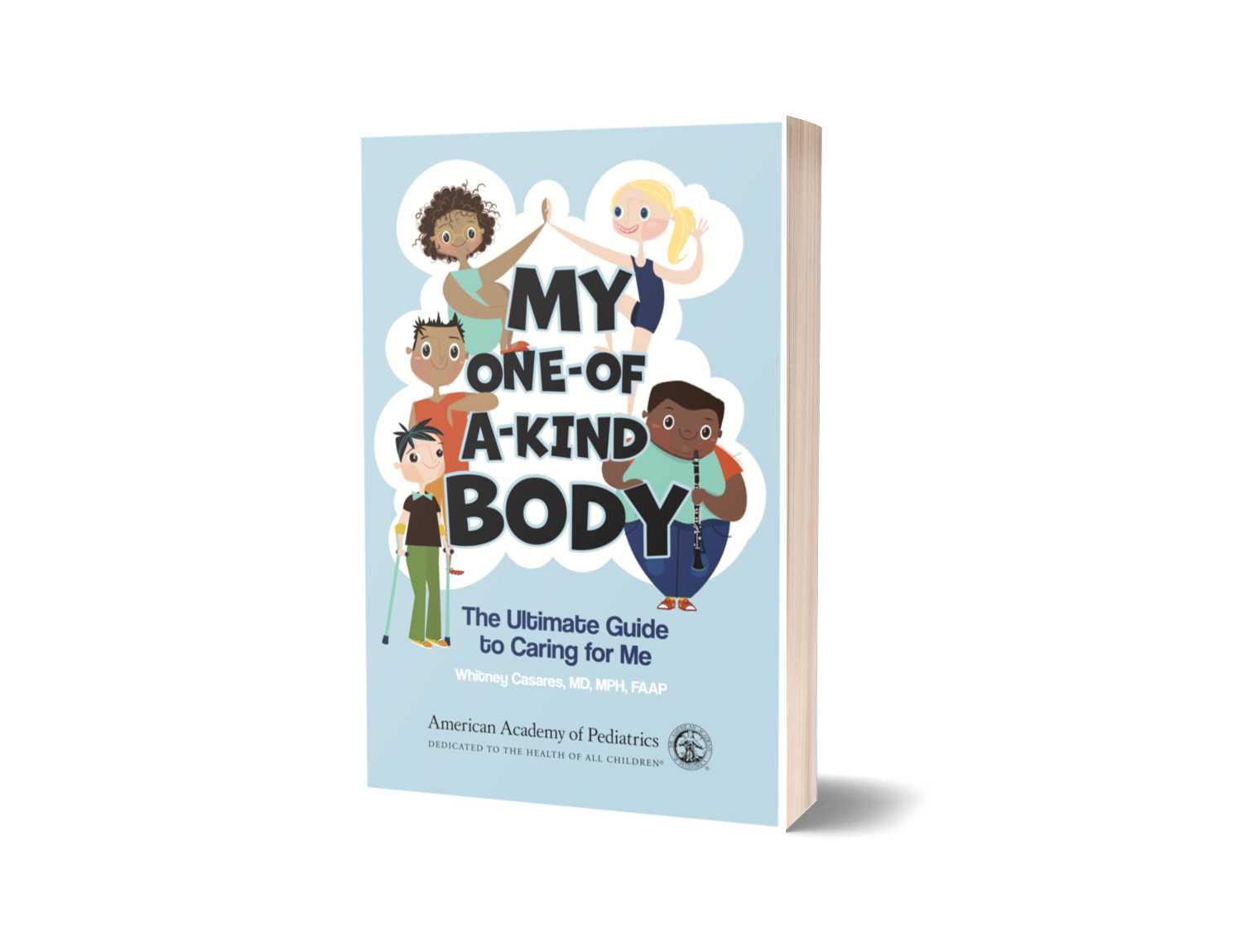
About the Episode: There’s so much parenting advice out there, and most of it doesn’t matter nearly as much as the internet wants you to think. (Seed oils? We have bigger fish to fry.) In this solo episode, Dr. Whitney gets back to basics and shares the six evidence-based parenting principles she focuses on as a pediatrician, the ones she dug into with a leading child development researcher. She also shares how these play out in real life as a mom of two neurodivergent kids, because guidance only helps if it actually fits your family. Key takeaways: Be sensitive and responsive. Simple practices like mirroring your child’s emotions and “serve and return” interactions build a loving, trusting foundation. Dr. Whitney shares how a Halloween decorating session turned into a deep conversation about religion once she slowed down and got curious. Meet kids where they are, especially at their worst. Drawing on Tina Payne Bryson, co-author of The Whole-Brain Child , Dr. Whitney explains that soothing a meltdown isn’t giving in. It’s letting your child know they’re not alone in a big feeling. Model self-regulation, and repair when you lose it. Self-regulation predicts academic success better than IQ. The goal isn’t staying calm all the time, it’s understanding why you got dysregulated, coming back to baseline, and offering yourself some self-compassion. Set limits for your kids and yourself. Every child’s needs are different (screen time affects Dr. Whitney’s two daughters very differently), but all kids need limits, and so do parents. Taking time for yourself models something healthy. Aim for authoritative, not permissive. High expectations paired with warmth and grace is the sweet spot. “Gentle parenting” can blur into permissiveness, which research shows is as harmful as authoritarian parenting. Protect unstructured time. Kids need boredom and free play to become self-directed. For ADHD and autistic kids, Dr. Whitney recommends offering a few options and letting kids choose. Support internal motivation. Using a “mirrors facing outward” image from her own therapist, Dr. Whitney explains why we want kids to trust their own instincts rather than constantly look outward for approval. Want to Start Raising Body-Confident Kids Today? 📘 Order the Books Raising Body-Confident Kids If you've ever caught yourself saying something to your kid about their body that sounded exactly like what your mother said to you, this book is for you. Raising Body-Confident Kids is a research-backed, judgment-free guide for parents who want to break the cycle of diet culture and body shame without swinging into toxic positivity or giving up all structure around food and movement. It answers the real questions parents are actually asking about Ozempic, about picky eaters, about what to say when your kid is being bullied for their body, and about social media influences. This is a practical, values-based game plan you can actually use, even if your own relationship with your body is still a work in progress. My One-of-a-Kind Body My One-of-a-Kind Body gives kids the language and understanding they need to care for their bodies with respect without fear, shame, or appearance-based messaging. Through inclusive illustrations and evidence-based health education, the book teaches body literacy, boundaries, and self-trust in a way kids can actually grasp. 👉 www.raisingbodyconfidentkids.com/books
By Modern Mommy Doc • October 5, 2026
What really matters when it comes to college admissions (for you and for them).
By Modern Mommy Doc • September 17, 2026
Kids going off to college are mean for a reason.
By Modern Mommy Doc • September 10, 2026
Maybe winning back to school isn't what we really want, after all.
By Modern Mommy Doc • August 27, 2026
First-class service has a lot to do with first-class parenting.

Welcome! Get the information you need to win at parenting without losing yourself.

LEARN MORE

My Kids' Book on Body Confidence


Trying to break the cycle of body shame and diet culture?


Overwhelmed by all the parenting advice out there?


SIGN UP FOR THE FREE STARTER KIT: UNBOTHERED. IT'S FREE. CLICK HERE


FRESH

ON THE PODCAST


By Modern Mommy Doc • October 9, 2026
About the Episode: There’s so much parenting advice out there, and most of it doesn’t matter nearly as much as the internet wants you to think. (Seed oils? We have bigger fish to fry.) In this solo episode, Dr. Whitney gets back to basics and shares the six evidence-based parenting principles she focuses on as a pediatrician, the ones she dug into with a leading child development researcher. She also shares how these play out in real life as a mom of two neurodivergent kids, because guidance only helps if it actually fits your family. Key takeaways: Be sensitive and responsive. Simple practices like mirroring your child’s emotions and “serve and return” interactions build a loving, trusting foundation. Dr. Whitney shares how a Halloween decorating session turned into a deep conversation about religion once she slowed down and got curious. Meet kids where they are, especially at their worst. Drawing on Tina Payne Bryson, co-author of The Whole-Brain Child , Dr. Whitney explains that soothing a meltdown isn’t giving in. It’s letting your child know they’re not alone in a big feeling. Model self-regulation, and repair when you lose it. Self-regulation predicts academic success better than IQ. The goal isn’t staying calm all the time, it’s understanding why you got dysregulated, coming back to baseline, and offering yourself some self-compassion. Set limits for your kids and yourself. Every child’s needs are different (screen time affects Dr. Whitney’s two daughters very differently), but all kids need limits, and so do parents. Taking time for yourself models something healthy. Aim for authoritative, not permissive. High expectations paired with warmth and grace is the sweet spot. “Gentle parenting” can blur into permissiveness, which research shows is as harmful as authoritarian parenting. Protect unstructured time. Kids need boredom and free play to become self-directed. For ADHD and autistic kids, Dr. Whitney recommends offering a few options and letting kids choose. Support internal motivation. Using a “mirrors facing outward” image from her own therapist, Dr. Whitney explains why we want kids to trust their own instincts rather than constantly look outward for approval. Want to Start Raising Body-Confident Kids Today? 📘 Order the Books Raising Body-Confident Kids If you've ever caught yourself saying something to your kid about their body that sounded exactly like what your mother said to you, this book is for you. Raising Body-Confident Kids is a research-backed, judgment-free guide for parents who want to break the cycle of diet culture and body shame without swinging into toxic positivity or giving up all structure around food and movement. It answers the real questions parents are actually asking about Ozempic, about picky eaters, about what to say when your kid is being bullied for their body, and about social media influences. This is a practical, values-based game plan you can actually use, even if your own relationship with your body is still a work in progress. My One-of-a-Kind Body My One-of-a-Kind Body gives kids the language and understanding they need to care for their bodies with respect without fear, shame, or appearance-based messaging. Through inclusive illustrations and evidence-based health education, the book teaches body literacy, boundaries, and self-trust in a way kids can actually grasp. 👉 www.raisingbodyconfidentkids.com/books
By Modern Mommy Doc • October 5, 2026
What really matters when it comes to college admissions (for you and for them).
By Modern Mommy Doc • September 17, 2026
Kids going off to college are mean for a reason.