MMD BLOG


CATEGORY:

KIDS

CARING FOR YOUR FAMILY AND YOURSELF IN TIMES OF CRISIS

 Modern Mommy Doc


PUBLICATION DATE:

August 3, 2020

CARING FOR YOUR FAMILY AND YOURSELF IN TIMES OF CRISIS

 Modern Mommy Doc

CATEGORY: KIDS

There are times in a family when you hit rock bottom, times when you can’t even pick yourself up off the floor. My family was in that place a few months ago. COVID-19 hit and my sensitive first-born, who needs structure and routine to mitigate her anxiety symptoms, was at a loss. Everything in her world was a no: no school, no gymnastics, no playdates, no playgrounds. No, no, no. Closed, canceled, coronavirus.


In fact, she wouldn’t even speak the word coronavirus (or let us speak it, for that matter). Instead, she regressed. It happened slowly, over time, as if, as the reality of the situation set in, her new outlook on the world did, too. She lashed out at her sister, she cried at the drop of a hat, she screamed for 20 minutes when she didn’t get her way. She threw a vase on the ground and smashed it to smithereens. She wanted nothing to do with walks around the block. “Boring,” she said. She could care less if she got to take her scooter to the grassy area at the park. “I’ve already done that,” she told us, “and you can’t make me.” 


My sweet girl was miserable and, as I watched her act less like the thoughtful, kind six-year-old I know and more like an angry rebel teenager day after day, I became miserable, too. We all did. Suddenly, chaos greeted me whenever I returned home from work. Screams echoed through my halls instead of laughter.  My husband and I started arguing more, emotionally exhausted by our child yet again, reminded of her colicky newborn days and her hardest toddler years. It felt like there was never any peace. And it kept on going for weeks and weeks on-end.


We were a family in crisis. 


I know we weren’t the only one. So many mamas have come to my office since everything went down in March feeling completely overwhelmed, especially those with high-needs children. I also know family crisis is not limited to the coronavirus pandemic variety. 


What do you do when everything suddenly falls apart? How do you take care of yourself and your kids in those moments when you feel like you’re really going to lose it as a family? 


You remind yourself that “kids do the best they can when they can, and so do parents.”


It may seem like your newborn is trying to turn you into a sleep-deprived zombie for months, but she’s not. Your hangry toddler might appear to be acting like a small he-devil on-purpose, but it’s not true. My daughter pushed every button we have on our darkest days with a fiery, defiant glare in her eye, but underneath all that was a scared, sad, confused little human who couldn’t harness her emotions. You can learn more about understanding the reasons behind your child's big emotions and on collaborative problem solving here.


You remember the times you’ve struggled through hard times in the past and came out okay on the other side. 


You think back on patterns that may be repeating or on lessons you learned last time something similar happened. You differentiate what you can do to change your situation versus what you can’t. You make sure there isn’t some underlying issue at play you haven’t fully addressed (in my daughter’s case, a shift in caregivers impacted her significantly more than we thought it had, further contributing to an already stressful time).


You trust your instincts.


You are an amazing mom even if in times of crisis you don’t feel like it AT ALL. You CAN trust yourself to make the right decisions for yourself and your family. Think back on the times you weren’t exactly sure what to do with your six-week-old’s diaper rash or you had no clue how to fix your toddler’s thumb sucking issue. You read about it, you asked others what to do but, in the end, you had to rely on what your intuition told you to do. The more you listen to your gut instincts, the more confident your parenting and your sense of self. 


You get help for yourself first.


When you’re in the middle of a crisis, it can be challenging to see your situation clearly. You need others to come alongside you and provide clarity and guidance. I needed help discovering ways to provide more structure for my little one in creative ways. Maybe more importantly, I needed people who could give me the emotional support I needed to get through it all. Only when we take care of our own social-emotional health can we fully take care of the social emotional health of others.


Every mama has times of personal or family crisis. Those times are unique and the situations are highly individualized,  but the steps to handle times of crisis with grace– no matter what the cause or issue – are universal. Trust yourself and take care of yourself. Get an outside set of ears and eyes. Give yourself and your family grace. Take a deep breath and remember this too shall pass. There is joy on the other side, Mama.


Want more?


On the podcast this week, I talked with David Hill, MD, FAAP, about one particular kind of family crisis that can bring stress and grief, but that can also be an opportunity for resilience and new beginnings: separation and divorce. You can listen here to what this expert guest had to say about his own personal divorce journey and his advice for mamas who are going through the same thing.



Raising Body-Confident Kids Starts at the Doctor's Office!

START NOW
By Dr. Whitney December 17, 2025
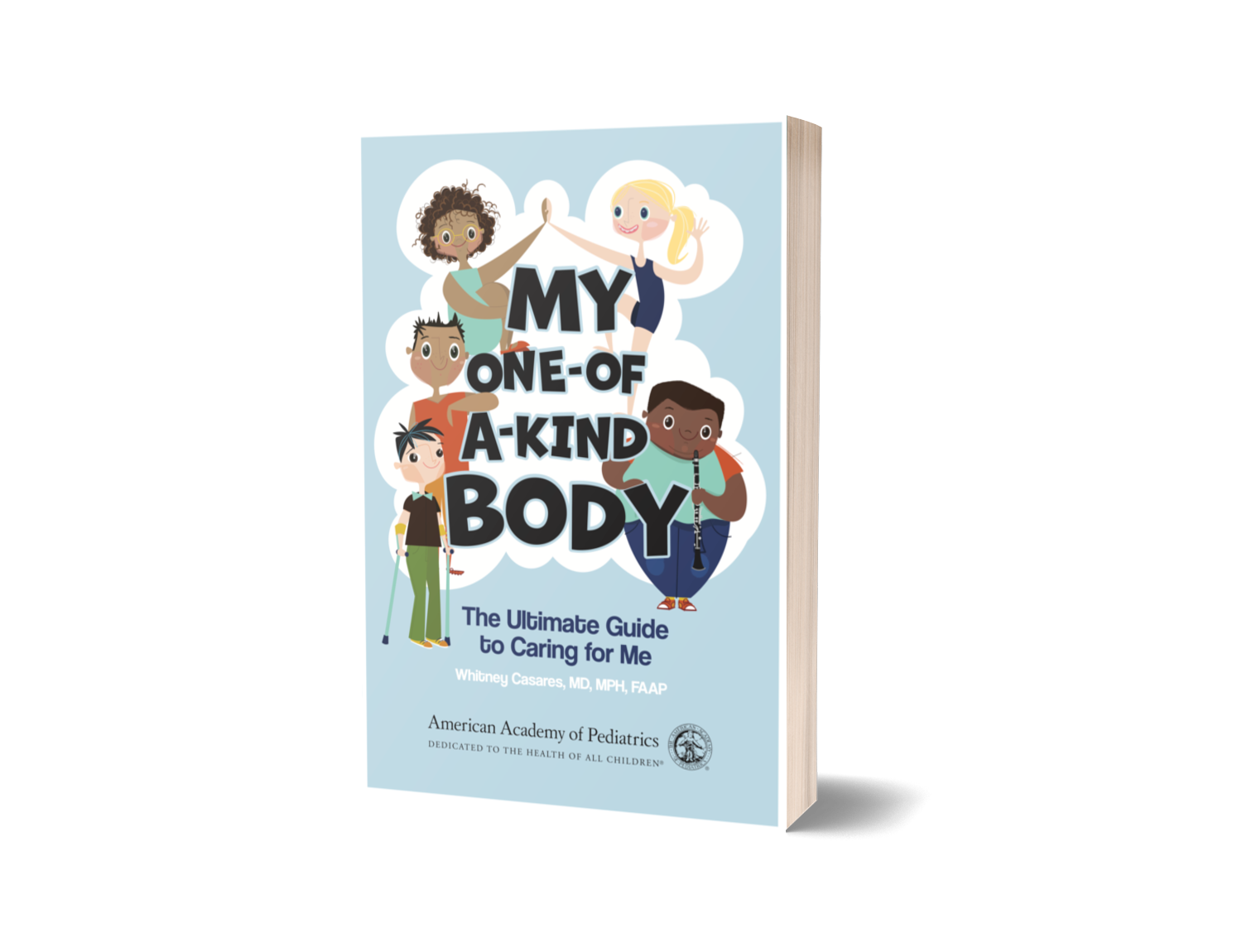
About the Episode: In this episode, Dr. Whitney sits down with Dr. Jay Gargus and Dave Justus from NeuroQure to discuss the power of early clarity when it comes to autism detection and why earlier intervention can fundamentally change outcomes for childre n and families. Dr. Gargus explains the science behind early behavioral therapies and why their impact goes far beyond short-term skill-building. Research shows that early, evidence-based interventions can lead to measurable, lifelong improvements in IQ, so cial skills, independence, and educational placement, often determining whether a child can thrive in mainstream education or requires ongoing specialized support. The conversation also tackles a critical and often overlooked issue: access. Dave Justus shares the personal motivation behind NeuroQure’s work and explains why the test is being launched at cost, with installment plans and employer subsidies, while the team works toward insurance coverage. The goal is to prevent families from losing precious years waiting for answers. Together, they emphasize a hopeful message for parents: families don’t need to wait for a future “silver bullet.” We already have therapies that work and getting kids connected to them earlier can change the course of a lifetime. In this episode, we discuss: Why early autism detection leads to lifelong changes—not just short-term gains What a 17-point IQ difference actually means for education, independence, and quality of life How early intervention can shift developmental trajectories as early as 6 months The science and validation behind current autism therapies Why NeuroQure is pricing testing at cost while pursuing insurance coverage How early clarity can reduce long-term strain on families, schools, and healthcare systems This episode is a powerful reminder that timing matters and that early access to answers can make an extraordinary difference for children and the families who love them. About Our Guest: Dr. Jay Gargus, MD, PhD is a physician-scientist and nationally recognized expert in neurodevelopmental disorders, with decades of experience researching the biological underpinnings of autism. His work has focused on translating well-established science into meaningful, real-world interventions that can improve lifelong outcomes for children. Dr. Gargus emphasizes that early, evidence-based therapies are already available—and that connecting families to them sooner can fundamentally change developmental trajectories. Dave Justus is a parent and the founder of NeuroQure, whose work is driven by personal experience navigating delayed autism diagnosis and intervention. Motivated by the belief that early clarity can spare families years of uncertainty, Dave is focused on expanding access to early testing through cost-based pricing and ongoing efforts to secure insurance coverage. His mission is simple but powerful: ensure families don’t have to wait for answers that could change everything. Want to Start Raising Body-Confident Kids Today? 📘 Order the Book Order your copy of My One-of-a-Kind Body 👉 www.raisingbodyconfidentkids.com/books 🎁 Claim Your Free Bonus When you order on our site, you’ll also get access to a FREE video mini-course with five bite-sized lessons for parents. In just 25 minutes, you’ll walk away with: Simple, script-style ways to respond when your kid says, “I hate my thighs” How to talk about health without weight talk What to do when your own inner critic shows up How to interrupt diet culture at home The first step to raising a body-confident kid, even if you didn’t grow up as one 📩 Subscribe to The Modern Mommy Doc Podcast for more episodes on parenting with confidence and clarity. Leave a review using the hashtag #ModernMommyDoc.
By Dr. Whitney November 13, 2025
Stop being so busy, and start being more present.
By Dr. Whitney November 5, 2025
Starting out right with solids doesn't have to be so scary.
By Dr. Whitney October 29, 2025
What if YOU are the one who needs to calm down first?

Welcome! Get the information you need to win at parenting without losing yourself.

LEARN MORE

My Kids' Book on Body Confidence is Finally Here!


Wish your partner would do more to lessen your mental load?


Want to make self-care a priority but not sure how to?


SIGN UP FOR SUSTAINABLE SELF-CARE. IT'S FREE. CLICK HERE


FRESH

ON THE PODCAST


By Dr. Whitney December 17, 2025
About the Episode: In this episode, Dr. Whitney sits down with Dr. Jay Gargus and Dave Justus from NeuroQure to discuss the power of early clarity when it comes to autism detection and why earlier intervention can fundamentally change outcomes for childre n and families. Dr. Gargus explains the science behind early behavioral therapies and why their impact goes far beyond short-term skill-building. Research shows that early, evidence-based interventions can lead to measurable, lifelong improvements in IQ, so cial skills, independence, and educational placement, often determining whether a child can thrive in mainstream education or requires ongoing specialized support. The conversation also tackles a critical and often overlooked issue: access. Dave Justus shares the personal motivation behind NeuroQure’s work and explains why the test is being launched at cost, with installment plans and employer subsidies, while the team works toward insurance coverage. The goal is to prevent families from losing precious years waiting for answers. Together, they emphasize a hopeful message for parents: families don’t need to wait for a future “silver bullet.” We already have therapies that work and getting kids connected to them earlier can change the course of a lifetime. In this episode, we discuss: Why early autism detection leads to lifelong changes—not just short-term gains What a 17-point IQ difference actually means for education, independence, and quality of life How early intervention can shift developmental trajectories as early as 6 months The science and validation behind current autism therapies Why NeuroQure is pricing testing at cost while pursuing insurance coverage How early clarity can reduce long-term strain on families, schools, and healthcare systems This episode is a powerful reminder that timing matters and that early access to answers can make an extraordinary difference for children and the families who love them. About Our Guest: Dr. Jay Gargus, MD, PhD is a physician-scientist and nationally recognized expert in neurodevelopmental disorders, with decades of experience researching the biological underpinnings of autism. His work has focused on translating well-established science into meaningful, real-world interventions that can improve lifelong outcomes for children. Dr. Gargus emphasizes that early, evidence-based therapies are already available—and that connecting families to them sooner can fundamentally change developmental trajectories. Dave Justus is a parent and the founder of NeuroQure, whose work is driven by personal experience navigating delayed autism diagnosis and intervention. Motivated by the belief that early clarity can spare families years of uncertainty, Dave is focused on expanding access to early testing through cost-based pricing and ongoing efforts to secure insurance coverage. His mission is simple but powerful: ensure families don’t have to wait for answers that could change everything. Want to Start Raising Body-Confident Kids Today? 📘 Order the Book Order your copy of My One-of-a-Kind Body 👉 www.raisingbodyconfidentkids.com/books 🎁 Claim Your Free Bonus When you order on our site, you’ll also get access to a FREE video mini-course with five bite-sized lessons for parents. In just 25 minutes, you’ll walk away with: Simple, script-style ways to respond when your kid says, “I hate my thighs” How to talk about health without weight talk What to do when your own inner critic shows up How to interrupt diet culture at home The first step to raising a body-confident kid, even if you didn’t grow up as one 📩 Subscribe to The Modern Mommy Doc Podcast for more episodes on parenting with confidence and clarity. Leave a review using the hashtag #ModernMommyDoc.
By Dr. Whitney November 13, 2025
Stop being so busy, and start being more present.