MMD BLOG


CATEGORY:

PODCAST EPISODES | #98

HOW TO TAKE HOLD OF YOUR HORMONE HEALTH WITH SMALL, SUSTAINABLE CHANGES WITH DR. HEATHER RHODES

 Modern Mommy Doc


PUBLICATION DATE:

May 12, 2022

HOW TO TAKE HOLD OF YOUR HORMONE HEALTH WITH SMALL, SUSTAINABLE CHANGES WITH DR. HEATHER RHODES

 Modern Mommy Doc

CATEGORY: PODCAST EPISODES | #98


Dr. Whitney chats with Dr. Heather Rhodes about all things hormones. They talk about how diet culture has forced us into extremely damaging habits, how to track your cycle in a way that tells you about your hormone picture, and why lowering your stress hormones are the first step to hormone (and overall) health.


Key takeaways:


We want to learn about our bodies and we have so much information at our fingertips right now. But hormones are something that just gets swept under the rug and women really aren’t ever given an opportunity to learn about this topic that affects every single part of their lives. Things that we’ve always traditionally been taught were “healthy” usually fly in the face of what our bodies need to function from a place of balanced hormones.


Hormones are made of fats, but you need specific types of fats in order to make them. Lots of people are really low on fat that they need to make healthy hormone production, but really high in the fats that cause inflammation. A typical medical approach would be to put them on meds to decrease fats overall rather than looking at the body as a whole and how it’s functioning. People need the information to understand how their body functions, which then turns into the skill of knowing how to maintain healthy hormones.


There’s definitely a time and a place for medication, but what are some things we can do as prevention so that our body isn’t depleted and starts to shut down our hormones?


For women specifically, they need to know how and why their body cycles. Things like, when are you ovulating? All of this is helpful when we start to look at symptoms like PMS, fatigue, and migraines because they point to our bodies struggling while our hormones are transitioning at different points in our cycles. 


Track your cycle and your symptoms for 30 days so you can connect the dots. We can track our Basal Body Temperatures (BBT) and they can give us insight on how our metabolism is working. It shows us whether or not our bodies are running on reserves or if it’s functioning at an optimal level. It also points to thyroid health and stress levels.


If we’re tracking our cycle, symptoms, and body temps–what do we do with that?


You’ve got to find resources that will teach you what those signs are pointing to, because those are all signals that our body is trying to give us. When you can understand what those signals are, it unlocks everything. A simple google search will give you a graph for what your hormone cycle will look like (although a professional set of eyes on your info is always a great idea!) 


For instance, right before you start your period, progesterone levels are supposed to take a pretty big dip. Progesterone is supposed to turn off our fight or flight and lower our cortisol levels, which is why it’s called natural Xanax. If your levels aren’t balanced with super low progesterone, when the dip starts to happen you feel like a crazy person! Those transitions are supposed to be a soft wave, not like jumping off the end of a cliff.


Taking hormone-specific supplements isn't the answer either, because it tells our brain to stop producing it because it’s getting it from an outside source. Even the most natural forms of it don’t operate the same way as the ones your body will make.


So then you’d look at why those progesterone levels were lower and what can decrease it in your body. Nine times out of ten it’s caused by high stress signaling in your body–some part of your body is super stressed out, which tells your brain to stop producing progesterone and start producing higher stress hormones because it thinks you aren’t “safe” and need to be on high alert.


It comes down to the signals your body is receiving (no sleep, poor nutrients, crazy workouts) and the nutrients that it takes in in order to make the hormones.


So the answer is really about finding ways to lower our stress holistically, so that when there are things that come along that shouldn’t stress us out, our levels don’t go crazy.


Yep! Because it’s not just about telling yourself to be “less stressed.” Think of how we take care of our kids. We’d never let them not eat until 2pm. We’d never let them consistently get hours less sleep than they need to. It would turn them into crazy people and that’s what we’re essentially doing to our bodies. And over time, our body sees that as normal, so it stops sending you the healthy signals (like hunger!) that it would otherwise in order to keep things safe.


Two questions to ask yourself: how do I structure my life so that it’s not continually stressed out from a physiological standpoint and how can I give my body more of what it needs to function well? That way, when it gets the signal that things aren’t going well, your body already knows what to do and can keep it balanced.


For those women that are feeling like they can’t slow down because they feel like everything will fall apart if they stop “producing,” or assume that there’s NO way they can do it. That their value is found in their ability to never stop. What can you say to them?


First, they’ve got to find a new rhythm that is restorative to their body. Second, in order to make changes to your hormones, you don’t have to do ALL the things. It’s not necessary to do yoga 7 days a week, quit your job, make your husband watch the kids all day, and eat clean 100% of the time. Instead, look at the habits and routines you’re already doing every single day and how you can add in pieces of support.


You’re already waking up every morning. Can you add in 5 minutes of breathwork before you pick up your phone? You take the kids to school every day. Could you turn the radio off and sit in silence for 5 minutes? Can we take the foods that you’re already eating and add in things that will replenish the nutrients that get depleted when you’re highly stressed? Work on the timing of meals so your blood sugar is stabilized? Pick one new habit and start with a small and intentional decision. We’re not overhauling your life. We’re just taking what you’re already doing and what you love and making it 10% better. And over time, you CAN see 100% of your symptoms resolve.


Connect with Heather Rhodes:


Websit


PCOS Resource


We'd love to hear from you, Mama! Do you listen each week? Leave a review or share a screenshot of your favorite episode(s) on social. Be sure to tag @modernmommydoc so we can see how much you're loving the podcast!

Raising Body-Confident Kids Starts at the Doctor's Office!

START NOW
By Dr. Whitney December 17, 2025
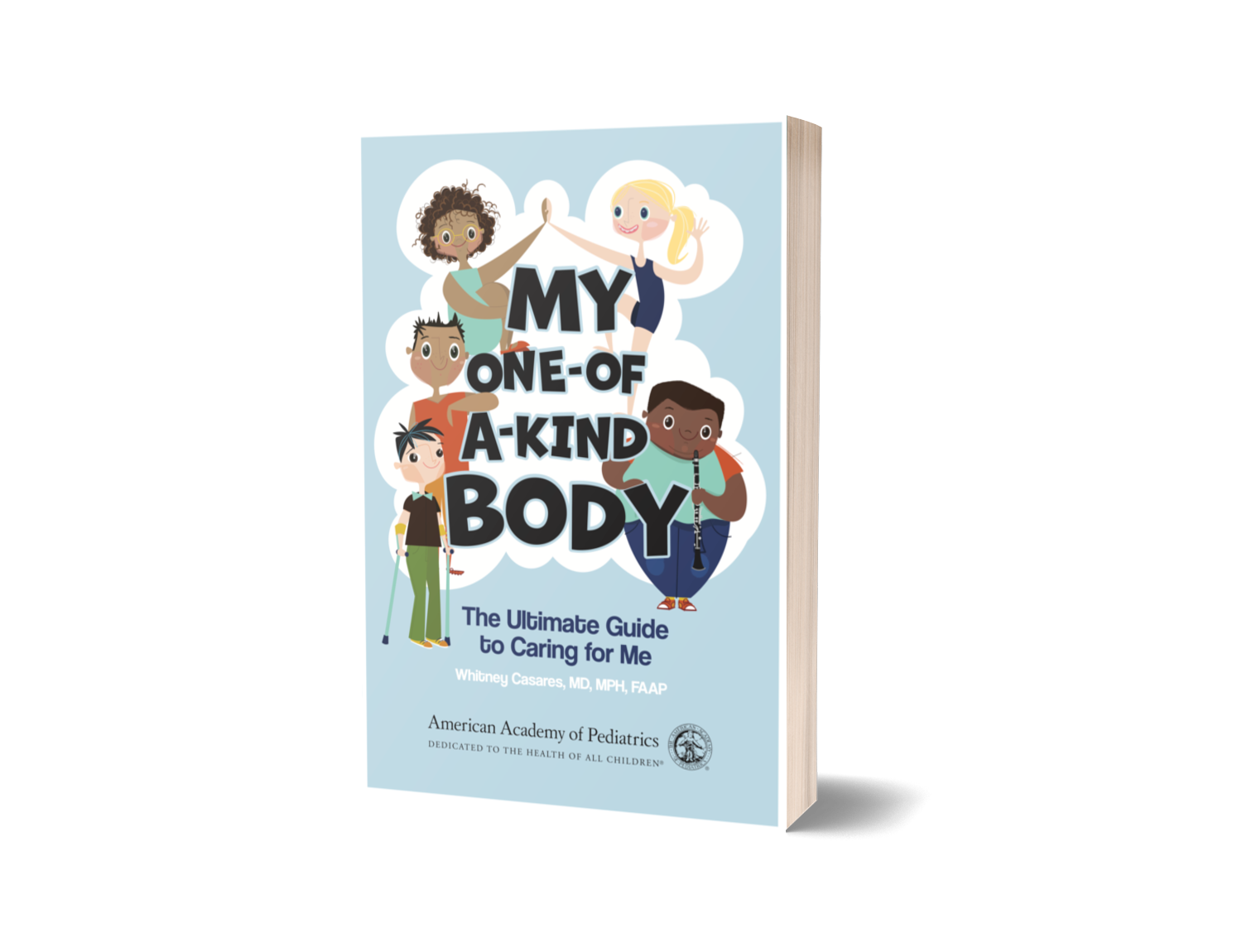
About the Episode: In this episode, Dr. Whitney sits down with Dr. Jay Gargus and Dave Justus from NeuroQure to discuss the power of early clarity when it comes to autism detection and why earlier intervention can fundamentally change outcomes for childre n and families. Dr. Gargus explains the science behind early behavioral therapies and why their impact goes far beyond short-term skill-building. Research shows that early, evidence-based interventions can lead to measurable, lifelong improvements in IQ, so cial skills, independence, and educational placement, often determining whether a child can thrive in mainstream education or requires ongoing specialized support. The conversation also tackles a critical and often overlooked issue: access. Dave Justus shares the personal motivation behind NeuroQure’s work and explains why the test is being launched at cost, with installment plans and employer subsidies, while the team works toward insurance coverage. The goal is to prevent families from losing precious years waiting for answers. Together, they emphasize a hopeful message for parents: families don’t need to wait for a future “silver bullet.” We already have therapies that work and getting kids connected to them earlier can change the course of a lifetime. In this episode, we discuss: Why early autism detection leads to lifelong changes—not just short-term gains What a 17-point IQ difference actually means for education, independence, and quality of life How early intervention can shift developmental trajectories as early as 6 months The science and validation behind current autism therapies Why NeuroQure is pricing testing at cost while pursuing insurance coverage How early clarity can reduce long-term strain on families, schools, and healthcare systems This episode is a powerful reminder that timing matters and that early access to answers can make an extraordinary difference for children and the families who love them. About Our Guest: Dr. Jay Gargus, MD, PhD is a physician-scientist and nationally recognized expert in neurodevelopmental disorders, with decades of experience researching the biological underpinnings of autism. His work has focused on translating well-established science into meaningful, real-world interventions that can improve lifelong outcomes for children. Dr. Gargus emphasizes that early, evidence-based therapies are already available—and that connecting families to them sooner can fundamentally change developmental trajectories. Dave Justus is a parent and the founder of NeuroQure, whose work is driven by personal experience navigating delayed autism diagnosis and intervention. Motivated by the belief that early clarity can spare families years of uncertainty, Dave is focused on expanding access to early testing through cost-based pricing and ongoing efforts to secure insurance coverage. His mission is simple but powerful: ensure families don’t have to wait for answers that could change everything. Want to Start Raising Body-Confident Kids Today? 📘 Order the Book Order your copy of My One-of-a-Kind Body 👉 www.raisingbodyconfidentkids.com/books 🎁 Claim Your Free Bonus When you order on our site, you’ll also get access to a FREE video mini-course with five bite-sized lessons for parents. In just 25 minutes, you’ll walk away with: Simple, script-style ways to respond when your kid says, “I hate my thighs” How to talk about health without weight talk What to do when your own inner critic shows up How to interrupt diet culture at home The first step to raising a body-confident kid, even if you didn’t grow up as one 📩 Subscribe to The Modern Mommy Doc Podcast for more episodes on parenting with confidence and clarity. Leave a review using the hashtag #ModernMommyDoc.
By Dr. Whitney November 13, 2025
Stop being so busy, and start being more present.
By Dr. Whitney November 5, 2025
Starting out right with solids doesn't have to be so scary.
By Dr. Whitney October 29, 2025
What if YOU are the one who needs to calm down first?

Welcome! Get the information you need to win at parenting without losing yourself.

LEARN MORE

My Kids' Book on Body Confidence is Finally Here!


Wish your partner would do more to lessen your mental load?


Want to make self-care a priority but not sure how to?


SIGN UP FOR SUSTAINABLE SELF-CARE. IT'S FREE. CLICK HERE


FRESH

ON THE PODCAST


By Dr. Whitney December 17, 2025
About the Episode: In this episode, Dr. Whitney sits down with Dr. Jay Gargus and Dave Justus from NeuroQure to discuss the power of early clarity when it comes to autism detection and why earlier intervention can fundamentally change outcomes for childre n and families. Dr. Gargus explains the science behind early behavioral therapies and why their impact goes far beyond short-term skill-building. Research shows that early, evidence-based interventions can lead to measurable, lifelong improvements in IQ, so cial skills, independence, and educational placement, often determining whether a child can thrive in mainstream education or requires ongoing specialized support. The conversation also tackles a critical and often overlooked issue: access. Dave Justus shares the personal motivation behind NeuroQure’s work and explains why the test is being launched at cost, with installment plans and employer subsidies, while the team works toward insurance coverage. The goal is to prevent families from losing precious years waiting for answers. Together, they emphasize a hopeful message for parents: families don’t need to wait for a future “silver bullet.” We already have therapies that work and getting kids connected to them earlier can change the course of a lifetime. In this episode, we discuss: Why early autism detection leads to lifelong changes—not just short-term gains What a 17-point IQ difference actually means for education, independence, and quality of life How early intervention can shift developmental trajectories as early as 6 months The science and validation behind current autism therapies Why NeuroQure is pricing testing at cost while pursuing insurance coverage How early clarity can reduce long-term strain on families, schools, and healthcare systems This episode is a powerful reminder that timing matters and that early access to answers can make an extraordinary difference for children and the families who love them. About Our Guest: Dr. Jay Gargus, MD, PhD is a physician-scientist and nationally recognized expert in neurodevelopmental disorders, with decades of experience researching the biological underpinnings of autism. His work has focused on translating well-established science into meaningful, real-world interventions that can improve lifelong outcomes for children. Dr. Gargus emphasizes that early, evidence-based therapies are already available—and that connecting families to them sooner can fundamentally change developmental trajectories. Dave Justus is a parent and the founder of NeuroQure, whose work is driven by personal experience navigating delayed autism diagnosis and intervention. Motivated by the belief that early clarity can spare families years of uncertainty, Dave is focused on expanding access to early testing through cost-based pricing and ongoing efforts to secure insurance coverage. His mission is simple but powerful: ensure families don’t have to wait for answers that could change everything. Want to Start Raising Body-Confident Kids Today? 📘 Order the Book Order your copy of My One-of-a-Kind Body 👉 www.raisingbodyconfidentkids.com/books 🎁 Claim Your Free Bonus When you order on our site, you’ll also get access to a FREE video mini-course with five bite-sized lessons for parents. In just 25 minutes, you’ll walk away with: Simple, script-style ways to respond when your kid says, “I hate my thighs” How to talk about health without weight talk What to do when your own inner critic shows up How to interrupt diet culture at home The first step to raising a body-confident kid, even if you didn’t grow up as one 📩 Subscribe to The Modern Mommy Doc Podcast for more episodes on parenting with confidence and clarity. Leave a review using the hashtag #ModernMommyDoc.
By Dr. Whitney November 13, 2025
Stop being so busy, and start being more present.