MMD BLOG


CATEGORY:

You + Your Partner

MY HUSBAND KNOWS HOW TO SHARE THE MENTAL LOAD. I'M JUST NOT ALWAYS SURE HE (REALLY) WANTS TO

 Modern Mommy Doc


PUBLICATION DATE:

July 3, 2024

MY HUSBAND KNOWS HOW TO SHARE THE MENTAL LOAD. I'M JUST NOT ALWAYS SURE HE (REALLY) WANTS TO

 Modern Mommy Doc

CATEGORY: You + Your Partner

"But you have to make sure she actually takes her medicine,” I say again, feeling like I want to bang my head against the wall as I try to explain my 10-year-old daughter’s needs—and my husband’s role in meeting them—for what feels like the eighth time this month. I’d just come home from a career-high, three-day work trip the night before, but the low of this moment made all that success come crashing down. 


Missed medications in my household are catastrophic events. My child relies on them to navigate her running list of diagnoses: dysregulatory disruptive mood disorder, sensory disorder, anxiety, and autism. 


“Even though we want her to be responsible for her own mental health, she’s not ready to be yet,” I remind Scott. 


But my husband sees it differently. “I put the medications on her plate with her breakfast. She’s not a baby. She can swallow the pills. If you want someone to put them in her mouth, you’ll have to be here to do it.”


You might think my husband and I are outliers. We’re not. I was in San Francisco last week, presenting at a wellness event for Stanford-trained neurosurgeons and Intensive Care Unit physician moms who are having the exact same experience. Never mind all the life-changing information I had to share with these highly educated, highly competent women about advancing their work-life integration skills. They wanted to know how to get their men to dress their toddlers in something other than shorts in the middle of February. “If I don’t take care of it myself, it just won’t get done right,” they lamented over and over. “And I already have enough guilt as a working mom as it is. I can’t add a freezing child to my list.”


Maybe you think my husband is incompetent—not smart enough to put two and two together: one missed pill equals meltdowns all day and no sleep all night for the next week. He’s not. Scott got a near-perfect score on his GRE. He’s the director of a successful physical therapy clinic. He has common sense. 


Or maybe he’s just downright selfish? No. Friends and family can count on him to move their apartments, or send a “sorry your dog died” card, or show up with some beers if they’ve had a bad day. He’s also my best career champion and cheerleader. 


You might think we need to read Fair PlayEve Rodsky’s book that outlines a business-like plan for divvying up family tasks and responsibilities in dual-gender households. We’ve read it. And, while Fair Play’s approach is both groundbreaking and practical, the idea that all men actually want to carry the mental load in the way that it needs to be carried does not hold water in my family all the time. And while I hope and pray that this isn’t the story my kids (or even their kids) have to tell about their partners, it certainly is my narrative.


Here’s the reality: my husband knows how to share the mental load with me. He just doesn’t always see why, even if he doesn't want to, he NEEDS to so it doesn't all fall to me. In his mind, the kids are old enough to do their own laundry, to wash their own dishes, and to figure out what to do when they’re bored. If they don’t, it’s not his responsibility. The only problem is, while the day may be coming soon when my kids can fend for themselves, I know we’re not there quite yet. Someone has to pick up the slack when the kids don’t act like adults (or face the mental health consequences a few days later), and I bet you can guess who that is in most American households


When you think about it, men have a pretty great deal. What’s their incentive to change the status quo? A 2023 Pew Research analysis found that working husbands have more leisure time than their working wives, especially if there are children. This same analysis pointed out that while women are gaining more economically by potentially earning equivalent to their husbands, they’re carrying a heavier burden at home. Researchers went on to conclude, “The only marriage type where husbands devote more time to caregiving than their wives is one in which the wife is the sole breadwinner. In those marriages, wives and husbands spend roughly the same amount of time per week on household chores.” An additional point of proof? Same-sex female couples also share the load fairly.


If you ask Scott, he’ll say he’s doing his fair share. And, compared to dads who came before them, modern fathers certainly are. Scott changed diapers right alongside me when our girls were newborns. He picks our kids up from school three days a week. The responsibility for the mental load is shifting, it’s just taking way too long—and taking way too much advocacy from men who get it. As women, we’re seemingly left with two options: wait for the world to change or succumb to depression and resentment. I can’t afford to do either. I have an autistic child who needs both parents in sync, and I want a life I’m happy with. 


Advocates like Rodsky agree with me. To convince their partners to share the mental load, women must stand up for themselves in the face of mental load inequities and believe in their own self-worth. It requires continuous, team-oriented communication to be effective. Women have to speak up when their partners don’t meet the mark—or when they don’t step up to the mental load plate at all. I have to win the argument about my unreliable kid reliably getting her Zoloft—and be willing to reiterate it again and again until it sticks. I can’t let it go when it all falls to me. 


But will most women really do that? My experience in the working mom world tells me the answer is, unless women believe that they deserve to have the same level of rest, purpose, and respect as everyone else in their families, unequivocally no. Women consistently mop up the messes and pick up the slack to keep their families functioning, even when they don’t want to. They over-function because their self-worth is tied to taking care of everyone and everything else instead of protecting their own peace. They keep quiet because they’re not taught communication tools, like compassionate assertiveness, that allow them to express their needs while earning buy-in toward more teamwork. They keep shouldering the mental load because, in some ways, it feels like such an uphill battle to convince their partners to care the same way they do. 


Can we stop pretending like our partners don’t know how to share the mental load—or that they always want to—not because they're jerks, but because it requires a sea-change in perspective and their partners standing up for themselves? It goes against centuries of history. It invalidates the current working mom experience. It’s not going to get us anywhere. Instead, let’s teach women how to push equity forward, even when they meet resistance from their partners, by building a stronger internal foundation so they can fully embrace Fair Play and other amazing tools. Let’s start by teaching women to embrace their self-worth. Let’s empower women with evidence-based communication tools and strategies that allow them to stop over-functioning. We can keep teaching men and women how to share the mental load, but, more importantly, let’s make sure it actually happens.


Raising Body-Confident Kids Starts at the Doctor's Office!

START NOW
By Dr. Whitney December 17, 2025
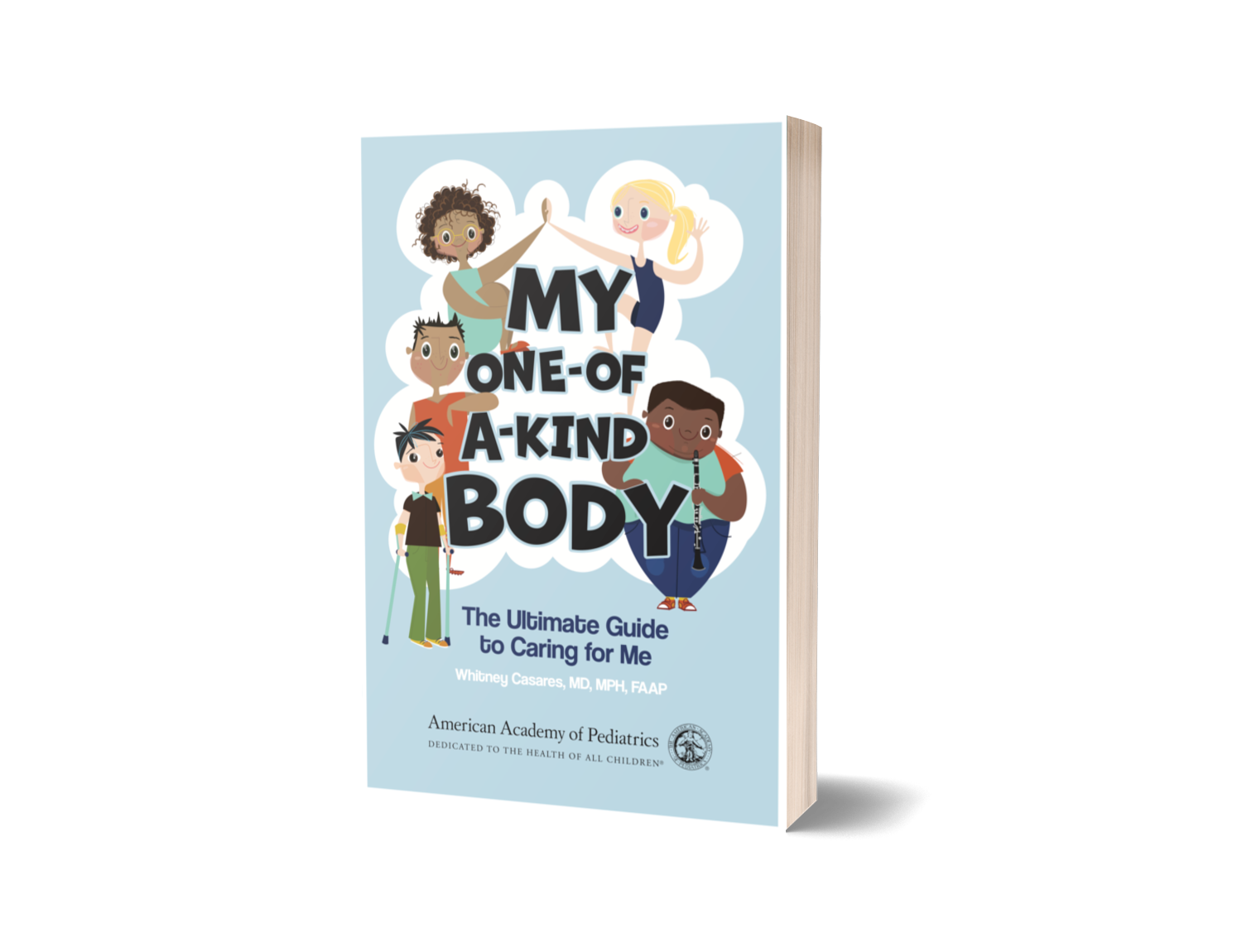
About the Episode: In this episode, Dr. Whitney sits down with Dr. Jay Gargus and Dave Justus from NeuroQure to discuss the power of early clarity when it comes to autism detection and why earlier intervention can fundamentally change outcomes for childre n and families. Dr. Gargus explains the science behind early behavioral therapies and why their impact goes far beyond short-term skill-building. Research shows that early, evidence-based interventions can lead to measurable, lifelong improvements in IQ, so cial skills, independence, and educational placement, often determining whether a child can thrive in mainstream education or requires ongoing specialized support. The conversation also tackles a critical and often overlooked issue: access. Dave Justus shares the personal motivation behind NeuroQure’s work and explains why the test is being launched at cost, with installment plans and employer subsidies, while the team works toward insurance coverage. The goal is to prevent families from losing precious years waiting for answers. Together, they emphasize a hopeful message for parents: families don’t need to wait for a future “silver bullet.” We already have therapies that work and getting kids connected to them earlier can change the course of a lifetime. In this episode, we discuss: Why early autism detection leads to lifelong changes—not just short-term gains What a 17-point IQ difference actually means for education, independence, and quality of life How early intervention can shift developmental trajectories as early as 6 months The science and validation behind current autism therapies Why NeuroQure is pricing testing at cost while pursuing insurance coverage How early clarity can reduce long-term strain on families, schools, and healthcare systems This episode is a powerful reminder that timing matters and that early access to answers can make an extraordinary difference for children and the families who love them. About Our Guest: Dr. Jay Gargus, MD, PhD is a physician-scientist and nationally recognized expert in neurodevelopmental disorders, with decades of experience researching the biological underpinnings of autism. His work has focused on translating well-established science into meaningful, real-world interventions that can improve lifelong outcomes for children. Dr. Gargus emphasizes that early, evidence-based therapies are already available—and that connecting families to them sooner can fundamentally change developmental trajectories. Dave Justus is a parent and the founder of NeuroQure, whose work is driven by personal experience navigating delayed autism diagnosis and intervention. Motivated by the belief that early clarity can spare families years of uncertainty, Dave is focused on expanding access to early testing through cost-based pricing and ongoing efforts to secure insurance coverage. His mission is simple but powerful: ensure families don’t have to wait for answers that could change everything. Want to Start Raising Body-Confident Kids Today? 📘 Order the Book Order your copy of My One-of-a-Kind Body 👉 www.raisingbodyconfidentkids.com/books 🎁 Claim Your Free Bonus When you order on our site, you’ll also get access to a FREE video mini-course with five bite-sized lessons for parents. In just 25 minutes, you’ll walk away with: Simple, script-style ways to respond when your kid says, “I hate my thighs” How to talk about health without weight talk What to do when your own inner critic shows up How to interrupt diet culture at home The first step to raising a body-confident kid, even if you didn’t grow up as one 📩 Subscribe to The Modern Mommy Doc Podcast for more episodes on parenting with confidence and clarity. Leave a review using the hashtag #ModernMommyDoc.
By Dr. Whitney November 13, 2025
Stop being so busy, and start being more present.
By Dr. Whitney November 5, 2025
Starting out right with solids doesn't have to be so scary.
By Dr. Whitney October 29, 2025
What if YOU are the one who needs to calm down first?

Welcome! Get the information you need to win at parenting without losing yourself.

LEARN MORE

My Kids' Book on Body Confidence is Finally Here!


Wish your partner would do more to lessen your mental load?


Want to make self-care a priority but not sure how to?


SIGN UP FOR SUSTAINABLE SELF-CARE. IT'S FREE. CLICK HERE


FRESH

ON THE PODCAST


By Dr. Whitney December 17, 2025
About the Episode: In this episode, Dr. Whitney sits down with Dr. Jay Gargus and Dave Justus from NeuroQure to discuss the power of early clarity when it comes to autism detection and why earlier intervention can fundamentally change outcomes for childre n and families. Dr. Gargus explains the science behind early behavioral therapies and why their impact goes far beyond short-term skill-building. Research shows that early, evidence-based interventions can lead to measurable, lifelong improvements in IQ, so cial skills, independence, and educational placement, often determining whether a child can thrive in mainstream education or requires ongoing specialized support. The conversation also tackles a critical and often overlooked issue: access. Dave Justus shares the personal motivation behind NeuroQure’s work and explains why the test is being launched at cost, with installment plans and employer subsidies, while the team works toward insurance coverage. The goal is to prevent families from losing precious years waiting for answers. Together, they emphasize a hopeful message for parents: families don’t need to wait for a future “silver bullet.” We already have therapies that work and getting kids connected to them earlier can change the course of a lifetime. In this episode, we discuss: Why early autism detection leads to lifelong changes—not just short-term gains What a 17-point IQ difference actually means for education, independence, and quality of life How early intervention can shift developmental trajectories as early as 6 months The science and validation behind current autism therapies Why NeuroQure is pricing testing at cost while pursuing insurance coverage How early clarity can reduce long-term strain on families, schools, and healthcare systems This episode is a powerful reminder that timing matters and that early access to answers can make an extraordinary difference for children and the families who love them. About Our Guest: Dr. Jay Gargus, MD, PhD is a physician-scientist and nationally recognized expert in neurodevelopmental disorders, with decades of experience researching the biological underpinnings of autism. His work has focused on translating well-established science into meaningful, real-world interventions that can improve lifelong outcomes for children. Dr. Gargus emphasizes that early, evidence-based therapies are already available—and that connecting families to them sooner can fundamentally change developmental trajectories. Dave Justus is a parent and the founder of NeuroQure, whose work is driven by personal experience navigating delayed autism diagnosis and intervention. Motivated by the belief that early clarity can spare families years of uncertainty, Dave is focused on expanding access to early testing through cost-based pricing and ongoing efforts to secure insurance coverage. His mission is simple but powerful: ensure families don’t have to wait for answers that could change everything. Want to Start Raising Body-Confident Kids Today? 📘 Order the Book Order your copy of My One-of-a-Kind Body 👉 www.raisingbodyconfidentkids.com/books 🎁 Claim Your Free Bonus When you order on our site, you’ll also get access to a FREE video mini-course with five bite-sized lessons for parents. In just 25 minutes, you’ll walk away with: Simple, script-style ways to respond when your kid says, “I hate my thighs” How to talk about health without weight talk What to do when your own inner critic shows up How to interrupt diet culture at home The first step to raising a body-confident kid, even if you didn’t grow up as one 📩 Subscribe to The Modern Mommy Doc Podcast for more episodes on parenting with confidence and clarity. Leave a review using the hashtag #ModernMommyDoc.
By Dr. Whitney November 13, 2025
Stop being so busy, and start being more present.