MMD BLOG


CATEGORY:

MOTHERHOOD

SMOTHER(ED) MOTHER

 Modern Mommy Doc


PUBLICATION DATE:

October 20, 2020

SMOTHER(ED) MOTHER

 Modern Mommy Doc

CATEGORY: MOTHERHOOD

It’s 11 p.m., and I’m finally crawling into bed after what feels like a marathon day. I was up early for meetings, saw a full panel of patients at the office, and now (thank God) am ready to rest. But as soon as my head hits the pillow, I hear her: my four-year-old crying from upstairs. She says she needs water, but I know she really means she wants snuggles. I kiss her and tuck her back into bed where she reluctantly settles down to sleep.


Two hours later, I hear my almost-seven-year-old rustling about. Now she needs me, too. It’s like a diabolical game of Whac-A-Mole. By the end of the night, I am very nearly smothered (literally) with one child’s arm draped over my face, and my other child’s leg crossed over mine.


My kids, especially when they’re not feeling well, are off their regular schedules, or just want more time with me, will endlessly crave me. And the pandemic hasn’t helped. We’re all together more than ever and surrounded by an almost palpable anxiety. Conditions like these are a breeding ground for a suffocating level of need, yet it’s more important than ever to tune into our kids and really connect with them. What’s a Mama to do?


DIVIDE AND CONQUER


There are, of course, no easy solutions. Just an intensified version of that balance we all try to create in our lives as people, partners, and parents. For me, doing two things consistently has helped: taking time for myself and taking time to connect with my daughters throughout the week.


The first of these is something I dig deep on in my Mama Reset Self-Care Retreat (at Home). The Reader’s Digest version? Carve out time every day or every few days for the things that recharge you. It can be 20 minutes alone with a good book or a two-hour FaceTime with your best friend. Just make time to take care of your inner self, even if it means all the laundry doesn’t get done.



Our children need us to be their biggest supporters and their best teachers when it comes to their feelings.


The second sanity-saver centers on building deep and sustaining connections with my kids. I spend plenty of hours every day taking care of them — making meals, overseeing projects, mediating squabbles, bathing, and so on. But the connection part is what really counts at the end of the day. It’s what motivates me to go beyond positive parenting and really lean into their big emotions. It’s also a subject close to my heart. Not only is it the focus of my Navigating and Regulating Children’s Big Emotions program, but it’s something I’ve lived every day of my highly sensitive oldest daughter’s life.


Our children need us to be their biggest supporters and their best teachers when it comes to their feelings. Part of this means validating and labeling their feelings for them. It means moving toward them, not away from them, when they’re upset. It means staying calm myself to see the hurt they’re feeling rather than the behavior (which, during a tantrum, can be admittedly awful).



FINDING WAYS TO CONNECT  


In addition to showing up for them emotionally, we can all build deep connections with our children by simply delighting in them. Take time to marvel at the miracle(s) you created, from gummy or gap-toothed grins to baby words, starfish fingers, and unexpected cuddles. (Yes, this applies even to teenagers who are lovable too. Sometimes.)


The other big way to forge connections is with “Special Time.” This is something I go into great detail on in my Big Emotions program, because it’s such an easy way to make a powerful impact. The idea behind Special Time is creating distraction-free chunks of time your child(ren) can count on with you.


How can you do that? Simply share in what fascinates or pleases them. For example:


  • Is your child into fairies this week? Then bake “fairy cakes” and eat them outside together while looking for fairies. 
  • Are dinosaurs more her thing? Turn your living room floor into Jurassic Park for an afternoon, and take turns acting like her favorite dinos. 
  • Does your child love board games? Make a regular game night where you devote half an hour to her latest obsession.
  • This mindful approach to connection is at the heart of motherhood. It’s why we do what we do. It’s why we care so freaking much. It’s why we get out of bed when it’s 11 p.m. and we hear our child crying.


Raising Body-Confident Kids Starts at the Doctor's Office!

START NOW
By Dr. Whitney December 17, 2025
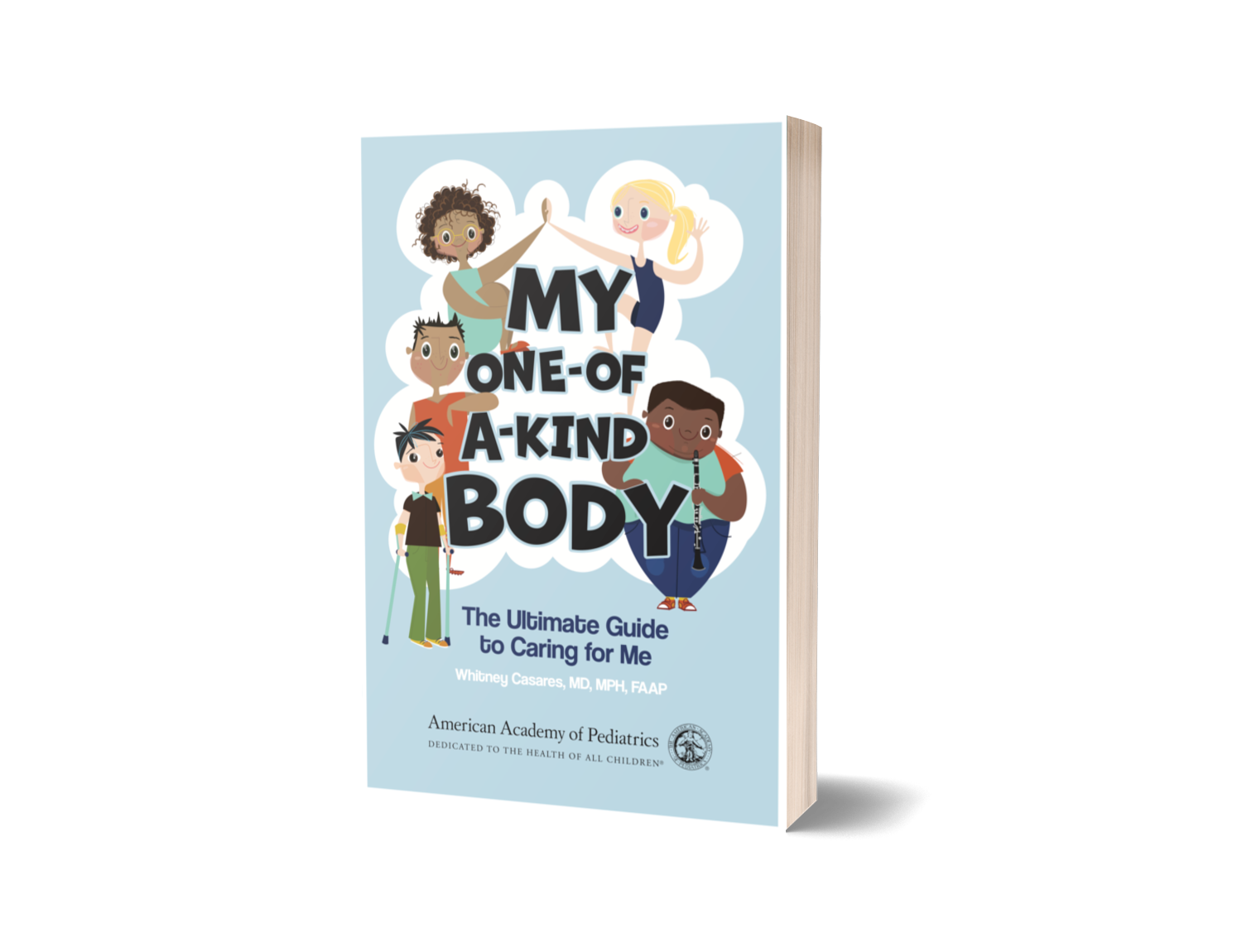
About the Episode: In this episode, Dr. Whitney sits down with Dr. Jay Gargus and Dave Justus from NeuroQure to discuss the power of early clarity when it comes to autism detection and why earlier intervention can fundamentally change outcomes for childre n and families. Dr. Gargus explains the science behind early behavioral therapies and why their impact goes far beyond short-term skill-building. Research shows that early, evidence-based interventions can lead to measurable, lifelong improvements in IQ, so cial skills, independence, and educational placement, often determining whether a child can thrive in mainstream education or requires ongoing specialized support. The conversation also tackles a critical and often overlooked issue: access. Dave Justus shares the personal motivation behind NeuroQure’s work and explains why the test is being launched at cost, with installment plans and employer subsidies, while the team works toward insurance coverage. The goal is to prevent families from losing precious years waiting for answers. Together, they emphasize a hopeful message for parents: families don’t need to wait for a future “silver bullet.” We already have therapies that work and getting kids connected to them earlier can change the course of a lifetime. In this episode, we discuss: Why early autism detection leads to lifelong changes—not just short-term gains What a 17-point IQ difference actually means for education, independence, and quality of life How early intervention can shift developmental trajectories as early as 6 months The science and validation behind current autism therapies Why NeuroQure is pricing testing at cost while pursuing insurance coverage How early clarity can reduce long-term strain on families, schools, and healthcare systems This episode is a powerful reminder that timing matters and that early access to answers can make an extraordinary difference for children and the families who love them. About Our Guest: Dr. Jay Gargus, MD, PhD is a physician-scientist and nationally recognized expert in neurodevelopmental disorders, with decades of experience researching the biological underpinnings of autism. His work has focused on translating well-established science into meaningful, real-world interventions that can improve lifelong outcomes for children. Dr. Gargus emphasizes that early, evidence-based therapies are already available—and that connecting families to them sooner can fundamentally change developmental trajectories. Dave Justus is a parent and the founder of NeuroQure, whose work is driven by personal experience navigating delayed autism diagnosis and intervention. Motivated by the belief that early clarity can spare families years of uncertainty, Dave is focused on expanding access to early testing through cost-based pricing and ongoing efforts to secure insurance coverage. His mission is simple but powerful: ensure families don’t have to wait for answers that could change everything. Want to Start Raising Body-Confident Kids Today? 📘 Order the Book Order your copy of My One-of-a-Kind Body 👉 www.raisingbodyconfidentkids.com/books 🎁 Claim Your Free Bonus When you order on our site, you’ll also get access to a FREE video mini-course with five bite-sized lessons for parents. In just 25 minutes, you’ll walk away with: Simple, script-style ways to respond when your kid says, “I hate my thighs” How to talk about health without weight talk What to do when your own inner critic shows up How to interrupt diet culture at home The first step to raising a body-confident kid, even if you didn’t grow up as one 📩 Subscribe to The Modern Mommy Doc Podcast for more episodes on parenting with confidence and clarity. Leave a review using the hashtag #ModernMommyDoc.
By Dr. Whitney November 13, 2025
Stop being so busy, and start being more present.
By Dr. Whitney November 5, 2025
Starting out right with solids doesn't have to be so scary.
By Dr. Whitney October 29, 2025
What if YOU are the one who needs to calm down first?

Welcome! Get the information you need to win at parenting without losing yourself.

LEARN MORE

My Kids' Book on Body Confidence is Finally Here!


Wish your partner would do more to lessen your mental load?


Want to make self-care a priority but not sure how to?


SIGN UP FOR SUSTAINABLE SELF-CARE. IT'S FREE. CLICK HERE


FRESH

ON THE PODCAST


By Dr. Whitney December 17, 2025
About the Episode: In this episode, Dr. Whitney sits down with Dr. Jay Gargus and Dave Justus from NeuroQure to discuss the power of early clarity when it comes to autism detection and why earlier intervention can fundamentally change outcomes for childre n and families. Dr. Gargus explains the science behind early behavioral therapies and why their impact goes far beyond short-term skill-building. Research shows that early, evidence-based interventions can lead to measurable, lifelong improvements in IQ, so cial skills, independence, and educational placement, often determining whether a child can thrive in mainstream education or requires ongoing specialized support. The conversation also tackles a critical and often overlooked issue: access. Dave Justus shares the personal motivation behind NeuroQure’s work and explains why the test is being launched at cost, with installment plans and employer subsidies, while the team works toward insurance coverage. The goal is to prevent families from losing precious years waiting for answers. Together, they emphasize a hopeful message for parents: families don’t need to wait for a future “silver bullet.” We already have therapies that work and getting kids connected to them earlier can change the course of a lifetime. In this episode, we discuss: Why early autism detection leads to lifelong changes—not just short-term gains What a 17-point IQ difference actually means for education, independence, and quality of life How early intervention can shift developmental trajectories as early as 6 months The science and validation behind current autism therapies Why NeuroQure is pricing testing at cost while pursuing insurance coverage How early clarity can reduce long-term strain on families, schools, and healthcare systems This episode is a powerful reminder that timing matters and that early access to answers can make an extraordinary difference for children and the families who love them. About Our Guest: Dr. Jay Gargus, MD, PhD is a physician-scientist and nationally recognized expert in neurodevelopmental disorders, with decades of experience researching the biological underpinnings of autism. His work has focused on translating well-established science into meaningful, real-world interventions that can improve lifelong outcomes for children. Dr. Gargus emphasizes that early, evidence-based therapies are already available—and that connecting families to them sooner can fundamentally change developmental trajectories. Dave Justus is a parent and the founder of NeuroQure, whose work is driven by personal experience navigating delayed autism diagnosis and intervention. Motivated by the belief that early clarity can spare families years of uncertainty, Dave is focused on expanding access to early testing through cost-based pricing and ongoing efforts to secure insurance coverage. His mission is simple but powerful: ensure families don’t have to wait for answers that could change everything. Want to Start Raising Body-Confident Kids Today? 📘 Order the Book Order your copy of My One-of-a-Kind Body 👉 www.raisingbodyconfidentkids.com/books 🎁 Claim Your Free Bonus When you order on our site, you’ll also get access to a FREE video mini-course with five bite-sized lessons for parents. In just 25 minutes, you’ll walk away with: Simple, script-style ways to respond when your kid says, “I hate my thighs” How to talk about health without weight talk What to do when your own inner critic shows up How to interrupt diet culture at home The first step to raising a body-confident kid, even if you didn’t grow up as one 📩 Subscribe to The Modern Mommy Doc Podcast for more episodes on parenting with confidence and clarity. Leave a review using the hashtag #ModernMommyDoc.
By Dr. Whitney November 13, 2025
Stop being so busy, and start being more present.