MMD BLOG


CATEGORY:

NEW MAMA + BABIES

TIPS FOR NEW PARENTS | PREPARING FOR BABY: WHAT YOU REALLY NEED TO KNOW BEFORE BABY ARRIVES

 Modern Mommy Doc


PUBLICATION DATE:

December 23, 2017

TIPS FOR NEW PARENTS | PREPARING FOR BABY: WHAT YOU REALLY NEED TO KNOW BEFORE BABY ARRIVES

 Modern Mommy Doc

CATEGORY: NEW MAMA + BABIES

I give medical advice and tips to new and expectant parents all day long as a pediatrician. When I had my own baby, though, I learned some more personal lessons about having a newborn. Some were practical, some were about perspective. Many were downright humbling. Here are some of the most important tips for new parents that I have my own little love nugget at home. Hopefully, they will help with your mommy (or daddy) metamorphosis as well:


1. The birth is just the beginning.


Before baby arrives, many parents focus primarily on learning about the birth of their child versus learning about the weeks and months after that fateful day. There's good reason: the act of giving birth is scary and can be painful. Still, I encourage parents to focus more on baby than on birth. After all, you will be taking care of another human being 24-7 and the hospital does not send home an owner's manual.


2. Buy a bunch of zip up sleepers. 


No snaps, no buttons. When your baby is a newborn, you want easy access to all those poopy diapers, especially at 2 am. I will never forget my husband fumbling with my daughter's tiny snaps in the middle of the night, mumbling under his breath about the makers of such "ridiculous get ups." He was right. Lose the fancy clothes while at home until about 3 months. Stick with zip-up sleepers at night.


3. Adjust your expectations. 


You will have fun again, you will have date nights, you will at some point (kind of) get back to who you were before you became mommy or daddy. Right now, though, it's time to dig in your heels and expect there will be a lot of tough days and nights. There will be moments of complete bliss, to be sure, but being a parent can be, well, annoying at times. You don't have your freedom, you lose control of your schedule, you get lost in a sea of feeding and pooping and sleeping, then doing it again. Is it worth it? Absolutely. Is it hard? You betcha. Better to be mentally prepared for a period of awkward transition than to expect smooth sailing from the get-go. Becoming a parent, just like starting any new and challenging job, usually involves a steep learning curve at the beginning.


4. Before your baby is born, buy these things:


➜ 1 small box of newborn diapers. You don't know how big your son or daughter will be and you'll be sad if you have a storage shed full of newborn diapers when your child is a size 1 within a week of birth.


➜ Tons of wipes.


➜ A hospital grade breast pump and Vitamin D drops if you plan on breastfeeding. Breastfed babies need 400 International Units of Vitamin D per day until they reach 1 year of age.


➜ Swaddle blankets.


➜ Zip-up sleepers.


➜ A place for your baby to sleep. Many parents use a bassinet next to their bed for the first few weeks of their baby’s life for easy feeding during the night.


➜ A car seat.


These are the essentials. You will receive and buy many more items but, if you have these things, you'll be able to survive the first few weeks.




5. Embrace Technology.


Diapers, cleaning products, baby toys: they can all be purchased online and delivered to your home for a small fee. Have a friend set up an online meal calendar (mealbaby.com, for example) so that friends can bring warm food to nourish your family. This is the time to take advantage of a few modern conveniences. Really, you have more important things to do than drive around town, like sleep and bond with your baby.


6. Plan to accept advice.


It really irritated me at first, especially as a pediatrician, when my mom would give me parenting advice. She hadn't done this is 30 plus years, what did she know? But the reality is, she had the ability to see things about my daughter that I could not. She also was not exhausted like I was. Same goes for friends with older kids - they can be a huge wealth of information. As my friend said when I was just 4 weeks into the process, "Don't feel bad if you don't always know what to do. You went to medical school, not mommy school! I imagine the things they teach in mommy school are much different than what they teach in anatomy class."


Just take everything as a suggestion and as an interesting perspective and then filter, filter, filter. Not everyone's opinion is something you will use with your own child but, if you are open to others' observations, you will be less frustrated and more successful.


7. You will buy a lot of stuff. 


Some things your baby will love, some your baby will hate. Some your baby will hate now and love later. Don't throw it out or sell it until you are really sure you don't want it or until you have a second child who also hates it.


8. Embrace the fact that your home will not be a serene haven of adult life for several years.


If you have toys and play mats and kid's stuff all around, do not stress out that your house will never be as neat and tidy as it once was. It won't be. That's life. Congratulations, you have a child now. Where there was serenity, there will now be a little being full of joy and life (and noise and mess).


9. Focus on sleep. Then focus some more.


 The sleep habits you help your child develop from a young age (as in 2 weeks old), are important. However, if you fail (or feel like you are failing) at getting your child to sleep well, it's wasted energy to beat yourself up. I read all the books and tried my best to help my child develop healthy sleep habits. At 3 months, it felt like I was spinning my wheels. Just now (at 6 months old) our hard work is really paying off.


Hey, the clichés are true: it goes SO fast.


You will cherish those little memories over and over, even the hard moments. And, even if you take a million pictures, you will wish you had more.


Want more help winning at parenting without losing yourself? Check out our self-care and newborn care courses.




Raising Body-Confident Kids Starts at the Doctor's Office!

START NOW
By Dr. Whitney December 17, 2025
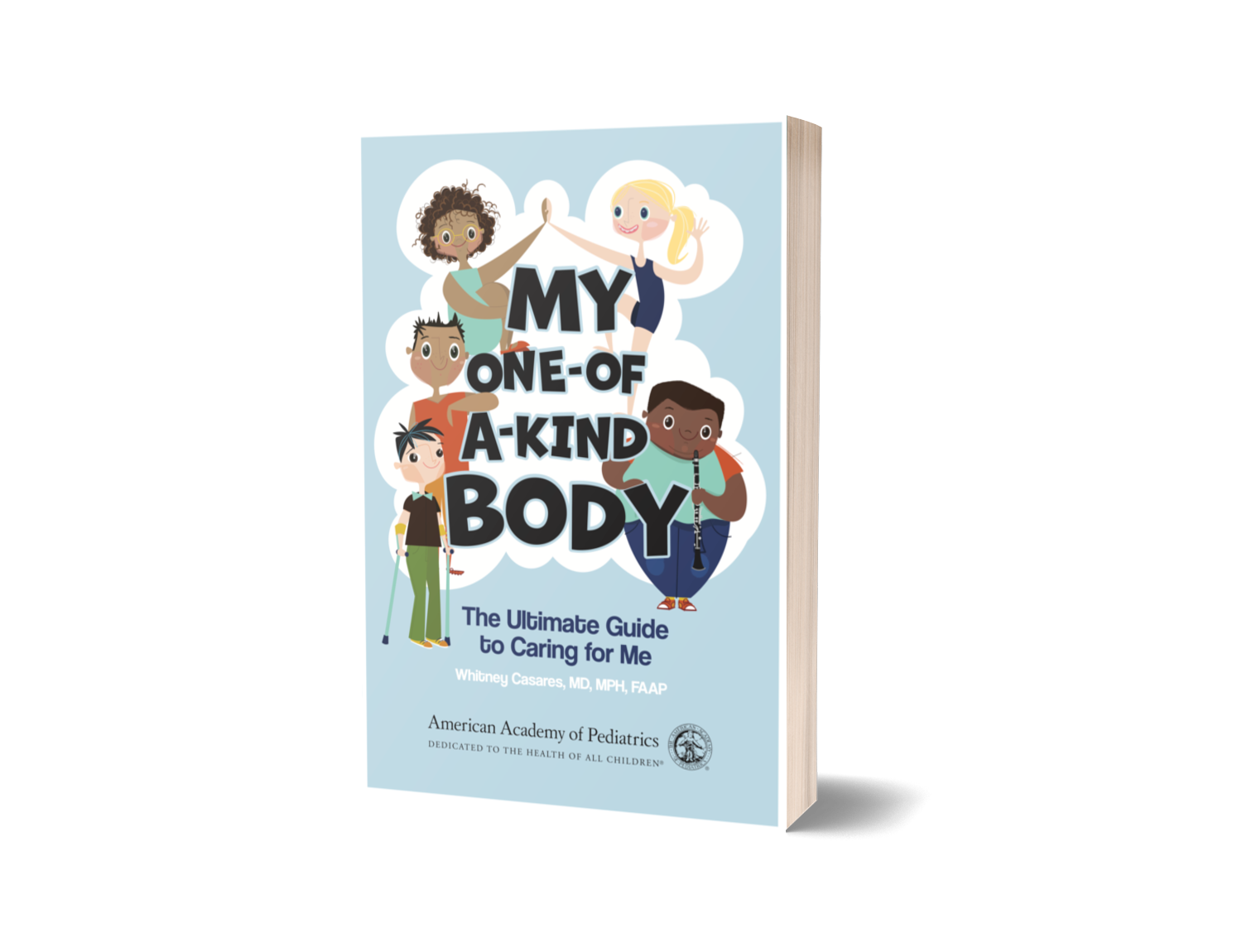
About the Episode: In this episode, Dr. Whitney sits down with Dr. Jay Gargus and Dave Justus from NeuroQure to discuss the power of early clarity when it comes to autism detection and why earlier intervention can fundamentally change outcomes for childre n and families. Dr. Gargus explains the science behind early behavioral therapies and why their impact goes far beyond short-term skill-building. Research shows that early, evidence-based interventions can lead to measurable, lifelong improvements in IQ, so cial skills, independence, and educational placement, often determining whether a child can thrive in mainstream education or requires ongoing specialized support. The conversation also tackles a critical and often overlooked issue: access. Dave Justus shares the personal motivation behind NeuroQure’s work and explains why the test is being launched at cost, with installment plans and employer subsidies, while the team works toward insurance coverage. The goal is to prevent families from losing precious years waiting for answers. Together, they emphasize a hopeful message for parents: families don’t need to wait for a future “silver bullet.” We already have therapies that work and getting kids connected to them earlier can change the course of a lifetime. In this episode, we discuss: Why early autism detection leads to lifelong changes—not just short-term gains What a 17-point IQ difference actually means for education, independence, and quality of life How early intervention can shift developmental trajectories as early as 6 months The science and validation behind current autism therapies Why NeuroQure is pricing testing at cost while pursuing insurance coverage How early clarity can reduce long-term strain on families, schools, and healthcare systems This episode is a powerful reminder that timing matters and that early access to answers can make an extraordinary difference for children and the families who love them. About Our Guest: Dr. Jay Gargus, MD, PhD is a physician-scientist and nationally recognized expert in neurodevelopmental disorders, with decades of experience researching the biological underpinnings of autism. His work has focused on translating well-established science into meaningful, real-world interventions that can improve lifelong outcomes for children. Dr. Gargus emphasizes that early, evidence-based therapies are already available—and that connecting families to them sooner can fundamentally change developmental trajectories. Dave Justus is a parent and the founder of NeuroQure, whose work is driven by personal experience navigating delayed autism diagnosis and intervention. Motivated by the belief that early clarity can spare families years of uncertainty, Dave is focused on expanding access to early testing through cost-based pricing and ongoing efforts to secure insurance coverage. His mission is simple but powerful: ensure families don’t have to wait for answers that could change everything. Want to Start Raising Body-Confident Kids Today? 📘 Order the Book Order your copy of My One-of-a-Kind Body 👉 www.raisingbodyconfidentkids.com/books 🎁 Claim Your Free Bonus When you order on our site, you’ll also get access to a FREE video mini-course with five bite-sized lessons for parents. In just 25 minutes, you’ll walk away with: Simple, script-style ways to respond when your kid says, “I hate my thighs” How to talk about health without weight talk What to do when your own inner critic shows up How to interrupt diet culture at home The first step to raising a body-confident kid, even if you didn’t grow up as one 📩 Subscribe to The Modern Mommy Doc Podcast for more episodes on parenting with confidence and clarity. Leave a review using the hashtag #ModernMommyDoc.
By Dr. Whitney November 13, 2025
Stop being so busy, and start being more present.
By Dr. Whitney November 5, 2025
Starting out right with solids doesn't have to be so scary.
By Dr. Whitney October 29, 2025
What if YOU are the one who needs to calm down first?

Welcome! Get the information you need to win at parenting without losing yourself.

LEARN MORE

My Kids' Book on Body Confidence is Finally Here!


Wish your partner would do more to lessen your mental load?


Want to make self-care a priority but not sure how to?


SIGN UP FOR SUSTAINABLE SELF-CARE. IT'S FREE. CLICK HERE


FRESH

ON THE PODCAST


By Dr. Whitney December 17, 2025
About the Episode: In this episode, Dr. Whitney sits down with Dr. Jay Gargus and Dave Justus from NeuroQure to discuss the power of early clarity when it comes to autism detection and why earlier intervention can fundamentally change outcomes for childre n and families. Dr. Gargus explains the science behind early behavioral therapies and why their impact goes far beyond short-term skill-building. Research shows that early, evidence-based interventions can lead to measurable, lifelong improvements in IQ, so cial skills, independence, and educational placement, often determining whether a child can thrive in mainstream education or requires ongoing specialized support. The conversation also tackles a critical and often overlooked issue: access. Dave Justus shares the personal motivation behind NeuroQure’s work and explains why the test is being launched at cost, with installment plans and employer subsidies, while the team works toward insurance coverage. The goal is to prevent families from losing precious years waiting for answers. Together, they emphasize a hopeful message for parents: families don’t need to wait for a future “silver bullet.” We already have therapies that work and getting kids connected to them earlier can change the course of a lifetime. In this episode, we discuss: Why early autism detection leads to lifelong changes—not just short-term gains What a 17-point IQ difference actually means for education, independence, and quality of life How early intervention can shift developmental trajectories as early as 6 months The science and validation behind current autism therapies Why NeuroQure is pricing testing at cost while pursuing insurance coverage How early clarity can reduce long-term strain on families, schools, and healthcare systems This episode is a powerful reminder that timing matters and that early access to answers can make an extraordinary difference for children and the families who love them. About Our Guest: Dr. Jay Gargus, MD, PhD is a physician-scientist and nationally recognized expert in neurodevelopmental disorders, with decades of experience researching the biological underpinnings of autism. His work has focused on translating well-established science into meaningful, real-world interventions that can improve lifelong outcomes for children. Dr. Gargus emphasizes that early, evidence-based therapies are already available—and that connecting families to them sooner can fundamentally change developmental trajectories. Dave Justus is a parent and the founder of NeuroQure, whose work is driven by personal experience navigating delayed autism diagnosis and intervention. Motivated by the belief that early clarity can spare families years of uncertainty, Dave is focused on expanding access to early testing through cost-based pricing and ongoing efforts to secure insurance coverage. His mission is simple but powerful: ensure families don’t have to wait for answers that could change everything. Want to Start Raising Body-Confident Kids Today? 📘 Order the Book Order your copy of My One-of-a-Kind Body 👉 www.raisingbodyconfidentkids.com/books 🎁 Claim Your Free Bonus When you order on our site, you’ll also get access to a FREE video mini-course with five bite-sized lessons for parents. In just 25 minutes, you’ll walk away with: Simple, script-style ways to respond when your kid says, “I hate my thighs” How to talk about health without weight talk What to do when your own inner critic shows up How to interrupt diet culture at home The first step to raising a body-confident kid, even if you didn’t grow up as one 📩 Subscribe to The Modern Mommy Doc Podcast for more episodes on parenting with confidence and clarity. Leave a review using the hashtag #ModernMommyDoc.
By Dr. Whitney November 13, 2025
Stop being so busy, and start being more present.