MMD BLOG


CATEGORY:

MOTHERHOOD + MAMA WELLNESS

FEEL THE BURN (BUT DON’T BURN OUT)

 Modern Mommy Doc


PUBLICATION DATE:

March 1, 2021

FEEL THE BURN (BUT DON’T BURN OUT)

 Modern Mommy Doc

CATEGORY: MOTHERHOOD + MAMA WELLNESS

Not long ago, Bumble C.E.O. Whitney Wolfe Herd took her company public. That a woman-owned dating app reached such a milestone (and swiped left on Tinder’s offer to buy it) is impressive enough. That Herd marked this milestone while holding her baby in her arms…well. That was an even more powerful message than telling women they can and should make the first move in the dating world.


Women like Herd are inspiring for so many reasons, not least of which is their apparent ease in balancing motherhood with crazy business success. But after a swell of collective pride at watching Herd officially make Bumble a publicly traded company, I felt that old familiar pang of bewilderment. How do people like Herd make it look so easy?


What has your day looked like so far, Mama? Did it involve a mad dash around the house as you got everyone up and fed and out the door (or on their screens)? Did it include a spilled coffee or, worse, no coffee on your way to morning meetings? Did you wonder at least once how you’d manage to juggle everything in the 12 or so hours left of your day?


The simple truth is that motherhood is hard. (I’ve said it before, and I’ll say it again.) And if we are to find not just success but joy in it, we have to remember that burnout is not inevitable. In fact, burnout can and should be avoided altogether.


GIRL MOM ON FIRE

Like many other things, motherhood effectively changes all our associations around the word “burn”. Remember when it meant an intense longing for that guy/girl across the room? Or a clever comeback? Or even a good workout? Yeah, these days it’s more likely to be paired up with that unfriendly preposition, “out”. And no wonder.


As therapist Kristen Genzano explains in my Mama Reset Self-Care Retreat (at Home), we as mamas take on an extraordinary number of responsibilities and commitments. Look at that sentence again. It’s easy to glide right over it, nodding in agreement but not really feeling it.


And feeling it is key to avoiding burnout. Not in a painful way, but in an honest and thoughtful way. So I encourage you to, right now, take 15 seconds and just mentally take stock of everything you’re committed to doing today. Work, kids, husband, home, family, friends, community, school projects — I’m willing to bet it’s a long list. Take a longer view (of your week, your month), and that list gets longer, too. So much of what we do, Genzano explains, is often unconsciously committed to.


Mom Retreat Online Parenting Course

HOW TO BEAT THE BURN

With so much orbiting around us, how do we stay replenished and grounded? It starts with adding yourself to the list of commitments.


What if, Genzano asks, you gave yourself just one-tenth of the attention you give everything and everyone else? What might change?


This doesn’t have to be especially difficult or time-consuming. In fact, Genzano offers a simple exercise that you can, to start with, do just once a day. And it looks like this:


· Pause what you’re doing.

· Place your hands over your heart, your belly, or another soothing place.

· Take a slow, deep breath.

· Ask yourself, “What do I need to support myself right now?”


The answer might be simple — a glass of water, a bite to eat, a moment alone. It might be more complicated, like an evening out or someone to talk to. But whatever it is, you have to tune in, acknowledge it, and provide for yourself.


CALLING MOMS EVERYWHERE

The theme for this year’s International Women’s Day (coming up on March 8!) is “Choose to Challenge.” So maybe, in addition to challenging the world to acknowledge women’s achievements and contributions, we can also challenge ourselves. We can challenge ourselves to create more balance in our lives. We can challenge ourselves to be kinder to ourselves. We can challenge ourselves to reset and recharge, whether that’s with a two-minute daily breathing exercise or a self-paced guided retreat.


We can take care of ourselves and, like Whitney Wolfe Herd, show our babies how it’s done.

Raising Body-Confident Kids Starts at the Doctor's Office!

START NOW
By Modern Mommy Doc • October 9, 2026
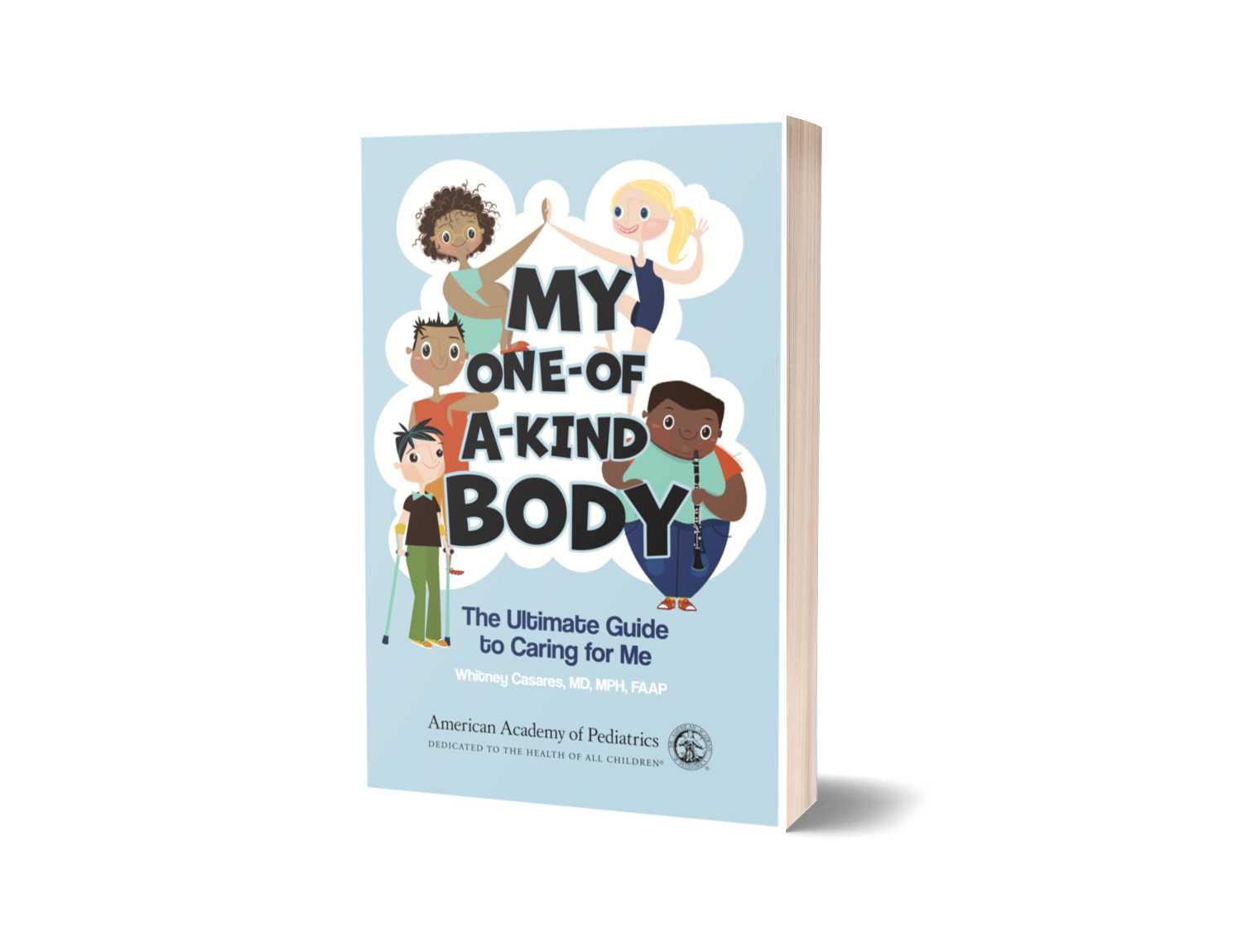
About the Episode: There’s so much parenting advice out there, and most of it doesn’t matter nearly as much as the internet wants you to think. (Seed oils? We have bigger fish to fry.) In this solo episode, Dr. Whitney gets back to basics and shares the six evidence-based parenting principles she focuses on as a pediatrician, the ones she dug into with a leading child development researcher. She also shares how these play out in real life as a mom of two neurodivergent kids, because guidance only helps if it actually fits your family. Key takeaways: Be sensitive and responsive. Simple practices like mirroring your child’s emotions and “serve and return” interactions build a loving, trusting foundation. Dr. Whitney shares how a Halloween decorating session turned into a deep conversation about religion once she slowed down and got curious. Meet kids where they are, especially at their worst. Drawing on Tina Payne Bryson, co-author of The Whole-Brain Child , Dr. Whitney explains that soothing a meltdown isn’t giving in. It’s letting your child know they’re not alone in a big feeling. Model self-regulation, and repair when you lose it. Self-regulation predicts academic success better than IQ. The goal isn’t staying calm all the time, it’s understanding why you got dysregulated, coming back to baseline, and offering yourself some self-compassion. Set limits for your kids and yourself. Every child’s needs are different (screen time affects Dr. Whitney’s two daughters very differently), but all kids need limits, and so do parents. Taking time for yourself models something healthy. Aim for authoritative, not permissive. High expectations paired with warmth and grace is the sweet spot. “Gentle parenting” can blur into permissiveness, which research shows is as harmful as authoritarian parenting. Protect unstructured time. Kids need boredom and free play to become self-directed. For ADHD and autistic kids, Dr. Whitney recommends offering a few options and letting kids choose. Support internal motivation. Using a “mirrors facing outward” image from her own therapist, Dr. Whitney explains why we want kids to trust their own instincts rather than constantly look outward for approval. Want to Start Raising Body-Confident Kids Today? 📘 Order the Books Raising Body-Confident Kids If you've ever caught yourself saying something to your kid about their body that sounded exactly like what your mother said to you, this book is for you. Raising Body-Confident Kids is a research-backed, judgment-free guide for parents who want to break the cycle of diet culture and body shame without swinging into toxic positivity or giving up all structure around food and movement. It answers the real questions parents are actually asking about Ozempic, about picky eaters, about what to say when your kid is being bullied for their body, and about social media influences. This is a practical, values-based game plan you can actually use, even if your own relationship with your body is still a work in progress. My One-of-a-Kind Body My One-of-a-Kind Body gives kids the language and understanding they need to care for their bodies with respect without fear, shame, or appearance-based messaging. Through inclusive illustrations and evidence-based health education, the book teaches body literacy, boundaries, and self-trust in a way kids can actually grasp. 👉 www.raisingbodyconfidentkids.com/books
By Modern Mommy Doc • October 5, 2026
What really matters when it comes to college admissions (for you and for them).
By Modern Mommy Doc • September 17, 2026
Kids going off to college are mean for a reason.
By Modern Mommy Doc • September 10, 2026
Maybe winning back to school isn't what we really want, after all.
By Modern Mommy Doc • August 27, 2026
First-class service has a lot to do with first-class parenting.

Welcome! Get the information you need to win at parenting without losing yourself.

LEARN MORE

My Kids' Book on Body Confidence


Trying to break the cycle of body shame and diet culture?


Overwhelmed by all the parenting advice out there?


SIGN UP FOR THE FREE STARTER KIT: UNBOTHERED. IT'S FREE. CLICK HERE


FRESH

ON THE PODCAST


By Modern Mommy Doc • October 9, 2026
About the Episode: There’s so much parenting advice out there, and most of it doesn’t matter nearly as much as the internet wants you to think. (Seed oils? We have bigger fish to fry.) In this solo episode, Dr. Whitney gets back to basics and shares the six evidence-based parenting principles she focuses on as a pediatrician, the ones she dug into with a leading child development researcher. She also shares how these play out in real life as a mom of two neurodivergent kids, because guidance only helps if it actually fits your family. Key takeaways: Be sensitive and responsive. Simple practices like mirroring your child’s emotions and “serve and return” interactions build a loving, trusting foundation. Dr. Whitney shares how a Halloween decorating session turned into a deep conversation about religion once she slowed down and got curious. Meet kids where they are, especially at their worst. Drawing on Tina Payne Bryson, co-author of The Whole-Brain Child , Dr. Whitney explains that soothing a meltdown isn’t giving in. It’s letting your child know they’re not alone in a big feeling. Model self-regulation, and repair when you lose it. Self-regulation predicts academic success better than IQ. The goal isn’t staying calm all the time, it’s understanding why you got dysregulated, coming back to baseline, and offering yourself some self-compassion. Set limits for your kids and yourself. Every child’s needs are different (screen time affects Dr. Whitney’s two daughters very differently), but all kids need limits, and so do parents. Taking time for yourself models something healthy. Aim for authoritative, not permissive. High expectations paired with warmth and grace is the sweet spot. “Gentle parenting” can blur into permissiveness, which research shows is as harmful as authoritarian parenting. Protect unstructured time. Kids need boredom and free play to become self-directed. For ADHD and autistic kids, Dr. Whitney recommends offering a few options and letting kids choose. Support internal motivation. Using a “mirrors facing outward” image from her own therapist, Dr. Whitney explains why we want kids to trust their own instincts rather than constantly look outward for approval. Want to Start Raising Body-Confident Kids Today? 📘 Order the Books Raising Body-Confident Kids If you've ever caught yourself saying something to your kid about their body that sounded exactly like what your mother said to you, this book is for you. Raising Body-Confident Kids is a research-backed, judgment-free guide for parents who want to break the cycle of diet culture and body shame without swinging into toxic positivity or giving up all structure around food and movement. It answers the real questions parents are actually asking about Ozempic, about picky eaters, about what to say when your kid is being bullied for their body, and about social media influences. This is a practical, values-based game plan you can actually use, even if your own relationship with your body is still a work in progress. My One-of-a-Kind Body My One-of-a-Kind Body gives kids the language and understanding they need to care for their bodies with respect without fear, shame, or appearance-based messaging. Through inclusive illustrations and evidence-based health education, the book teaches body literacy, boundaries, and self-trust in a way kids can actually grasp. 👉 www.raisingbodyconfidentkids.com/books
By Modern Mommy Doc • October 5, 2026
What really matters when it comes to college admissions (for you and for them).
By Modern Mommy Doc • September 17, 2026
Kids going off to college are mean for a reason.