MMD BLOG


CATEGORY:

systemic change

FEMALE CELEBRITIES: THEY'RE JUST LIKE US (CONSTANTLY OVER-FUNCTIONING WITHOUT REAL REWARDS)!

 Modern Mommy Doc


PUBLICATION DATE:

May 9, 2024

FEMALE CELEBRITIES: THEY'RE JUST LIKE US (CONSTANTLY OVER-FUNCTIONING WITHOUT REAL REWARDS)!

 Modern Mommy Doc

CATEGORY: systemic change

About a month ago, I went on the most epic trip to Japan with my daughter to see Taylor Swift. It was a trip of a lifetime for the two of us and I’m so glad we did it. I’m a huge Swiftie (as is my daughter) and this only served to cement it even further for us. 


But after I left the concert, I thought about what Taylor’s life must be like. And not in a fanciful, great vacations, private jets, and huge influence sorta way. But in a way that made me be like, “Will it ever calm down?” (See what I did there?)


It got me thinking about how life must hardly ever be calm for her. There’s her crazy hectic schedule. And the fact that she flew back across the globe to be at the Super Bowl (if you’re gonna be all negative about their relationship, just stop. Let them be cute and in love). And then flew back AGAIN to do more shows in Asia. 


And days before that she was at the Grammys.


Where she announced another album dropping…that she recorded while she was on freaking tour! Oh, and having a very public romance.


That’s a LOT.


I read last year that she can’t sleep after her shows. No kidding! (here's a great post from Dr. Heather Rhodes breaking down the probable hormonal cause for Taylor’s sleep habits).


This is not a fan girl post about Taylor Swift or a breakdown of her love life, though I know that’s what you usually expect from me (for very good reason. She is a BOSS). It’s really about a greater question: why do female superstars have to work so hard to stay relevant—and do they have a role to play in their own over-functioning? 


Just think about Beyoncé’s 27-song Cowboy Carter album, her longest LP ever. And her “16 Carriages” lyrics:


It's been thirty-eight summers and I'm not in my bed

On the back of the bus and a bunk with the band

Goin' so hard, now I miss my kids

Overworked and overwhelmed

I might cook, clean, but still won't fold


Or Taylor’s line on “I Can Do it With a Broken Heart”:


“I cry a lot but I am so productive, it's an art”


Or how about Lorde’s album announcement in 2021:


“There’s someone I want you to meet,” she wrote in a letter announcing her third album in Teen Vogue explaining her aesthetic transition from brooding and angsty to light and airy. “Her feet are bare at all times. She’s sexy, playful, feral, and free. She’s a modern girl in a deadstock bikini, in touch with her past and her future, vibrating at the highest level when summer comes around. Her skin is glowing, her lovers are many. I’m completely obsessed with her, and soon you will be too.”


I understand that they love what they do. I totally get that.


I adore being a doctor. But I also see when it’s time to draw lines in the sand with boundaries around my career. I’ve even pivoted from private practice recently because it made the most sense for me and my family.


When is enough, enough? When can you say that you’re proud of yourself and what you’ve done? When can you say that you’ve made it? What’s the reward—just more work?


Look across the industry–men simply aren’t doing this. Patrick Mahomes, Justin Timberlake, Brad Pitt. They aren’t constantly creating. They might be working, but not always in the same “must be doing, must be creating in order to stay relevant” phase we see women putting themselves in.


I can already hear you, “Yeah, well those men don’t have to, because society elevates their contributions above women.” And I fully agree with you. Female celebrities live under the curse of generations of gendered expectations and inequities. If they want to be treated like “The Man,” they have to work harder than any of their male counterparts. 


But I can’t help but wonder if all the constant reinventing, producing, and overworking we see female celebrities lean into doesn’t actually work against them–and us. When you build a career on reinvention, doesn’t that mean that you have to keep on reinventing yourself to keep advancing? In fact, the critics’ response to Swift’s The Tortured Poets Department, were pointed about how her relationship with long-time collaborator Jack Antonoff had become “comfortable” and risked “ going stale” because many of her songs sounded too similar to previous work they’d done together, in the critic’s opinion. 


How much is enough? How hard exactly do these celebrities have to work? How much joy and rest do they have to sacrifice? When are they enough?


And when you overwork constantly to keep up, doesn’t that teach the young girls that come after you that they also have to sacrifice their wellness by subscribing to over-functioning (and what, in all other circumstances, would be seen as workaholism)? 


I’m under no false pretenses that famous celebrities will change their work-life habits based on my opinion of their MOs, and they don’t have to. But let’s not pretend that working and working and working to handle our emotions or to combat inequities is normal or healthy. And let’s decide that here, in our not-so-famous lives, we want better for ourselves—that we want lives that don’t exhaust us or that we have to keep up with. That we’re okay and enough, no matter how much we make or do.


I just want women, billionaires or not, to hear and understand that our worth does not come from what we create. From what we do. It comes from who we are and the mere fact that we are humans (if you want more on this, check out my new book, Doing it All).


You’re uniquely you and that’s your magical super power. Not the 100 cases you closed in a year. Or the new client that you landed. Or the sold out shows that you’ve performed all across the world.


And if I can teach that to my daughters, then I’m living in my superstar power.


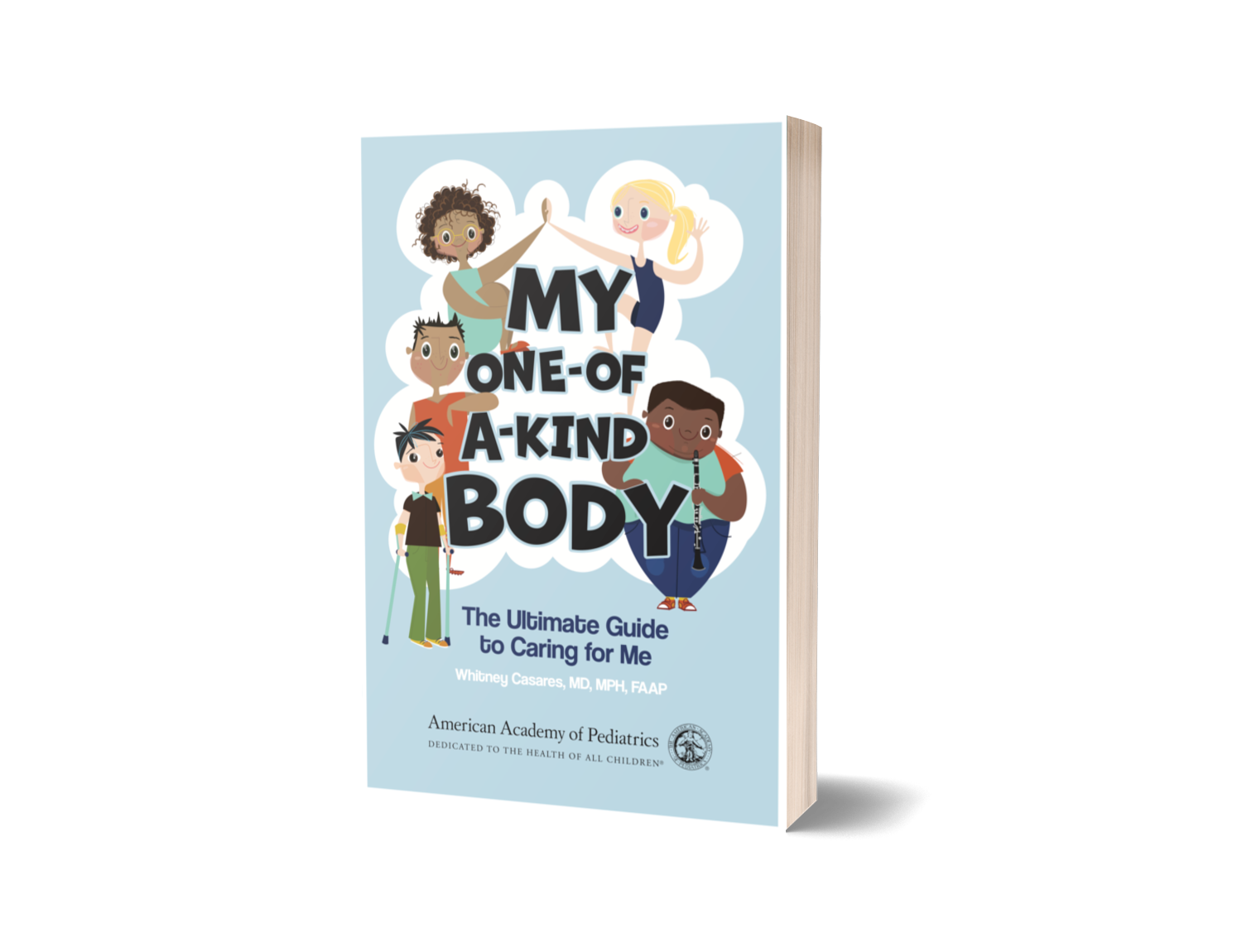
Raising Body-Confident Kids Starts at the Doctor's Office!

START NOW
By Dr. Whitney December 17, 2025
About the Episode: In this episode, Dr. Whitney sits down with Dr. Jay Gargus and Dave Justus from NeuroQure to discuss the power of early clarity when it comes to autism detection and why earlier intervention can fundamentally change outcomes for childre n and families. Dr. Gargus explains the science behind early behavioral therapies and why their impact goes far beyond short-term skill-building. Research shows that early, evidence-based interventions can lead to measurable, lifelong improvements in IQ, so cial skills, independence, and educational placement, often determining whether a child can thrive in mainstream education or requires ongoing specialized support. The conversation also tackles a critical and often overlooked issue: access. Dave Justus shares the personal motivation behind NeuroQure’s work and explains why the test is being launched at cost, with installment plans and employer subsidies, while the team works toward insurance coverage. The goal is to prevent families from losing precious years waiting for answers. Together, they emphasize a hopeful message for parents: families don’t need to wait for a future “silver bullet.” We already have therapies that work and getting kids connected to them earlier can change the course of a lifetime. In this episode, we discuss: Why early autism detection leads to lifelong changes—not just short-term gains What a 17-point IQ difference actually means for education, independence, and quality of life How early intervention can shift developmental trajectories as early as 6 months The science and validation behind current autism therapies Why NeuroQure is pricing testing at cost while pursuing insurance coverage How early clarity can reduce long-term strain on families, schools, and healthcare systems This episode is a powerful reminder that timing matters and that early access to answers can make an extraordinary difference for children and the families who love them. About Our Guest: Dr. Jay Gargus, MD, PhD is a physician-scientist and nationally recognized expert in neurodevelopmental disorders, with decades of experience researching the biological underpinnings of autism. His work has focused on translating well-established science into meaningful, real-world interventions that can improve lifelong outcomes for children. Dr. Gargus emphasizes that early, evidence-based therapies are already available—and that connecting families to them sooner can fundamentally change developmental trajectories. Dave Justus is a parent and the founder of NeuroQure, whose work is driven by personal experience navigating delayed autism diagnosis and intervention. Motivated by the belief that early clarity can spare families years of uncertainty, Dave is focused on expanding access to early testing through cost-based pricing and ongoing efforts to secure insurance coverage. His mission is simple but powerful: ensure families don’t have to wait for answers that could change everything. Want to Start Raising Body-Confident Kids Today? 📘 Order the Book Order your copy of My One-of-a-Kind Body 👉 www.raisingbodyconfidentkids.com/books 🎁 Claim Your Free Bonus When you order on our site, you’ll also get access to a FREE video mini-course with five bite-sized lessons for parents. In just 25 minutes, you’ll walk away with: Simple, script-style ways to respond when your kid says, “I hate my thighs” How to talk about health without weight talk What to do when your own inner critic shows up How to interrupt diet culture at home The first step to raising a body-confident kid, even if you didn’t grow up as one 📩 Subscribe to The Modern Mommy Doc Podcast for more episodes on parenting with confidence and clarity. Leave a review using the hashtag #ModernMommyDoc.
By Dr. Whitney November 13, 2025
Stop being so busy, and start being more present.
By Dr. Whitney November 5, 2025
Starting out right with solids doesn't have to be so scary.
By Dr. Whitney October 29, 2025
What if YOU are the one who needs to calm down first?

Welcome! Get the information you need to win at parenting without losing yourself.

LEARN MORE

My Kids' Book on Body Confidence is Finally Here!


Wish your partner would do more to lessen your mental load?


Want to make self-care a priority but not sure how to?


SIGN UP FOR SUSTAINABLE SELF-CARE. IT'S FREE. CLICK HERE


FRESH

ON THE PODCAST


By Dr. Whitney December 17, 2025
About the Episode: In this episode, Dr. Whitney sits down with Dr. Jay Gargus and Dave Justus from NeuroQure to discuss the power of early clarity when it comes to autism detection and why earlier intervention can fundamentally change outcomes for childre n and families. Dr. Gargus explains the science behind early behavioral therapies and why their impact goes far beyond short-term skill-building. Research shows that early, evidence-based interventions can lead to measurable, lifelong improvements in IQ, so cial skills, independence, and educational placement, often determining whether a child can thrive in mainstream education or requires ongoing specialized support. The conversation also tackles a critical and often overlooked issue: access. Dave Justus shares the personal motivation behind NeuroQure’s work and explains why the test is being launched at cost, with installment plans and employer subsidies, while the team works toward insurance coverage. The goal is to prevent families from losing precious years waiting for answers. Together, they emphasize a hopeful message for parents: families don’t need to wait for a future “silver bullet.” We already have therapies that work and getting kids connected to them earlier can change the course of a lifetime. In this episode, we discuss: Why early autism detection leads to lifelong changes—not just short-term gains What a 17-point IQ difference actually means for education, independence, and quality of life How early intervention can shift developmental trajectories as early as 6 months The science and validation behind current autism therapies Why NeuroQure is pricing testing at cost while pursuing insurance coverage How early clarity can reduce long-term strain on families, schools, and healthcare systems This episode is a powerful reminder that timing matters and that early access to answers can make an extraordinary difference for children and the families who love them. About Our Guest: Dr. Jay Gargus, MD, PhD is a physician-scientist and nationally recognized expert in neurodevelopmental disorders, with decades of experience researching the biological underpinnings of autism. His work has focused on translating well-established science into meaningful, real-world interventions that can improve lifelong outcomes for children. Dr. Gargus emphasizes that early, evidence-based therapies are already available—and that connecting families to them sooner can fundamentally change developmental trajectories. Dave Justus is a parent and the founder of NeuroQure, whose work is driven by personal experience navigating delayed autism diagnosis and intervention. Motivated by the belief that early clarity can spare families years of uncertainty, Dave is focused on expanding access to early testing through cost-based pricing and ongoing efforts to secure insurance coverage. His mission is simple but powerful: ensure families don’t have to wait for answers that could change everything. Want to Start Raising Body-Confident Kids Today? 📘 Order the Book Order your copy of My One-of-a-Kind Body 👉 www.raisingbodyconfidentkids.com/books 🎁 Claim Your Free Bonus When you order on our site, you’ll also get access to a FREE video mini-course with five bite-sized lessons for parents. In just 25 minutes, you’ll walk away with: Simple, script-style ways to respond when your kid says, “I hate my thighs” How to talk about health without weight talk What to do when your own inner critic shows up How to interrupt diet culture at home The first step to raising a body-confident kid, even if you didn’t grow up as one 📩 Subscribe to The Modern Mommy Doc Podcast for more episodes on parenting with confidence and clarity. Leave a review using the hashtag #ModernMommyDoc.
By Dr. Whitney November 13, 2025
Stop being so busy, and start being more present.