MMD BLOG


CATEGORY:

PARENTING + SELF-CARE

IN CHARGE TO RECHARGE: HOW PARENTS CAN RE-ENERGIZE THROUGHOUT THE DAY

 Modern Mommy Doc


PUBLICATION DATE:

February 1, 2021

IN CHARGE TO RECHARGE: HOW PARENTS CAN RE-ENERGIZE THROUGHOUT THE DAY

 Modern Mommy Doc

CATEGORY: PARENTING + SELF-CARE

If you’re familiar with this blog, you may recall the one I wrote a few weeks ago, which highlighted a few easy ways we mamas can  boost our energy throughout the day. It seemed pretty obvious that, if the pandemic, election, and holidays hadn’t depleted your energy levels, being a parent in the modern world would.


Parenthood is hard, no matter what’s happening around us. So if you sometimes find yourself holding your breath for no apparent reason, or if your shoulders feel like they’ve permanently relocated closer to your ears, or if you just feel a pervasive, generalized fatigue some days, I’m here to remind you that self-care for parents is real, necessary, and, yes, attainable.


WHEN (AND HOW) TO BOOST YOUR ENERGY


First off, I think it’s worth repeating that, while parenting is tiring by definition, it is NOT supposed to be a 24-7 marathon. Have you ever run a marathon? It requires extensive training and, more importantly, it ENDS. Since parenting requires us to take the long view, we need endurance. We need strength. And we need some self-care strategies. Here are a few ways you can boost your energy all day long.


You wake up tired. Maybe there were nighttime feedings/nightmares/bed-wetting. Maybe your partner just snores. Whatever the deal, you’re facing down a full day on very little steam.


Exercise is your friend here. (Don’t shoot the messenger!) If you can swing a morning workout — even if it’s a 15-minute  Barre3 warm-up or a  30-minute yoga session — do it and reap the rewards of increased energy, a focused mind, and a deeper sense of joy. If you can’t fit it in (because, late) then take a shortcut in the shower. Do a little dry brushing ahead of your morning shower, or use an exfoliant while bathing (the minty-er, the better!) to boost your blood circulation and improve alertness.


It’s mid-morning. Your coffee mug is empty. It’s hours until lunch. You have back-to-back meetings lined up until then. You can already feel those fluorescent lights working their energy-draining magic as you start to yawn.


Don’t even think about another liaison with the coffeepot. The only thing worse than yawning through a meeting is being jittery while you do it. This is when you need to make friends with nature’s original energy drink: water. Kicking back an 8-ounce glass when you’re feeling drowsy can  improve your alertness. And, since dehydration causes general sluggishness, make hydration a priority throughout the day.


Want to take it to the next level? Help stabilize your blood-sugar levels by snacking on fresh veggies throughout the day. (Alavita Nutrition has lots of other great tips for moms on the move.)


Another helper? Aromatherapy. Whether you prefer a diffuser or a candle, surrounding yourself with energizing scents like rosemary, peppermint, and citrus can help keep you feeling awake and focused.


After meetings, lunch, and some one-on-one time with your computer, you start to feel the inevitable late-afternoon fatigue slip over you. Nothing, not even an outdoor massage in Maui, sounds better than a nap right now.


If you can nap — in your car, on a couch in your office, during your baby/toddler/lazy teenager’s nap — do it. Set your alarm for 30 minutes, lie down, and let the magic happen. Need something more? Coffee naps are actually a thing, if an unscientifically endorsed thing. While the jury is still out on whether these work, the theory goes that drinking a cup of coffee before a 20-minute snooze (set that alarm!) will have you waking up more energized than normal.


If naps aren’t part of your office policy (and I’m in that boat, too), there are other ways to beat the late-afternoon lag. Take five minutes to stretch your arms, neck, and legs. You can go through a yoga flow or just follow your body’s cues to stretch out your tight and tired muscles. Doing so boosts circulation and energy.


Progressive muscle relaxation is another way to wake up. Flex and release one set of muscles after another, working your way from the top of your body down to your toes.


Another option? Go for a walk. Do a few laps around the office floor. Hit the stairwell for a flight or two. Or, your best option, get outside for a 10-minute lap around the building. Fresh air, sunlight, and nature all improve energy and mood levels.



MINDFULNESS IS KEY TO SELF-CARE


The one thing that all of these suggestions have in common is their reliance on mindfulness. And that’s good news for many modern parents who are keyed in to wanting to intuitively care for themselves and their children. The more we can recognize when we’re feeling low-energy, both physically and mentally, the more we can stop and really ask ourselves what we need.


It doesn’t matter if you’re dealing with the stress of a global pandemic or challenging parenting stages (read: toddlers and teenagers). We all need to create space and time for cultivating joy.


My husband reminded me of this the other night. After a late work meeting, I came home exhausted, poked around the fridge for some dinner, and ended up with some cold chicken. Scott couldn’t help but stare as I shoveled in a few bites.


“Is that even good?” he asked.


“Not really,” I answered as I choked down the dry meat.


“For goodness sake,” he said. “Order some Indian food already! There aren’t a lot of pleasures in life right now, but that one’s still there.”


And he’s right. So when there’s a good song playing in the car, turn off that inner-dialogue and give yourself over to the joy of listening. Or when your child wants to snuggle a little longer, move closer and let yourself soak up the joy of the moment. In the end, there’s nothing more reinvigorating than that: joy.


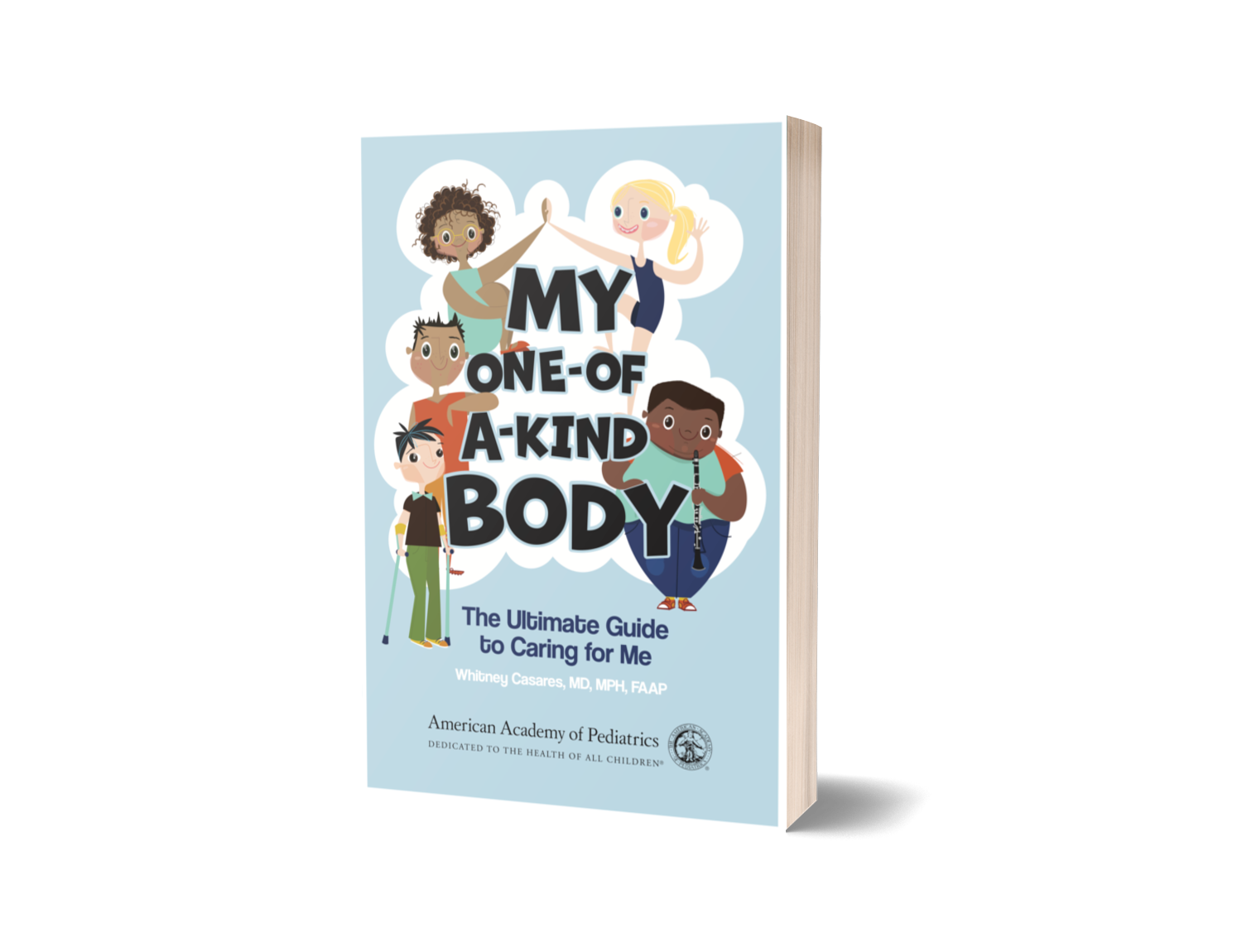
Raising Body-Confident Kids Starts at the Doctor's Office!

START NOW
By Dr. Whitney December 17, 2025
About the Episode: In this episode, Dr. Whitney sits down with Dr. Jay Gargus and Dave Justus from NeuroQure to discuss the power of early clarity when it comes to autism detection and why earlier intervention can fundamentally change outcomes for childre n and families. Dr. Gargus explains the science behind early behavioral therapies and why their impact goes far beyond short-term skill-building. Research shows that early, evidence-based interventions can lead to measurable, lifelong improvements in IQ, so cial skills, independence, and educational placement, often determining whether a child can thrive in mainstream education or requires ongoing specialized support. The conversation also tackles a critical and often overlooked issue: access. Dave Justus shares the personal motivation behind NeuroQure’s work and explains why the test is being launched at cost, with installment plans and employer subsidies, while the team works toward insurance coverage. The goal is to prevent families from losing precious years waiting for answers. Together, they emphasize a hopeful message for parents: families don’t need to wait for a future “silver bullet.” We already have therapies that work and getting kids connected to them earlier can change the course of a lifetime. In this episode, we discuss: Why early autism detection leads to lifelong changes—not just short-term gains What a 17-point IQ difference actually means for education, independence, and quality of life How early intervention can shift developmental trajectories as early as 6 months The science and validation behind current autism therapies Why NeuroQure is pricing testing at cost while pursuing insurance coverage How early clarity can reduce long-term strain on families, schools, and healthcare systems This episode is a powerful reminder that timing matters and that early access to answers can make an extraordinary difference for children and the families who love them. About Our Guest: Dr. Jay Gargus, MD, PhD is a physician-scientist and nationally recognized expert in neurodevelopmental disorders, with decades of experience researching the biological underpinnings of autism. His work has focused on translating well-established science into meaningful, real-world interventions that can improve lifelong outcomes for children. Dr. Gargus emphasizes that early, evidence-based therapies are already available—and that connecting families to them sooner can fundamentally change developmental trajectories. Dave Justus is a parent and the founder of NeuroQure, whose work is driven by personal experience navigating delayed autism diagnosis and intervention. Motivated by the belief that early clarity can spare families years of uncertainty, Dave is focused on expanding access to early testing through cost-based pricing and ongoing efforts to secure insurance coverage. His mission is simple but powerful: ensure families don’t have to wait for answers that could change everything. Want to Start Raising Body-Confident Kids Today? 📘 Order the Book Order your copy of My One-of-a-Kind Body 👉 www.raisingbodyconfidentkids.com/books 🎁 Claim Your Free Bonus When you order on our site, you’ll also get access to a FREE video mini-course with five bite-sized lessons for parents. In just 25 minutes, you’ll walk away with: Simple, script-style ways to respond when your kid says, “I hate my thighs” How to talk about health without weight talk What to do when your own inner critic shows up How to interrupt diet culture at home The first step to raising a body-confident kid, even if you didn’t grow up as one 📩 Subscribe to The Modern Mommy Doc Podcast for more episodes on parenting with confidence and clarity. Leave a review using the hashtag #ModernMommyDoc.
By Dr. Whitney November 13, 2025
Stop being so busy, and start being more present.
By Dr. Whitney November 5, 2025
Starting out right with solids doesn't have to be so scary.
By Dr. Whitney October 29, 2025
What if YOU are the one who needs to calm down first?

Welcome! Get the information you need to win at parenting without losing yourself.

LEARN MORE

My Kids' Book on Body Confidence is Finally Here!


Wish your partner would do more to lessen your mental load?


Want to make self-care a priority but not sure how to?


SIGN UP FOR SUSTAINABLE SELF-CARE. IT'S FREE. CLICK HERE


FRESH

ON THE PODCAST


By Dr. Whitney December 17, 2025
About the Episode: In this episode, Dr. Whitney sits down with Dr. Jay Gargus and Dave Justus from NeuroQure to discuss the power of early clarity when it comes to autism detection and why earlier intervention can fundamentally change outcomes for childre n and families. Dr. Gargus explains the science behind early behavioral therapies and why their impact goes far beyond short-term skill-building. Research shows that early, evidence-based interventions can lead to measurable, lifelong improvements in IQ, so cial skills, independence, and educational placement, often determining whether a child can thrive in mainstream education or requires ongoing specialized support. The conversation also tackles a critical and often overlooked issue: access. Dave Justus shares the personal motivation behind NeuroQure’s work and explains why the test is being launched at cost, with installment plans and employer subsidies, while the team works toward insurance coverage. The goal is to prevent families from losing precious years waiting for answers. Together, they emphasize a hopeful message for parents: families don’t need to wait for a future “silver bullet.” We already have therapies that work and getting kids connected to them earlier can change the course of a lifetime. In this episode, we discuss: Why early autism detection leads to lifelong changes—not just short-term gains What a 17-point IQ difference actually means for education, independence, and quality of life How early intervention can shift developmental trajectories as early as 6 months The science and validation behind current autism therapies Why NeuroQure is pricing testing at cost while pursuing insurance coverage How early clarity can reduce long-term strain on families, schools, and healthcare systems This episode is a powerful reminder that timing matters and that early access to answers can make an extraordinary difference for children and the families who love them. About Our Guest: Dr. Jay Gargus, MD, PhD is a physician-scientist and nationally recognized expert in neurodevelopmental disorders, with decades of experience researching the biological underpinnings of autism. His work has focused on translating well-established science into meaningful, real-world interventions that can improve lifelong outcomes for children. Dr. Gargus emphasizes that early, evidence-based therapies are already available—and that connecting families to them sooner can fundamentally change developmental trajectories. Dave Justus is a parent and the founder of NeuroQure, whose work is driven by personal experience navigating delayed autism diagnosis and intervention. Motivated by the belief that early clarity can spare families years of uncertainty, Dave is focused on expanding access to early testing through cost-based pricing and ongoing efforts to secure insurance coverage. His mission is simple but powerful: ensure families don’t have to wait for answers that could change everything. Want to Start Raising Body-Confident Kids Today? 📘 Order the Book Order your copy of My One-of-a-Kind Body 👉 www.raisingbodyconfidentkids.com/books 🎁 Claim Your Free Bonus When you order on our site, you’ll also get access to a FREE video mini-course with five bite-sized lessons for parents. In just 25 minutes, you’ll walk away with: Simple, script-style ways to respond when your kid says, “I hate my thighs” How to talk about health without weight talk What to do when your own inner critic shows up How to interrupt diet culture at home The first step to raising a body-confident kid, even if you didn’t grow up as one 📩 Subscribe to The Modern Mommy Doc Podcast for more episodes on parenting with confidence and clarity. Leave a review using the hashtag #ModernMommyDoc.
By Dr. Whitney November 13, 2025
Stop being so busy, and start being more present.