MMD BLOG


CATEGORY:

Hot Mess Moms

ONLY SELF-WORTH WILL SAVE YOU

 Modern Mommy Doc


PUBLICATION DATE:

January 11, 2024

ONLY SELF-WORTH WILL SAVE YOU

 Modern Mommy Doc

CATEGORY: Hot Mess Moms

About Our Guest:


Whitney Casares, MD, MPH, FAAP, is a practicing board-certified pediatrician, author, speaker, and full-time working mom. Dr. Whitney is a Stanford University-trained private practice physician whose expertise spans the public health, direct patient care, and media worlds. She holds a Master of Public Health in Maternal and Child Health from The University of California, Berkeley, and a Journalism degree from California Polytechnic State University, San Luis Obispo. She is also CEO and Founder of Modern Mommy Doc and The Modern Mamas Club App.


Dr. Whitney advocates for the success of career-driven caregivers in all facets of their lives, guiding them toward increased focus, happiness, and effectiveness despite the systemic challenges and inherent biases that threaten to undermine them. She speaks nationally about her Centered Life Blueprint, which teaches working caregivers how to pay attention to what matters most amid pressure, at multibillion-dollar corporations like Adidas and Nike, and at executive-level conferences. She is a spokesperson for the American Academy of Pediatrics and medical consultant for large-scale organizations, including Good Housekeeping magazine, Gerber, and L’Oreal (CeraVe). Her work has been featured in Forbes, Thrive Global, and TODAY Parenting. She is a regular contributor to Psychology Today.


Dr. Whitney practices medicine in Portland, Oregon, where she and her husband raise their two young daughters. 


About the Episode:


In this episode, Whitney talks about the foundational piece that is missing that we must develop BEFORE we start implementing strategies for equity at home and in the workplace: self-worth. We must decide that we are worth fighting for and that we are valuable before we take on the giant systemic issue of inequity. Without it, there’s not much we’re fighting for and we’ll quickly lose steam and settle into societal norms.

Episode Takeaways:


  • There are so many great tools out there, like Eve Rodsky’s idea of Fair Play for equitable workloads in relationships, as well as the minimum standard of care, that are helping women take huge strides towards equity in their home and workplace. However, sometimes, those strategies are a great second step and what we need to do first is to change the foundational principles that are actually holding us back from making that change. In 2023, we have to take ownership of our roles as women and realize that, even in the midst of systemic issues, we are either perpetuating the way we are treated in the workplace and at home or changing the game.  We have control over certain aspects of our ability to be treated with the level of value that we actually have and bring to the table. There are 4 things we can do, no matter what our work or home situations are like, and no matter what the policies are that begin with the idea of knowing your self-worth.


  • #1 We have to be aware of the conditioning that women in America have been getting since we were little, to not be too loud or aggressive and to be a “good little girl.” In recent contract negotiations, I found myself having to really be sure of the value and contribution I bring to the table. If I wasn’t, I would fall into making sure that, ABOVE getting my worth, I was kind. That I was well liked. That no one was mad at me. I always want to bring professionalism with me in my work, but if I do all of those things in place of allowing my contributions to be fairly compensated or even acknowledged, I’m perpetuating poor treatment. For example, let’s look at the fight for work-from-home vs mandated in-office hours. In many cases, employees find that they actually are more productive at home and are able to work more efficiently, but there’s still a lot of tone-deaf pushback from employers to say that people must work from their physical locations, which generally affects women more than men. When we are aware of those inequities, we have to push past the fear that we won’t be liked or that we need to stay quiet, in order to see real change happen.


  • #2 Really dig into your self-boundary. There are all types of boundaries, such as boundaries around your time, money, or physical space. We often forget about the most important one, your self-boundary. If you have a really poor self-boundary, that means you’re willing to abandon your own needs for the sake of the team or for the sake of someone else, whose needs you’re putting above your own. Without these self-boundaries, you’re going to end up compromising your worth and it’s going to show up in your bodily symptoms (fatigue, headache, anxiety), usually at a pretty inconvenient time.


  • #3 Treat yourself with self-compassion, which is the idea that you deserve to treat yourself the same way you would your best friend–with compassion and the benefit of the doubt. When you do this, you’re giving yourself grace for when you’re having a hard time, because you know you have a lot on your plate, you were overwhelmed, or because you were over-functioning. As moms, we’re usually terrible at this. Self-compassion recognizes the feelings that you’re having, validating those feelings, recognizing that you’re not alone in those feelings, and then treating yourself with as much kindness and empathy as possible. This allows you to set stronger self-boundaries and not allow people to treat you poorly, because you feel so strongly about what you’re worth and what you need.


  • #4 Patience, practice and accountability. You can practice this using some compassionate-assertive language when you’re talking with other people. It allows you to show that you have compassion for what someone is going through, but doesn’t allow you to take on the burden of what they’re unwilling to carry. You also have to have that personal accountability piece in place in order to make sure that change is continually happening, not just the one time someone is called out. We had to do this when divvying up the chores in our house. Once we brought awareness to how much of a load I was taking on, my husband eagerly helped me split our tasks. However, he didn’t really fully jump on board to be consistent, until we had our therapist following up, as well as seeing other couples modeling what they were doing as well. It became our social norm. Finally, I just have to have lots and lots of patience. It’s taken us centuries to get to this point where we’re even aware of the inequities. It’s going to take generations until we get to where we want.


More Blogs on this Topic:


More Podcast Episodes on this Topic:


Raising Body-Confident Kids Starts at the Doctor's Office!

START NOW
By Dr. Whitney December 17, 2025
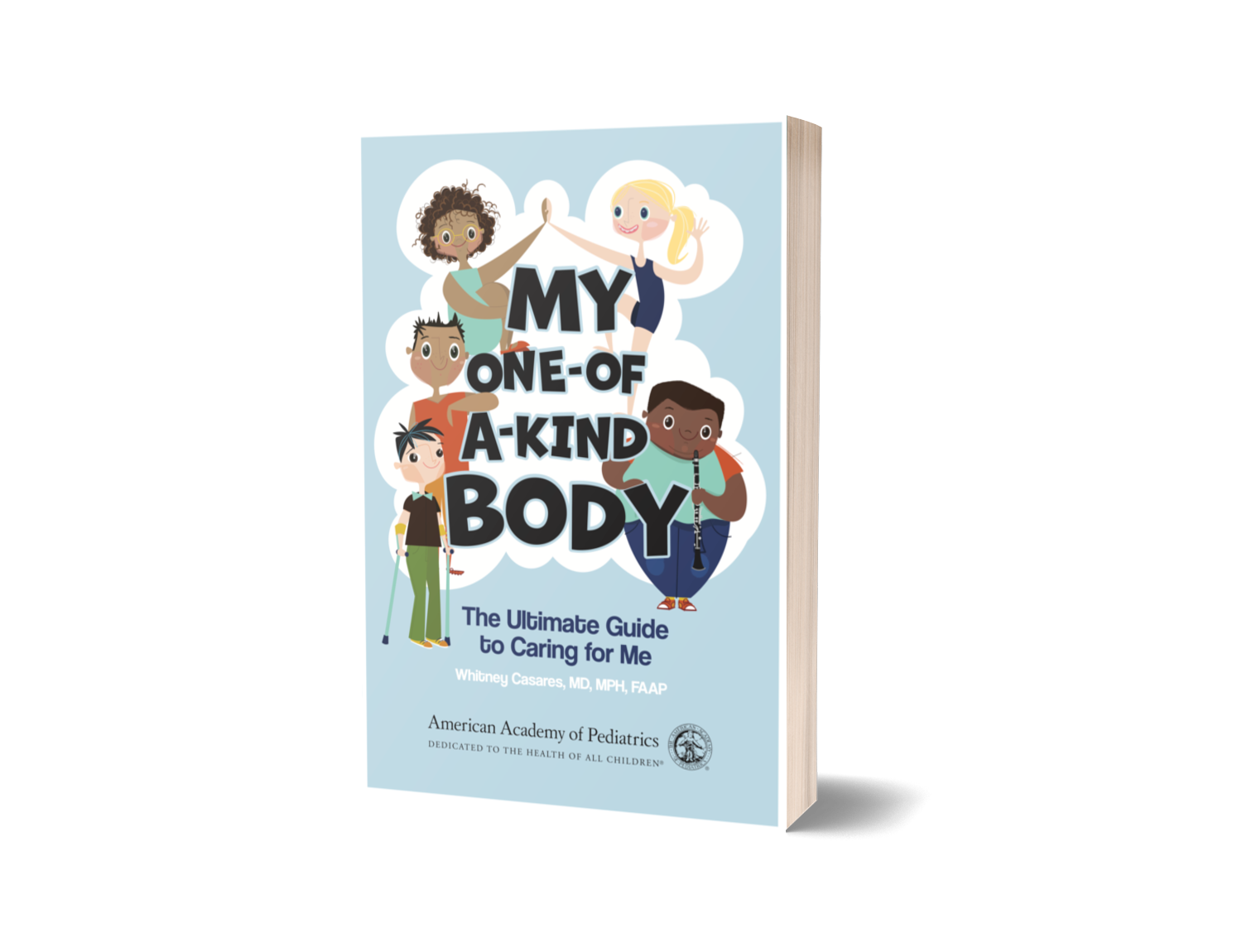
About the Episode: In this episode, Dr. Whitney sits down with Dr. Jay Gargus and Dave Justus from NeuroQure to discuss the power of early clarity when it comes to autism detection and why earlier intervention can fundamentally change outcomes for childre n and families. Dr. Gargus explains the science behind early behavioral therapies and why their impact goes far beyond short-term skill-building. Research shows that early, evidence-based interventions can lead to measurable, lifelong improvements in IQ, so cial skills, independence, and educational placement, often determining whether a child can thrive in mainstream education or requires ongoing specialized support. The conversation also tackles a critical and often overlooked issue: access. Dave Justus shares the personal motivation behind NeuroQure’s work and explains why the test is being launched at cost, with installment plans and employer subsidies, while the team works toward insurance coverage. The goal is to prevent families from losing precious years waiting for answers. Together, they emphasize a hopeful message for parents: families don’t need to wait for a future “silver bullet.” We already have therapies that work and getting kids connected to them earlier can change the course of a lifetime. In this episode, we discuss: Why early autism detection leads to lifelong changes—not just short-term gains What a 17-point IQ difference actually means for education, independence, and quality of life How early intervention can shift developmental trajectories as early as 6 months The science and validation behind current autism therapies Why NeuroQure is pricing testing at cost while pursuing insurance coverage How early clarity can reduce long-term strain on families, schools, and healthcare systems This episode is a powerful reminder that timing matters and that early access to answers can make an extraordinary difference for children and the families who love them. About Our Guest: Dr. Jay Gargus, MD, PhD is a physician-scientist and nationally recognized expert in neurodevelopmental disorders, with decades of experience researching the biological underpinnings of autism. His work has focused on translating well-established science into meaningful, real-world interventions that can improve lifelong outcomes for children. Dr. Gargus emphasizes that early, evidence-based therapies are already available—and that connecting families to them sooner can fundamentally change developmental trajectories. Dave Justus is a parent and the founder of NeuroQure, whose work is driven by personal experience navigating delayed autism diagnosis and intervention. Motivated by the belief that early clarity can spare families years of uncertainty, Dave is focused on expanding access to early testing through cost-based pricing and ongoing efforts to secure insurance coverage. His mission is simple but powerful: ensure families don’t have to wait for answers that could change everything. Want to Start Raising Body-Confident Kids Today? 📘 Order the Book Order your copy of My One-of-a-Kind Body 👉 www.raisingbodyconfidentkids.com/books 🎁 Claim Your Free Bonus When you order on our site, you’ll also get access to a FREE video mini-course with five bite-sized lessons for parents. In just 25 minutes, you’ll walk away with: Simple, script-style ways to respond when your kid says, “I hate my thighs” How to talk about health without weight talk What to do when your own inner critic shows up How to interrupt diet culture at home The first step to raising a body-confident kid, even if you didn’t grow up as one 📩 Subscribe to The Modern Mommy Doc Podcast for more episodes on parenting with confidence and clarity. Leave a review using the hashtag #ModernMommyDoc.
By Dr. Whitney November 13, 2025
Stop being so busy, and start being more present.
By Dr. Whitney November 5, 2025
Starting out right with solids doesn't have to be so scary.
By Dr. Whitney October 29, 2025
What if YOU are the one who needs to calm down first?

Welcome! Get the information you need to win at parenting without losing yourself.

LEARN MORE

My Kids' Book on Body Confidence is Finally Here!


Wish your partner would do more to lessen your mental load?


Want to make self-care a priority but not sure how to?


SIGN UP FOR SUSTAINABLE SELF-CARE. IT'S FREE. CLICK HERE


FRESH

ON THE PODCAST


By Dr. Whitney December 17, 2025
About the Episode: In this episode, Dr. Whitney sits down with Dr. Jay Gargus and Dave Justus from NeuroQure to discuss the power of early clarity when it comes to autism detection and why earlier intervention can fundamentally change outcomes for childre n and families. Dr. Gargus explains the science behind early behavioral therapies and why their impact goes far beyond short-term skill-building. Research shows that early, evidence-based interventions can lead to measurable, lifelong improvements in IQ, so cial skills, independence, and educational placement, often determining whether a child can thrive in mainstream education or requires ongoing specialized support. The conversation also tackles a critical and often overlooked issue: access. Dave Justus shares the personal motivation behind NeuroQure’s work and explains why the test is being launched at cost, with installment plans and employer subsidies, while the team works toward insurance coverage. The goal is to prevent families from losing precious years waiting for answers. Together, they emphasize a hopeful message for parents: families don’t need to wait for a future “silver bullet.” We already have therapies that work and getting kids connected to them earlier can change the course of a lifetime. In this episode, we discuss: Why early autism detection leads to lifelong changes—not just short-term gains What a 17-point IQ difference actually means for education, independence, and quality of life How early intervention can shift developmental trajectories as early as 6 months The science and validation behind current autism therapies Why NeuroQure is pricing testing at cost while pursuing insurance coverage How early clarity can reduce long-term strain on families, schools, and healthcare systems This episode is a powerful reminder that timing matters and that early access to answers can make an extraordinary difference for children and the families who love them. About Our Guest: Dr. Jay Gargus, MD, PhD is a physician-scientist and nationally recognized expert in neurodevelopmental disorders, with decades of experience researching the biological underpinnings of autism. His work has focused on translating well-established science into meaningful, real-world interventions that can improve lifelong outcomes for children. Dr. Gargus emphasizes that early, evidence-based therapies are already available—and that connecting families to them sooner can fundamentally change developmental trajectories. Dave Justus is a parent and the founder of NeuroQure, whose work is driven by personal experience navigating delayed autism diagnosis and intervention. Motivated by the belief that early clarity can spare families years of uncertainty, Dave is focused on expanding access to early testing through cost-based pricing and ongoing efforts to secure insurance coverage. His mission is simple but powerful: ensure families don’t have to wait for answers that could change everything. Want to Start Raising Body-Confident Kids Today? 📘 Order the Book Order your copy of My One-of-a-Kind Body 👉 www.raisingbodyconfidentkids.com/books 🎁 Claim Your Free Bonus When you order on our site, you’ll also get access to a FREE video mini-course with five bite-sized lessons for parents. In just 25 minutes, you’ll walk away with: Simple, script-style ways to respond when your kid says, “I hate my thighs” How to talk about health without weight talk What to do when your own inner critic shows up How to interrupt diet culture at home The first step to raising a body-confident kid, even if you didn’t grow up as one 📩 Subscribe to The Modern Mommy Doc Podcast for more episodes on parenting with confidence and clarity. Leave a review using the hashtag #ModernMommyDoc.
By Dr. Whitney November 13, 2025
Stop being so busy, and start being more present.