MMD BLOG


CATEGORY:

PARENTING HACKS + TIPS

PARENTING TIPS | YOUR FAMILY VACATION - OR HOLIDAY TRAVEL - SUCCESS GUIDE

 Modern Mommy Doc


PUBLICATION DATE:

December 23, 2017

PARENTING TIPS | YOUR FAMILY VACATION - OR HOLIDAY TRAVEL - SUCCESS GUIDE

 Modern Mommy Doc

CATEGORY: PARENTING HACKS + TIPS

Nothing strikes fear in the hearts of fun-loving, relaxation-seeking parents like a family vacation (or a holiday trip) with babies and toddlers. So much can go right- chances for adventure, opportunities to re-connect and to re-charge. But SOOOOO much can go wrong: cranky kids (by the way, if you're looking for help with toddler tantrums, check out our free toddler tantrum guide here), flight delays, unexpected illness. It can be overwhelming to even start to consider taking your little ones on more than a local jaunt. I'm not about to spend hundreds or thousands of dollars on a leisure trip if it feels way more stressful than leisurely.


So, is it even worth it to try? Definitely!! Family vacations are an amazing way to build memories, to model self-care and to get out of your day-to-day grind with your kids.


Just make sure you follow these parenting tips on how to keep your troupe safe and sane on your family vacation:


1. Bring Help Whenever Possible. (THIS.)


When we went to Hawaii last spring with our then eight-month-old baby and three-year-old toddler, we decided to bring our nanny with us. At first, we felt really embarrassed we were planning it that way. It was a little “too rich for our blood,” my husband said. He barely mentioned it to his family when they asked how we were going to juggle both kids, two flights and our desire to actually relax once we got to our island destination.


But, after we came back, he could not contain himself about what a completely different experience we would have had without her. I’m so glad we made the decision to set aside our pride. We did the simple math on affordability and made a choice that worked for us. In the end, it cost us about $500 more on an eight-day trip to have her come along (since we would have been paying for her to care for our kids anyway during that week based on our contract with her).


This year when we go on a family vacay, we’re bringing grandma # 1 for the first week and grandma #2 for the second. It’ll be an even more cost-effective way to actually meet our trip-away goals.


I can already feel my blood pressure lowering as we arrange the details of our stay.


2. Plan Ahead for Illness and Emergencies.


Especially when you travel internationally (or to a more remote destination), don’t assume you’ll be able to find the medications or the products you need. Bring ibuprofen, acetaminophen, and diphenhydramine (Benadryl) when appropriate (plus know your child’s dose). Pack a first aid kit, plus diaper creams and a sunblock you trust. Make sure you remember a thermometer, plus the normal soaps, shampoos, and lotions your child’s body is used to. In my pediatric office. we see countless patients come back from trips with skin irritation and rashes from using hotel-brand products.


Before you go, look into how to access care in case of emergency or in case of mild illness. If you book on sites like Airbnb or Kid & Coe (an awesome site where you can find dream vacation stays designed specifically with kids’ needs in mind), take advantage of your host’s knowledge of the local area and the local healthcare system.


Get an international phone plan so you can access family or make phone calls for help if necessary. Familiarize yourself with Google Translate so, if you are stuck with a language barrier, you can communicate more effectively.



3. Pack Efficiently.


I tend to overpack. I want to make sure I have all the items I need everywhere I go. The upside? I’m ready for most anything. The downside? Usually, I can hardly find the one item I really need as I sift through all the junk I stuffed into my heavy suitcase. This year, I’ve learned to pare it down and lighten my load. It makes it easier in the car, on the airplane and throughout the airport. The less you lug and the more efficiently you lug it the better.


4. Pick An Itinerary That Matches Your Child’s Temperament.


It might sound like a good idea to travel around the world with your two-year-old and it very well might be. But if your two-year-old is temperamental (or is just typical), think it through before you buy the tickets. On a smaller scale, we have plenty of discussions in my house before a big trip about how to get from Point A to Point B with the least amount of drama. For every adult-focused activity on our vacations, we plan a kid-focused activity. We know when to call it quits on our itinerary, even if we’ve already bought the museum entrance tickets and it feels like we’re wasting our hard-earned money. Dragging yourself through an experience is not a trip, it’s just annoying. No one gives out medals at the end for “Biggest Vacation Martyr.”


5. Understand That No Good Trip Goes Unpunished.


Brace yourself a little for some sleep deprivation and some minor illnesses once you come back from your vacation. If you can, plan ahead so you have a recovery day at the end of your adventure to just catch up on laundry and get the house and yourselves back in order. Anticipate you might have to use your down day to tend to things you forgot to take care of while you were away or that came up when you returned.


I love traveling with my daughters and I rarely have regrets when I think back on the trips we’ve taken as a family. Some vacations, though, have definitely been better than others. It serves us all well to plan ahead, expect some unavoidable hiccups and keep it simple as much as possible. Happy family vacationing and holiday trip planning!


Going out to eat when you're on vacation? Read more here about happy restaurant visits.

Raising Body-Confident Kids Starts at the Doctor's Office!

START NOW
By Dr. Whitney December 17, 2025
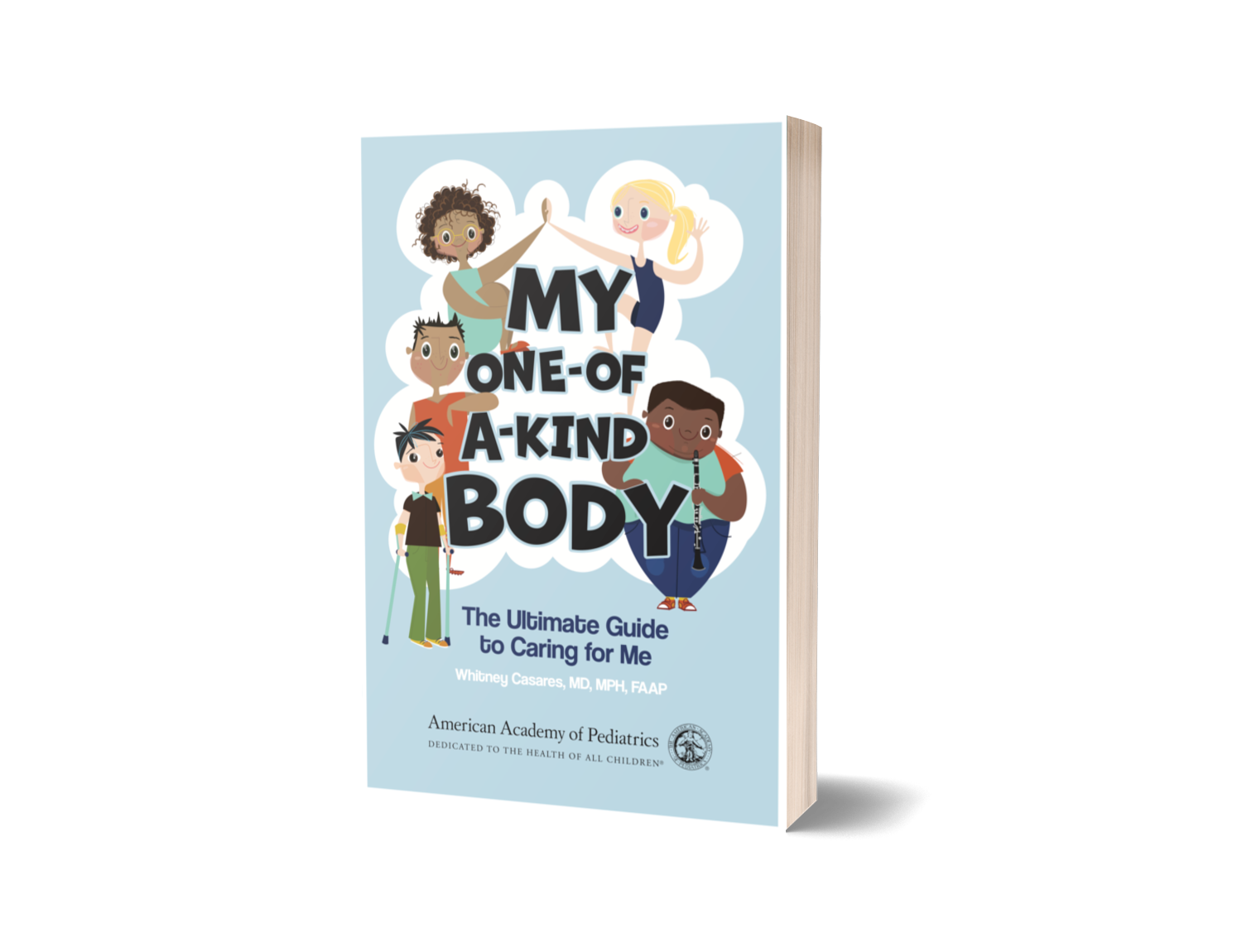
About the Episode: In this episode, Dr. Whitney sits down with Dr. Jay Gargus and Dave Justus from NeuroQure to discuss the power of early clarity when it comes to autism detection and why earlier intervention can fundamentally change outcomes for childre n and families. Dr. Gargus explains the science behind early behavioral therapies and why their impact goes far beyond short-term skill-building. Research shows that early, evidence-based interventions can lead to measurable, lifelong improvements in IQ, so cial skills, independence, and educational placement, often determining whether a child can thrive in mainstream education or requires ongoing specialized support. The conversation also tackles a critical and often overlooked issue: access. Dave Justus shares the personal motivation behind NeuroQure’s work and explains why the test is being launched at cost, with installment plans and employer subsidies, while the team works toward insurance coverage. The goal is to prevent families from losing precious years waiting for answers. Together, they emphasize a hopeful message for parents: families don’t need to wait for a future “silver bullet.” We already have therapies that work and getting kids connected to them earlier can change the course of a lifetime. In this episode, we discuss: Why early autism detection leads to lifelong changes—not just short-term gains What a 17-point IQ difference actually means for education, independence, and quality of life How early intervention can shift developmental trajectories as early as 6 months The science and validation behind current autism therapies Why NeuroQure is pricing testing at cost while pursuing insurance coverage How early clarity can reduce long-term strain on families, schools, and healthcare systems This episode is a powerful reminder that timing matters and that early access to answers can make an extraordinary difference for children and the families who love them. About Our Guest: Dr. Jay Gargus, MD, PhD is a physician-scientist and nationally recognized expert in neurodevelopmental disorders, with decades of experience researching the biological underpinnings of autism. His work has focused on translating well-established science into meaningful, real-world interventions that can improve lifelong outcomes for children. Dr. Gargus emphasizes that early, evidence-based therapies are already available—and that connecting families to them sooner can fundamentally change developmental trajectories. Dave Justus is a parent and the founder of NeuroQure, whose work is driven by personal experience navigating delayed autism diagnosis and intervention. Motivated by the belief that early clarity can spare families years of uncertainty, Dave is focused on expanding access to early testing through cost-based pricing and ongoing efforts to secure insurance coverage. His mission is simple but powerful: ensure families don’t have to wait for answers that could change everything. Want to Start Raising Body-Confident Kids Today? 📘 Order the Book Order your copy of My One-of-a-Kind Body 👉 www.raisingbodyconfidentkids.com/books 🎁 Claim Your Free Bonus When you order on our site, you’ll also get access to a FREE video mini-course with five bite-sized lessons for parents. In just 25 minutes, you’ll walk away with: Simple, script-style ways to respond when your kid says, “I hate my thighs” How to talk about health without weight talk What to do when your own inner critic shows up How to interrupt diet culture at home The first step to raising a body-confident kid, even if you didn’t grow up as one 📩 Subscribe to The Modern Mommy Doc Podcast for more episodes on parenting with confidence and clarity. Leave a review using the hashtag #ModernMommyDoc.
By Dr. Whitney November 13, 2025
Stop being so busy, and start being more present.
By Dr. Whitney November 5, 2025
Starting out right with solids doesn't have to be so scary.
By Dr. Whitney October 29, 2025
What if YOU are the one who needs to calm down first?

Welcome! Get the information you need to win at parenting without losing yourself.

LEARN MORE

My Kids' Book on Body Confidence is Finally Here!


Wish your partner would do more to lessen your mental load?


Want to make self-care a priority but not sure how to?


SIGN UP FOR SUSTAINABLE SELF-CARE. IT'S FREE. CLICK HERE


FRESH

ON THE PODCAST


By Dr. Whitney December 17, 2025
About the Episode: In this episode, Dr. Whitney sits down with Dr. Jay Gargus and Dave Justus from NeuroQure to discuss the power of early clarity when it comes to autism detection and why earlier intervention can fundamentally change outcomes for childre n and families. Dr. Gargus explains the science behind early behavioral therapies and why their impact goes far beyond short-term skill-building. Research shows that early, evidence-based interventions can lead to measurable, lifelong improvements in IQ, so cial skills, independence, and educational placement, often determining whether a child can thrive in mainstream education or requires ongoing specialized support. The conversation also tackles a critical and often overlooked issue: access. Dave Justus shares the personal motivation behind NeuroQure’s work and explains why the test is being launched at cost, with installment plans and employer subsidies, while the team works toward insurance coverage. The goal is to prevent families from losing precious years waiting for answers. Together, they emphasize a hopeful message for parents: families don’t need to wait for a future “silver bullet.” We already have therapies that work and getting kids connected to them earlier can change the course of a lifetime. In this episode, we discuss: Why early autism detection leads to lifelong changes—not just short-term gains What a 17-point IQ difference actually means for education, independence, and quality of life How early intervention can shift developmental trajectories as early as 6 months The science and validation behind current autism therapies Why NeuroQure is pricing testing at cost while pursuing insurance coverage How early clarity can reduce long-term strain on families, schools, and healthcare systems This episode is a powerful reminder that timing matters and that early access to answers can make an extraordinary difference for children and the families who love them. About Our Guest: Dr. Jay Gargus, MD, PhD is a physician-scientist and nationally recognized expert in neurodevelopmental disorders, with decades of experience researching the biological underpinnings of autism. His work has focused on translating well-established science into meaningful, real-world interventions that can improve lifelong outcomes for children. Dr. Gargus emphasizes that early, evidence-based therapies are already available—and that connecting families to them sooner can fundamentally change developmental trajectories. Dave Justus is a parent and the founder of NeuroQure, whose work is driven by personal experience navigating delayed autism diagnosis and intervention. Motivated by the belief that early clarity can spare families years of uncertainty, Dave is focused on expanding access to early testing through cost-based pricing and ongoing efforts to secure insurance coverage. His mission is simple but powerful: ensure families don’t have to wait for answers that could change everything. Want to Start Raising Body-Confident Kids Today? 📘 Order the Book Order your copy of My One-of-a-Kind Body 👉 www.raisingbodyconfidentkids.com/books 🎁 Claim Your Free Bonus When you order on our site, you’ll also get access to a FREE video mini-course with five bite-sized lessons for parents. In just 25 minutes, you’ll walk away with: Simple, script-style ways to respond when your kid says, “I hate my thighs” How to talk about health without weight talk What to do when your own inner critic shows up How to interrupt diet culture at home The first step to raising a body-confident kid, even if you didn’t grow up as one 📩 Subscribe to The Modern Mommy Doc Podcast for more episodes on parenting with confidence and clarity. Leave a review using the hashtag #ModernMommyDoc.
By Dr. Whitney November 13, 2025
Stop being so busy, and start being more present.