MMD BLOG


CATEGORY:

PARENTING + KIDS

RAISING CHILDREN | THE REAL MEASURE OF SUCCESS...AND HOW TO HELP YOUR KIDS ATTAIN IT

 Modern Mommy Doc


PUBLICATION DATE:

December 22, 2017

RAISING CHILDREN | THE REAL MEASURE OF SUCCESS...AND HOW TO HELP YOUR KIDS ATTAIN IT

 Modern Mommy Doc

CATEGORY: PARENTING + KIDS

We all want our kids to be successful - to be a leap ahead. Not ahead of every other kid, necessarily, but to their full potential. This is all a part of raising children.


So, how do we do it? And how do we achieve it (even more importantly) without making them stressed-out and overwhelmed in the process (by the way, if you have toddlers who tend to act out when they're stressed, check out our free toddler tantrum guide here)?


1. First Get a Grip On Your Parenting Goals and Philosophy


Is my goal to have my daughters be doctors like me? Why? Because that sounds successful? Not a good enough reason. Is my number one focus for them to be accepted into some highly-acclaimed academic institution? For what purpose? I have to check in with myself about my own motivations.


Instead, I try to make it my goal to raise daughters who 1. Are well-adjusted, self-sufficient, confident adults 2. Who love what they do-no matter what that is and 3. Who understand that they have to work hard to achieve their dreams. That is the REAL measure of success.


2. Allow Time for Imaginative Play To Foster A Love of Learning 


Just because I’m not gunning for Ivy-League admittance for my kids (not that it would be bad if they ended up there, it just isn’t my focus), it doesn’t mean I don’t look for educational opportunities every day. In fact, I do a lot of that. But my main goal with the activities is that my kids totally nerd out on whatever it is that THEY think is really cool, even if it's not in my interest area. I also make sure that they have plenty of free time to play without structure.


For example, my almost four-year-old is on a Julia Child kick these days. We stumbled upon some old In Julia’s Kitchen With Master Chefs episodes and she was hooked after one show. I noticed that, soon after she started watching, she asked me to pull out ingredients from the cupboard and began making little concoctions with them. At first, I asked if she was interested in an Easy Bake Oven, or some other way to actually cook food but she looked at me, appalled, when I suggested it.


“Mommy, these are experiments, NOT meals.”


No problem, kiddo.


She then proceeded to narrate her addition of the baking soda to the vinegar (“Ooh, look how it bubbles! It’s making a frothy foam”) and every single other ingredient she added in. She sounded like she was a cooking show host but, apparently, she imagined she was the star of a fancy chemistry presentation.


The counters were a mess. We probably wasted $20 in flour and salt, but she was so content as her little imagination soared. The next time we were at the library, she wanted to know if there were books about other types of mixtures - paints, dirt and water, other types of foods. It was a little magical.


3. Provide Age-Appropriate Learning Opportunities That Allow Kids To Build Competence and Confidence (But Don’t Overdo It). 


I care about keeping my priorities straight but I also care about stimulating my daughters’ little neural pathways . In the process of fostering a love of learning, I have to make sure to simplify so we don't get too overwhelmed.


Why? I’ve seen the effect of over-scheduling kids over and over in my office. The kids are so frantic and so are their parents.



Instead, I recommend focusing on one or two weekly non-school activities per kid per season (3 max!).


Mix it up while they are young, if possible, unless they find something THEY love that they want to stick with. If you can, find one active activity and one more “academic” or community option (think music class, art class). For older kids, let THEM choose from a handful of options, versus demanding that they be involved with a specific activity you really care about. If the coach/teacher is a bad fit, that’s one thing but, if at all possible, try to stick with whichever activity you choose through the season, then switch it up if it’s not working out so you can help foster a little perseverance and commitment.


4. Model Resilience and a Growth Mindset 


Allow your kids to see you fail and to rebound from your failures. Use family dinner times to talk about the best parts of your day but also about the challenges you faced and the ways you overcame them. Have your kids, when they are old enough, share their “Rose and Thorn Of The Day” as well. Work on letting them figure things out on their own, waiting to jump in with help until they ask you for it and, even then, assisting mostly by helping them to problem-solve the situation for themselves.


“Well, let’s see, how could you get your book back without yelling if your sister takes it?”


“I could give her another toy and ask if I could trade her.”


“I love that idea! Nice problem-solving.”


In your own work, look for ways you can adjust your attitude to consider yourself a “learner.” When you don’t do as well as you want to do, use it as an opportunity to grow as opposed to looking at each mini failure as a sign of ineptitude.


Approach your kids’ failures in the same way. “I can’t do that” is usually met with a “yet” in my house. “Did you try your best? Ok, then you did a great job!”


5. Aim For Goodness of Fit


When you get involved in activities or make choices on which schools/educational programs are best, look first at how it fits with the personality of your child. Does your child need a warm, supportive environment to thrive, even if it’s not seemingly as rigorous as another option? It might just serve you better in the long run. Does your kid need more structure and accountability? An educational program that fits that model may work better. The temperament of your child will often determine their needs and their ability to work well within the system where they go to learn every day,


A leap ahead - that's my focus for my kids and I bet it is for you, too. A leap to wherever they want to go. To whatever they want to be. To an understanding that success in life and work is not about fulfilling expectations, it's about finding the things that ultimately bring them joy and fulfillment.



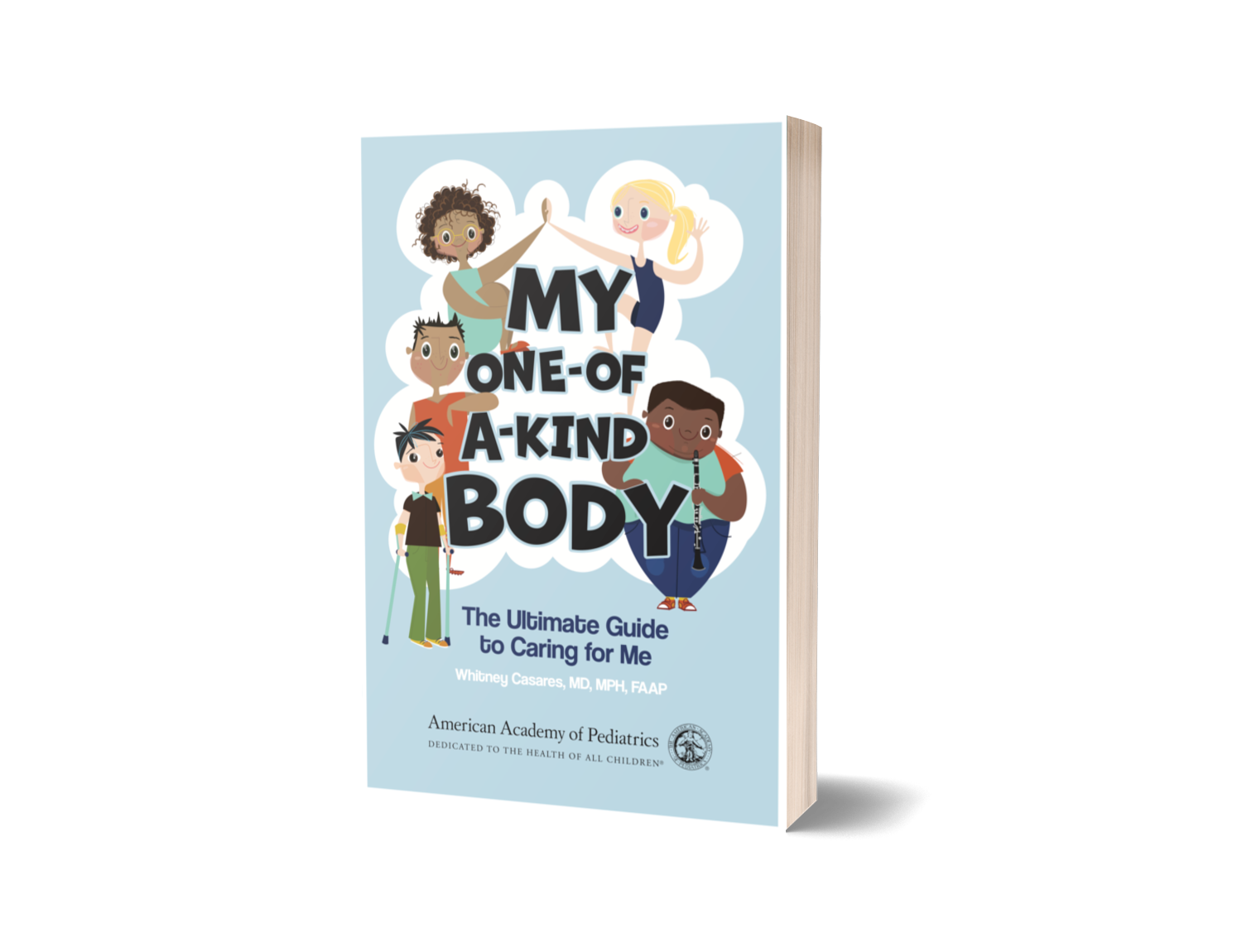
Raising Body-Confident Kids Starts at the Doctor's Office!

START NOW
By Dr. Whitney December 17, 2025
About the Episode: In this episode, Dr. Whitney sits down with Dr. Jay Gargus and Dave Justus from NeuroQure to discuss the power of early clarity when it comes to autism detection and why earlier intervention can fundamentally change outcomes for childre n and families. Dr. Gargus explains the science behind early behavioral therapies and why their impact goes far beyond short-term skill-building. Research shows that early, evidence-based interventions can lead to measurable, lifelong improvements in IQ, so cial skills, independence, and educational placement, often determining whether a child can thrive in mainstream education or requires ongoing specialized support. The conversation also tackles a critical and often overlooked issue: access. Dave Justus shares the personal motivation behind NeuroQure’s work and explains why the test is being launched at cost, with installment plans and employer subsidies, while the team works toward insurance coverage. The goal is to prevent families from losing precious years waiting for answers. Together, they emphasize a hopeful message for parents: families don’t need to wait for a future “silver bullet.” We already have therapies that work and getting kids connected to them earlier can change the course of a lifetime. In this episode, we discuss: Why early autism detection leads to lifelong changes—not just short-term gains What a 17-point IQ difference actually means for education, independence, and quality of life How early intervention can shift developmental trajectories as early as 6 months The science and validation behind current autism therapies Why NeuroQure is pricing testing at cost while pursuing insurance coverage How early clarity can reduce long-term strain on families, schools, and healthcare systems This episode is a powerful reminder that timing matters and that early access to answers can make an extraordinary difference for children and the families who love them. About Our Guest: Dr. Jay Gargus, MD, PhD is a physician-scientist and nationally recognized expert in neurodevelopmental disorders, with decades of experience researching the biological underpinnings of autism. His work has focused on translating well-established science into meaningful, real-world interventions that can improve lifelong outcomes for children. Dr. Gargus emphasizes that early, evidence-based therapies are already available—and that connecting families to them sooner can fundamentally change developmental trajectories. Dave Justus is a parent and the founder of NeuroQure, whose work is driven by personal experience navigating delayed autism diagnosis and intervention. Motivated by the belief that early clarity can spare families years of uncertainty, Dave is focused on expanding access to early testing through cost-based pricing and ongoing efforts to secure insurance coverage. His mission is simple but powerful: ensure families don’t have to wait for answers that could change everything. Want to Start Raising Body-Confident Kids Today? 📘 Order the Book Order your copy of My One-of-a-Kind Body 👉 www.raisingbodyconfidentkids.com/books 🎁 Claim Your Free Bonus When you order on our site, you’ll also get access to a FREE video mini-course with five bite-sized lessons for parents. In just 25 minutes, you’ll walk away with: Simple, script-style ways to respond when your kid says, “I hate my thighs” How to talk about health without weight talk What to do when your own inner critic shows up How to interrupt diet culture at home The first step to raising a body-confident kid, even if you didn’t grow up as one 📩 Subscribe to The Modern Mommy Doc Podcast for more episodes on parenting with confidence and clarity. Leave a review using the hashtag #ModernMommyDoc.
By Dr. Whitney November 13, 2025
Stop being so busy, and start being more present.
By Dr. Whitney November 5, 2025
Starting out right with solids doesn't have to be so scary.
By Dr. Whitney October 29, 2025
What if YOU are the one who needs to calm down first?

Welcome! Get the information you need to win at parenting without losing yourself.

LEARN MORE

My Kids' Book on Body Confidence is Finally Here!


Wish your partner would do more to lessen your mental load?


Want to make self-care a priority but not sure how to?


SIGN UP FOR SUSTAINABLE SELF-CARE. IT'S FREE. CLICK HERE


FRESH

ON THE PODCAST


By Dr. Whitney December 17, 2025
About the Episode: In this episode, Dr. Whitney sits down with Dr. Jay Gargus and Dave Justus from NeuroQure to discuss the power of early clarity when it comes to autism detection and why earlier intervention can fundamentally change outcomes for childre n and families. Dr. Gargus explains the science behind early behavioral therapies and why their impact goes far beyond short-term skill-building. Research shows that early, evidence-based interventions can lead to measurable, lifelong improvements in IQ, so cial skills, independence, and educational placement, often determining whether a child can thrive in mainstream education or requires ongoing specialized support. The conversation also tackles a critical and often overlooked issue: access. Dave Justus shares the personal motivation behind NeuroQure’s work and explains why the test is being launched at cost, with installment plans and employer subsidies, while the team works toward insurance coverage. The goal is to prevent families from losing precious years waiting for answers. Together, they emphasize a hopeful message for parents: families don’t need to wait for a future “silver bullet.” We already have therapies that work and getting kids connected to them earlier can change the course of a lifetime. In this episode, we discuss: Why early autism detection leads to lifelong changes—not just short-term gains What a 17-point IQ difference actually means for education, independence, and quality of life How early intervention can shift developmental trajectories as early as 6 months The science and validation behind current autism therapies Why NeuroQure is pricing testing at cost while pursuing insurance coverage How early clarity can reduce long-term strain on families, schools, and healthcare systems This episode is a powerful reminder that timing matters and that early access to answers can make an extraordinary difference for children and the families who love them. About Our Guest: Dr. Jay Gargus, MD, PhD is a physician-scientist and nationally recognized expert in neurodevelopmental disorders, with decades of experience researching the biological underpinnings of autism. His work has focused on translating well-established science into meaningful, real-world interventions that can improve lifelong outcomes for children. Dr. Gargus emphasizes that early, evidence-based therapies are already available—and that connecting families to them sooner can fundamentally change developmental trajectories. Dave Justus is a parent and the founder of NeuroQure, whose work is driven by personal experience navigating delayed autism diagnosis and intervention. Motivated by the belief that early clarity can spare families years of uncertainty, Dave is focused on expanding access to early testing through cost-based pricing and ongoing efforts to secure insurance coverage. His mission is simple but powerful: ensure families don’t have to wait for answers that could change everything. Want to Start Raising Body-Confident Kids Today? 📘 Order the Book Order your copy of My One-of-a-Kind Body 👉 www.raisingbodyconfidentkids.com/books 🎁 Claim Your Free Bonus When you order on our site, you’ll also get access to a FREE video mini-course with five bite-sized lessons for parents. In just 25 minutes, you’ll walk away with: Simple, script-style ways to respond when your kid says, “I hate my thighs” How to talk about health without weight talk What to do when your own inner critic shows up How to interrupt diet culture at home The first step to raising a body-confident kid, even if you didn’t grow up as one 📩 Subscribe to The Modern Mommy Doc Podcast for more episodes on parenting with confidence and clarity. Leave a review using the hashtag #ModernMommyDoc.
By Dr. Whitney November 13, 2025
Stop being so busy, and start being more present.