MMD BLOG


CATEGORY:

KIDS + PARENTING

RAISING CHILDREN | WHAT I'M DOING TO KEEP MY CHILDREN FROM BECOMING COMPLETE JERKS

 Modern Mommy Doc


PUBLICATION DATE:

December 22, 2017

RAISING CHILDREN | WHAT I'M DOING TO KEEP MY CHILDREN FROM BECOMING COMPLETE JERKS

 Modern Mommy Doc

CATEGORY: KIDS + PARENTING

It’s not looking good for my family’s gold star status chances today. One of my children is at the indoor play gym posturing for her position in line for the slide. The other is grabbing her sister’s toy out of her hands, seemingly oblivious to the shrieks of offense and horror coming from her sibling. Raising children is hard.


Cue pediatrician mom. I'm full of understanding about what’s normal at all kid ages and stages but I'm faced with the reality that MY kids are acting like complete jerks. And commence re-committing to the idea that, while perfectly-behaved kids are indeed totally overrated and totally unrealistic, it’s also my responsibility to not let them stay complete jerks their whole lives.


For me and my kids, preventing jerkdom means that, when they do act unkind or selfish, I try my best to use it as it as a learning and guiding opportunity.


Somehow, though, my authoritative parenting style (firm but loving, high expectations with consistent consequences, high level of emotional responsiveness) is often met by other parents with a lot of shock and negativity depending on the crowd.


I think it’s because, as a culture and as a generation, we’re having a hard time these days figuring out where to land on the parenting style spectrum. There’s a lot of talk about letting our kids work it out themselves, about being more hands off. While I agree that helicopter parenting is no good, I also know we can’t just let our kids run amuck.


Passive parenting is being super responsive and loving but having hardly any rules or expectations. It has its own major downfalls. Lord of the Flies didn’t turn out so well and neither will a candy shop full of tiny humans with a “me complex” left to their own devices. I’m sure your kids are perfect angels all the time but none of the other kids I’ve ever met are. Nope, the children I know need clear expectations and boundaries.


Now, can people take it too far with the whole rules and regulations thing? Can getting overly involved in every squabble hinder a kid’s ability to learn how to problem-solve on their own?


Absolutely. I’m not talking about holding your kid’s hand through every single social situation they encounter. I am saying, though, that it's our obligation to be explicit and consistent as we teach our kids values like compassion and kindness.


I’m also not saying that setting boundaries means we can’t use Positive Parenting to implement our “I Will Not Let You Become a Jerk” plan. In fact, looking at what’s behind the behavior your children exhibit (hunger, fatigue), you can guide your kids to make their own good choices. Giving realistic expectations beforehand when possible are all great tools for setting and enforcing boundaries. Tracy Cutchlow writes all about these positive parenting techniques in her book, Zero to Five.


As a pediatrician, I see my colleagues working tirelessly to impart balance in this area to the parents they meet. Encouraging parents to not be afraid TO PARENT. Almost needing to give permission to set a limit, set a boundary or set a consequence.


I’m not a perfect parent to my kids, by any means. Sometimes I look back on my parenting decisions with regret. It can be especially tricky to navigate when creating structure for a more sensitive, spirited son or daughter. Some kids, based on their temperament or personality, need more redirection or firm boundaries than others. But I do believe that passive parenting doesn’t do children any favors. And I believe that authoritarian (demanding or harsh) parenting tactics usually don’t turn out so well either. Like a bridge without rails, the path of life becomes more precarious without the security that comes from structure.


I’m trying hard to not let my kids become jerks. Even while I accept that sometimes they will be selfish and mean no matter how hard I (or they) try.


It’s our natural instinct to be selfish. Add in their limited self-regulation skills and their high sensitivity to hunger and fatigue. Now it feels like an uphill battle to get involved and hold them accountable. It’s worth it, though. In fact, their future friends, partners, and bosses all depend on the hard work we’re putting in now.


Want more? Check out our mommy self-care program here.


Know a friend who's about to welcome a new baby? Give her the gifts of information, inspiration, and a little love. Learn more about our Newborn Baby Gift Boxes here.


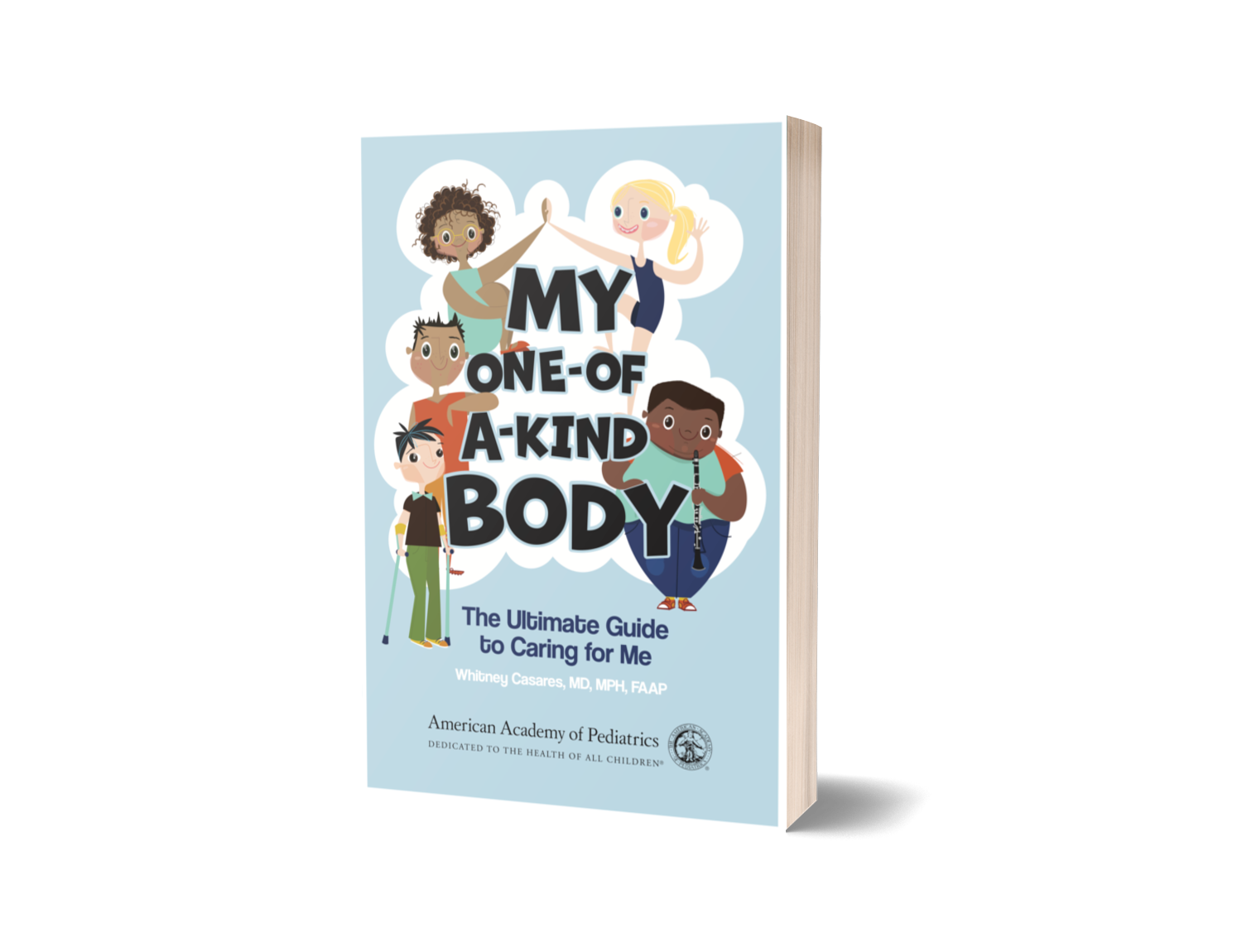
Raising Body-Confident Kids Starts at the Doctor's Office!

START NOW
By Dr. Whitney December 17, 2025
About the Episode: In this episode, Dr. Whitney sits down with Dr. Jay Gargus and Dave Justus from NeuroQure to discuss the power of early clarity when it comes to autism detection and why earlier intervention can fundamentally change outcomes for childre n and families. Dr. Gargus explains the science behind early behavioral therapies and why their impact goes far beyond short-term skill-building. Research shows that early, evidence-based interventions can lead to measurable, lifelong improvements in IQ, so cial skills, independence, and educational placement, often determining whether a child can thrive in mainstream education or requires ongoing specialized support. The conversation also tackles a critical and often overlooked issue: access. Dave Justus shares the personal motivation behind NeuroQure’s work and explains why the test is being launched at cost, with installment plans and employer subsidies, while the team works toward insurance coverage. The goal is to prevent families from losing precious years waiting for answers. Together, they emphasize a hopeful message for parents: families don’t need to wait for a future “silver bullet.” We already have therapies that work and getting kids connected to them earlier can change the course of a lifetime. In this episode, we discuss: Why early autism detection leads to lifelong changes—not just short-term gains What a 17-point IQ difference actually means for education, independence, and quality of life How early intervention can shift developmental trajectories as early as 6 months The science and validation behind current autism therapies Why NeuroQure is pricing testing at cost while pursuing insurance coverage How early clarity can reduce long-term strain on families, schools, and healthcare systems This episode is a powerful reminder that timing matters and that early access to answers can make an extraordinary difference for children and the families who love them. About Our Guest: Dr. Jay Gargus, MD, PhD is a physician-scientist and nationally recognized expert in neurodevelopmental disorders, with decades of experience researching the biological underpinnings of autism. His work has focused on translating well-established science into meaningful, real-world interventions that can improve lifelong outcomes for children. Dr. Gargus emphasizes that early, evidence-based therapies are already available—and that connecting families to them sooner can fundamentally change developmental trajectories. Dave Justus is a parent and the founder of NeuroQure, whose work is driven by personal experience navigating delayed autism diagnosis and intervention. Motivated by the belief that early clarity can spare families years of uncertainty, Dave is focused on expanding access to early testing through cost-based pricing and ongoing efforts to secure insurance coverage. His mission is simple but powerful: ensure families don’t have to wait for answers that could change everything. Want to Start Raising Body-Confident Kids Today? 📘 Order the Book Order your copy of My One-of-a-Kind Body 👉 www.raisingbodyconfidentkids.com/books 🎁 Claim Your Free Bonus When you order on our site, you’ll also get access to a FREE video mini-course with five bite-sized lessons for parents. In just 25 minutes, you’ll walk away with: Simple, script-style ways to respond when your kid says, “I hate my thighs” How to talk about health without weight talk What to do when your own inner critic shows up How to interrupt diet culture at home The first step to raising a body-confident kid, even if you didn’t grow up as one 📩 Subscribe to The Modern Mommy Doc Podcast for more episodes on parenting with confidence and clarity. Leave a review using the hashtag #ModernMommyDoc.
By Dr. Whitney November 13, 2025
Stop being so busy, and start being more present.
By Dr. Whitney November 5, 2025
Starting out right with solids doesn't have to be so scary.
By Dr. Whitney October 29, 2025
What if YOU are the one who needs to calm down first?

Welcome! Get the information you need to win at parenting without losing yourself.

LEARN MORE

My Kids' Book on Body Confidence is Finally Here!


Wish your partner would do more to lessen your mental load?


Want to make self-care a priority but not sure how to?


SIGN UP FOR SUSTAINABLE SELF-CARE. IT'S FREE. CLICK HERE


FRESH

ON THE PODCAST


By Dr. Whitney December 17, 2025
About the Episode: In this episode, Dr. Whitney sits down with Dr. Jay Gargus and Dave Justus from NeuroQure to discuss the power of early clarity when it comes to autism detection and why earlier intervention can fundamentally change outcomes for childre n and families. Dr. Gargus explains the science behind early behavioral therapies and why their impact goes far beyond short-term skill-building. Research shows that early, evidence-based interventions can lead to measurable, lifelong improvements in IQ, so cial skills, independence, and educational placement, often determining whether a child can thrive in mainstream education or requires ongoing specialized support. The conversation also tackles a critical and often overlooked issue: access. Dave Justus shares the personal motivation behind NeuroQure’s work and explains why the test is being launched at cost, with installment plans and employer subsidies, while the team works toward insurance coverage. The goal is to prevent families from losing precious years waiting for answers. Together, they emphasize a hopeful message for parents: families don’t need to wait for a future “silver bullet.” We already have therapies that work and getting kids connected to them earlier can change the course of a lifetime. In this episode, we discuss: Why early autism detection leads to lifelong changes—not just short-term gains What a 17-point IQ difference actually means for education, independence, and quality of life How early intervention can shift developmental trajectories as early as 6 months The science and validation behind current autism therapies Why NeuroQure is pricing testing at cost while pursuing insurance coverage How early clarity can reduce long-term strain on families, schools, and healthcare systems This episode is a powerful reminder that timing matters and that early access to answers can make an extraordinary difference for children and the families who love them. About Our Guest: Dr. Jay Gargus, MD, PhD is a physician-scientist and nationally recognized expert in neurodevelopmental disorders, with decades of experience researching the biological underpinnings of autism. His work has focused on translating well-established science into meaningful, real-world interventions that can improve lifelong outcomes for children. Dr. Gargus emphasizes that early, evidence-based therapies are already available—and that connecting families to them sooner can fundamentally change developmental trajectories. Dave Justus is a parent and the founder of NeuroQure, whose work is driven by personal experience navigating delayed autism diagnosis and intervention. Motivated by the belief that early clarity can spare families years of uncertainty, Dave is focused on expanding access to early testing through cost-based pricing and ongoing efforts to secure insurance coverage. His mission is simple but powerful: ensure families don’t have to wait for answers that could change everything. Want to Start Raising Body-Confident Kids Today? 📘 Order the Book Order your copy of My One-of-a-Kind Body 👉 www.raisingbodyconfidentkids.com/books 🎁 Claim Your Free Bonus When you order on our site, you’ll also get access to a FREE video mini-course with five bite-sized lessons for parents. In just 25 minutes, you’ll walk away with: Simple, script-style ways to respond when your kid says, “I hate my thighs” How to talk about health without weight talk What to do when your own inner critic shows up How to interrupt diet culture at home The first step to raising a body-confident kid, even if you didn’t grow up as one 📩 Subscribe to The Modern Mommy Doc Podcast for more episodes on parenting with confidence and clarity. Leave a review using the hashtag #ModernMommyDoc.
By Dr. Whitney November 13, 2025
Stop being so busy, and start being more present.