MMD BLOG


CATEGORY:

SELF-CARE

SCHEDULING SELF-CARE IN A SUSTAINABLE WAY

 Modern Mommy Doc


PUBLICATION DATE:

September 4, 2020

SCHEDULING SELF-CARE IN A SUSTAINABLE WAY

 Modern Mommy Doc

CATEGORY: SELF-CARE

Earlier this week, I had a hard day in my pediatric office. I was on my game, trying my best, providing the best care possible. It didn’t matter. When you’re a pediatrician you deal with sick kids and their understandably anxious parents day in and day out, making a few hard ones here and there inevitable. My medical assistant and I hustled as we tried to make sure everyone was taken care of. 


We spent all day seeing well and unwell kids, making phone calls to specialists, and rearranging schedules when patients came late, needed more time, or had extra questions. Despite our best efforts and our commitment to top-notch customer service, stressors and time constraints meant we couldn’t please everyone perfectly. I kept up my determination to stay present and mindful, though, looking for opportunities to make connections, set realistic expectations, and think ahead about potential dissatisfiers. My assistant and I weren’t perfect but we were proud of ourselves as we ended the day. 


By the time 6 p.m. rolled around and I shut down my computer, I was exhausted. 


I headed home, letting my early 2000s throwback playlist melt away the day. It was time to get myself out of work mode and back into family mode because, even though the day had been hard, my kids didn’t know that…and they wouldn’t fully understand it if I showed up irritated and weary when I walked through the door. I mean, they would have said they were sorry for me if I had laid out the whole day’s events for them, but they have their own needs at the end of the day—a need to connect with the working parents they’ve been separated from for the last 9 hours. It’s not up to them to take up less space in my life when work threatens to take up way too much. 


I let Justin Timberlake ease the day’s pains as I cruised down the freeway. 


The door opened as I turned the handle and two excited voices shouted, “Mom’s home!” As my eldest read to me proudly from her chapter book and showed me her “Life Cycle of a Mealworm” art project (oh, how I miss first grade) and my youngest climbed into my lap, I felt my body sinking into my chair—no longer from fatigue but rather from relief. I was back to my happy place. Work can be my happy place, too, but on that day, Home won hands down.


Why didn’t I feel even more tired as two more souls started scrambling for my attention and begging for my focus? Why did that energize and calm me, all at the same time? Because, my friend, knowing that chaos is inevitable in my work life and in my home life, I planned ahead. I took the time I needed that morning before the day got going to take care of myself. I prioritized self-care preemptively because I knew that I would be taking care of everyone else later on. 


A Self-Care Schedule You’ll Stick With


I follow a set self-care schedule. It’s even on my calendar. I attend my self-care appointments just like I would any other appointment. 


That’s why, at 6 am that morning, I was at the gym, riding on a stationary bike to Lizzo, the lights turned down low, the music turned up loud, my heart beating strong in my chest, covered in sweat, feeling alive.


This is not about self-indulgence— taking care of ourselves is not just talking about massages and pedicures (or even lively exercise classes), though those are really amazing when they happen. This is also not about putting another thing on our to-do lists, something to check off or add to our mental overload. This is about getting intentional around taking dedicated time to stop, regroup, and refocus before moving on to yet another obligation or commitment that is about everything and everyone else in your life but you


What is something you can do about every other day, almost every single week to take care of yourself? Of course, there are weeks you may do absolutely nothing for yourself, but if you can commit to three times a week most weeks, it will be often enough that you stick with it and it will become a routine. If you can get to your activity more often, awesome, but three times a week is a great start.


I schedule my self-care this way:

  • One weekend morning
  • One weekday evening or weekday morning when my husband is with our kids
  • One weekday evening or weekday morning when a caretaker is with our kids


I’ll be honest. I have weeks where none of these three days happen. There are days I have to squeeze time in for myself at the very end of the day. Still, I come back to this schedule time and time again. Remember, this is not about checking off boxes. This is about thinking about how much time you’re willing to give yourself and what you would do with that time if you had it.


Exercise is the activity I choose most often for my “self-care appointments.”


Physical fitness can give you the chance to deepen your social connections, be mindful, and set goals for yourself. Meditation also checks many of those same boxes but there is something valuable in moving our bodies as a way to clear the mental and physical cobwebs away.


Maybe exercise is not your thing. My husband prefers setting aside time to go to football games with his buddies or heading out to a restaurant with close friends. Your version of self-care could be sitting quietly looking out at a view or at a coffee shop reading a magazine. Choose a routine that works for you, not that fits other’s expectations or sounds good to everyone else. This is not about them, it’s one hundred and eighty percent about you.


My self-care schedule takes six hours a week, sometimes less, but it makes all the difference in the world. And, I find the more I commit to spending a few regular, dedicated hours on myself throughout the week, the easier it is to find other opportunities, even small moments, to slow down and focus in so I can continue to keep pace with my life (for more on how to simplify things so the pace of your life isn’t so fast, click here). 


Is Self-Care Selfish?


You may be thinking (or have been taught by someone else) that taking care of yourself, especially as you mother, is selfish or frivolous, but we all know that’s just not true. Self-care is about survival. I know I get antsy, anxious, and downright ornery when I don’t have enough breaks. As moms, we’re overwhelmed and overburdened when we minimize our need to reset.


This is why I choose not to live a frantic, harried martyr’d kind of life whenever possible. Some of our stresses as moms, particularly working moms like me, are inevitable because society is still stuck in antiquated policies and paradigms. Some of our stresses won’t change because our kids are at a particularly difficult age or are struggling with something that just takes time to work through. Some are wholly dependent on our finances or a lack of support from those around us, even (more than occasionally) those who co-parent with us. So many of our stressors, though, can be mitigated by prioritizing well and by taking control of the way we use our time and resources


The Best Moments Deserve Our Best Focus


I don’t want the best moments of my life, the ones I’ll remember forever, to be lost to glazed eyes and exhaustion. I don’t want to give myself or my kids my leftovers, the dregs of my day, the crumbs that are left after I take care of everything else. Let’s be intentional enough with our time so we don’t miss out on the moments that matter. 



NEED A SUSTAINABLE

SELF-CARE PLAN?


Click below to learn the four keys to sustainable

self-care so you can be the best you for yourself and for your family.



SIGN UP NOW

Raising Body-Confident Kids Starts at the Doctor's Office!

START NOW
By Dr. Whitney December 17, 2025
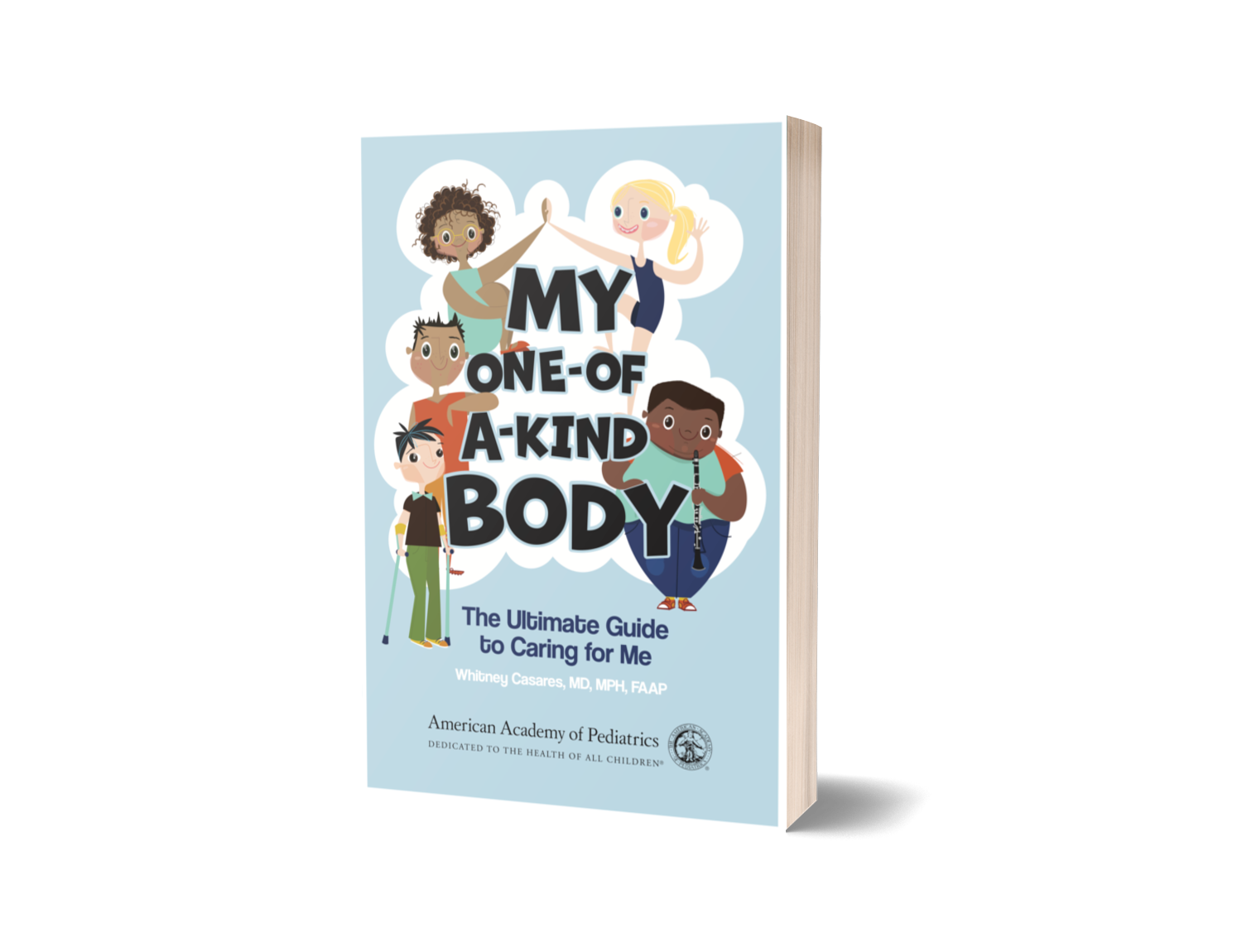
About the Episode: In this episode, Dr. Whitney sits down with Dr. Jay Gargus and Dave Justus from NeuroQure to discuss the power of early clarity when it comes to autism detection and why earlier intervention can fundamentally change outcomes for childre n and families. Dr. Gargus explains the science behind early behavioral therapies and why their impact goes far beyond short-term skill-building. Research shows that early, evidence-based interventions can lead to measurable, lifelong improvements in IQ, so cial skills, independence, and educational placement, often determining whether a child can thrive in mainstream education or requires ongoing specialized support. The conversation also tackles a critical and often overlooked issue: access. Dave Justus shares the personal motivation behind NeuroQure’s work and explains why the test is being launched at cost, with installment plans and employer subsidies, while the team works toward insurance coverage. The goal is to prevent families from losing precious years waiting for answers. Together, they emphasize a hopeful message for parents: families don’t need to wait for a future “silver bullet.” We already have therapies that work and getting kids connected to them earlier can change the course of a lifetime. In this episode, we discuss: Why early autism detection leads to lifelong changes—not just short-term gains What a 17-point IQ difference actually means for education, independence, and quality of life How early intervention can shift developmental trajectories as early as 6 months The science and validation behind current autism therapies Why NeuroQure is pricing testing at cost while pursuing insurance coverage How early clarity can reduce long-term strain on families, schools, and healthcare systems This episode is a powerful reminder that timing matters and that early access to answers can make an extraordinary difference for children and the families who love them. About Our Guest: Dr. Jay Gargus, MD, PhD is a physician-scientist and nationally recognized expert in neurodevelopmental disorders, with decades of experience researching the biological underpinnings of autism. His work has focused on translating well-established science into meaningful, real-world interventions that can improve lifelong outcomes for children. Dr. Gargus emphasizes that early, evidence-based therapies are already available—and that connecting families to them sooner can fundamentally change developmental trajectories. Dave Justus is a parent and the founder of NeuroQure, whose work is driven by personal experience navigating delayed autism diagnosis and intervention. Motivated by the belief that early clarity can spare families years of uncertainty, Dave is focused on expanding access to early testing through cost-based pricing and ongoing efforts to secure insurance coverage. His mission is simple but powerful: ensure families don’t have to wait for answers that could change everything. Want to Start Raising Body-Confident Kids Today? 📘 Order the Book Order your copy of My One-of-a-Kind Body 👉 www.raisingbodyconfidentkids.com/books 🎁 Claim Your Free Bonus When you order on our site, you’ll also get access to a FREE video mini-course with five bite-sized lessons for parents. In just 25 minutes, you’ll walk away with: Simple, script-style ways to respond when your kid says, “I hate my thighs” How to talk about health without weight talk What to do when your own inner critic shows up How to interrupt diet culture at home The first step to raising a body-confident kid, even if you didn’t grow up as one 📩 Subscribe to The Modern Mommy Doc Podcast for more episodes on parenting with confidence and clarity. Leave a review using the hashtag #ModernMommyDoc.
By Dr. Whitney November 13, 2025
Stop being so busy, and start being more present.
By Dr. Whitney November 5, 2025
Starting out right with solids doesn't have to be so scary.
By Dr. Whitney October 29, 2025
What if YOU are the one who needs to calm down first?

Welcome! Get the information you need to win at parenting without losing yourself.

LEARN MORE

My Kids' Book on Body Confidence is Finally Here!


Wish your partner would do more to lessen your mental load?


Want to make self-care a priority but not sure how to?


SIGN UP FOR SUSTAINABLE SELF-CARE. IT'S FREE. CLICK HERE


FRESH

ON THE PODCAST


By Dr. Whitney December 17, 2025
About the Episode: In this episode, Dr. Whitney sits down with Dr. Jay Gargus and Dave Justus from NeuroQure to discuss the power of early clarity when it comes to autism detection and why earlier intervention can fundamentally change outcomes for childre n and families. Dr. Gargus explains the science behind early behavioral therapies and why their impact goes far beyond short-term skill-building. Research shows that early, evidence-based interventions can lead to measurable, lifelong improvements in IQ, so cial skills, independence, and educational placement, often determining whether a child can thrive in mainstream education or requires ongoing specialized support. The conversation also tackles a critical and often overlooked issue: access. Dave Justus shares the personal motivation behind NeuroQure’s work and explains why the test is being launched at cost, with installment plans and employer subsidies, while the team works toward insurance coverage. The goal is to prevent families from losing precious years waiting for answers. Together, they emphasize a hopeful message for parents: families don’t need to wait for a future “silver bullet.” We already have therapies that work and getting kids connected to them earlier can change the course of a lifetime. In this episode, we discuss: Why early autism detection leads to lifelong changes—not just short-term gains What a 17-point IQ difference actually means for education, independence, and quality of life How early intervention can shift developmental trajectories as early as 6 months The science and validation behind current autism therapies Why NeuroQure is pricing testing at cost while pursuing insurance coverage How early clarity can reduce long-term strain on families, schools, and healthcare systems This episode is a powerful reminder that timing matters and that early access to answers can make an extraordinary difference for children and the families who love them. About Our Guest: Dr. Jay Gargus, MD, PhD is a physician-scientist and nationally recognized expert in neurodevelopmental disorders, with decades of experience researching the biological underpinnings of autism. His work has focused on translating well-established science into meaningful, real-world interventions that can improve lifelong outcomes for children. Dr. Gargus emphasizes that early, evidence-based therapies are already available—and that connecting families to them sooner can fundamentally change developmental trajectories. Dave Justus is a parent and the founder of NeuroQure, whose work is driven by personal experience navigating delayed autism diagnosis and intervention. Motivated by the belief that early clarity can spare families years of uncertainty, Dave is focused on expanding access to early testing through cost-based pricing and ongoing efforts to secure insurance coverage. His mission is simple but powerful: ensure families don’t have to wait for answers that could change everything. Want to Start Raising Body-Confident Kids Today? 📘 Order the Book Order your copy of My One-of-a-Kind Body 👉 www.raisingbodyconfidentkids.com/books 🎁 Claim Your Free Bonus When you order on our site, you’ll also get access to a FREE video mini-course with five bite-sized lessons for parents. In just 25 minutes, you’ll walk away with: Simple, script-style ways to respond when your kid says, “I hate my thighs” How to talk about health without weight talk What to do when your own inner critic shows up How to interrupt diet culture at home The first step to raising a body-confident kid, even if you didn’t grow up as one 📩 Subscribe to The Modern Mommy Doc Podcast for more episodes on parenting with confidence and clarity. Leave a review using the hashtag #ModernMommyDoc.
By Dr. Whitney November 13, 2025
Stop being so busy, and start being more present.