MMD BLOG


CATEGORY:

SUCCESSFUL MOMS + HAPPINESS

SUCCESSFUL MOMS DON'T WASTE THEIR TIME

 Modern Mommy Doc


PUBLICATION DATE:

January 14, 2020

SUCCESSFUL MOMS DON'T WASTE THEIR TIME

 Modern Mommy Doc

CATEGORY: SUCCESSFUL MOMS + HAPPINESS

For the past few weeks we've been talking about how to actually win at parenting without losing ourselves. Last week we talked about becoming intentional about our dreams


This week, we're focusing on the second core area: intentionally spending time on things that matter. 


Jamie works full time at a start-up tech company. Her work requires more than a nine-to-five commitment. There are evening meetings, early morning deadlines, and fierce competition among her colleagues for the corner office. 


She also has a rambunctious two-year-old daughter – the kind of toddler who tries to climb up into the refrigerator, clumsily pull the orange juice out, and attempt to pour her own beverage into an adult glass every morning; the type of little one who screams "It's just not fair" whenever she's told it's time for bed. 


Jamie has a strong group of friends from her high school and college years, but she doesn't see them or talk with them as often as she'd like. She wants to get back to painting – a passion she spent hours on before her daughter arrived – but there's never enough time. 


"It's difficult to figure out how to do it all," she says. "The worst part is, it feels like I'm hardly ever doing what I want to do. Instead, I'm almost always doing what I have to do."


Jamie, like most modern moms, has a hard time intentionally spending time on things that actually matter, but she doesn't have to waste her time and energy. 


Our Priorities Dictate Our Daily Agendas


Last week we talked about dreaming big. Dreaming big allows us to understand our "why"; it helps us understand where we're going in the next month or year or even ten years. Figuring out our priorities, on the other hand, helps us to get granular about how much time we’ll give to one area or another on a daily basis. 


Remember, this is fluid and depends entirely on the stage of motherhood you’re in right now. When you have a newborn, your priority is making sure you’re taken care of, making sure your baby is taken care of, and …yep, that’s about it. And it’s enough, Mama! When your baby or toddler, or even a little older, you’ll be in a completely different stage, …and with that stage will come more sleep and more brain space for bigger dreams and bigger plans. So, give yourself grace. 


I tell the story of how I developed my own priorities in my upcoming book, The New Baby Blueprint:


My friend Christie is a business executive coach. She spends all day guiding leaders personally and professionally as they make million-dollar decisions. One night, discussing life at a bar, she took a cocktail napkin and wrote out the major categories of life—kids, spouse, work, exercise, friendships, hobbies, homemaking, travel and experiences, and appearance. For clarification, exercise to me meant releasing endorphins, stress reduction, and meditation, whereas appearance included everything that goes into looking put together (including exercise for the purpose of having a good appearance).


She wrote them in random order and then asked me to rank them in order in the left-hand column according to what I, in an ideal world, would spend the most time doing. “Rank them as a private, honest list, not based at all on what other people would think is the right way to rank them,” she said.


I called it my ideal list.


Ideal List:


1. Exercise and stress reduction

2. Kids

3. Travel and experiences

4. Hobbies and sports (including writing and reading)

5. Partner

6. Friendships

7. Homemaking (tasks such as laundry and dishes)

8. Appearance

9. Work


In the next column, she asked me to rank what I thought I spent my time on.Here is my reality list.


Reality List


1. Work

2. Homemaking

3. Kids

4. Hobbies and sports

5. Partner

6. Appearance

7. Friendships

8. Exercise and stress reduction

9. Travel and experiences


Then, she told me to compare them.

.


Understanding Your Priorities Will Change Your Life


That comparison was scary, Mama. I didn’t like at all how I was spending my time in the real world versus how I wanted to be spending it in my ideal world. So, I changed it. I switched it up. I decided I would spend way more of my time and energy on the top three items on my Ideal List, as opposed to the top three things on my Reality List. Why? Because joy lived at the top of the Ideal List. Stress and resentment found their unhappy home at the top of the Reality List. 


Putting Your Priorities Into Practice


To put your priorities into action, you’re going to have to get strategic. You’ll need to do three things with the majority of the tasks you feel like you have to get to, but you can’t stand doing (or that suck up way too much time and energy): either delegate them, automate them, or completely forget about them. Too much time on grocery shopping? Shop online at Amazon or Instagram. You're the only one in your home who does any cooking or cleaning? Time to get your partner or your village involved.


Spending a whole lot of effort choosing your clothes every morning and getting yourself ready for the day? Simplify your routine and get strategic about what's in your closet. You will still spend some of your moments on things that don’t matter, but those things cannot and should not define you. If you give them less time and brain space, they won’t. 


Next week, we'll dive into the next core area successful moms are intentional about: making space for themselves.


Raising Body-Confident Kids Starts at the Doctor's Office!

START NOW
By Dr. Whitney December 17, 2025
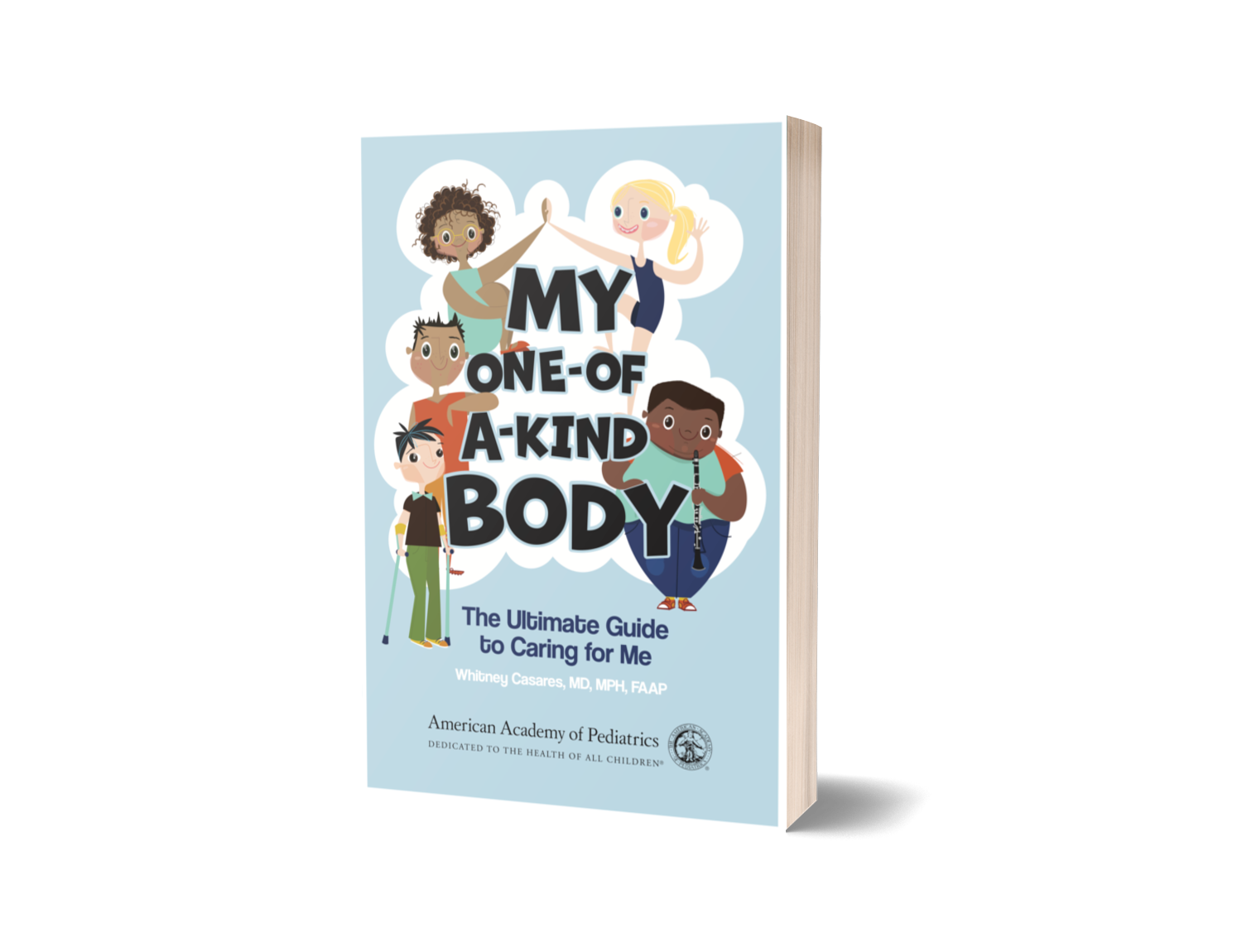
About the Episode: In this episode, Dr. Whitney sits down with Dr. Jay Gargus and Dave Justus from NeuroQure to discuss the power of early clarity when it comes to autism detection and why earlier intervention can fundamentally change outcomes for childre n and families. Dr. Gargus explains the science behind early behavioral therapies and why their impact goes far beyond short-term skill-building. Research shows that early, evidence-based interventions can lead to measurable, lifelong improvements in IQ, so cial skills, independence, and educational placement, often determining whether a child can thrive in mainstream education or requires ongoing specialized support. The conversation also tackles a critical and often overlooked issue: access. Dave Justus shares the personal motivation behind NeuroQure’s work and explains why the test is being launched at cost, with installment plans and employer subsidies, while the team works toward insurance coverage. The goal is to prevent families from losing precious years waiting for answers. Together, they emphasize a hopeful message for parents: families don’t need to wait for a future “silver bullet.” We already have therapies that work and getting kids connected to them earlier can change the course of a lifetime. In this episode, we discuss: Why early autism detection leads to lifelong changes—not just short-term gains What a 17-point IQ difference actually means for education, independence, and quality of life How early intervention can shift developmental trajectories as early as 6 months The science and validation behind current autism therapies Why NeuroQure is pricing testing at cost while pursuing insurance coverage How early clarity can reduce long-term strain on families, schools, and healthcare systems This episode is a powerful reminder that timing matters and that early access to answers can make an extraordinary difference for children and the families who love them. About Our Guest: Dr. Jay Gargus, MD, PhD is a physician-scientist and nationally recognized expert in neurodevelopmental disorders, with decades of experience researching the biological underpinnings of autism. His work has focused on translating well-established science into meaningful, real-world interventions that can improve lifelong outcomes for children. Dr. Gargus emphasizes that early, evidence-based therapies are already available—and that connecting families to them sooner can fundamentally change developmental trajectories. Dave Justus is a parent and the founder of NeuroQure, whose work is driven by personal experience navigating delayed autism diagnosis and intervention. Motivated by the belief that early clarity can spare families years of uncertainty, Dave is focused on expanding access to early testing through cost-based pricing and ongoing efforts to secure insurance coverage. His mission is simple but powerful: ensure families don’t have to wait for answers that could change everything. Want to Start Raising Body-Confident Kids Today? 📘 Order the Book Order your copy of My One-of-a-Kind Body 👉 www.raisingbodyconfidentkids.com/books 🎁 Claim Your Free Bonus When you order on our site, you’ll also get access to a FREE video mini-course with five bite-sized lessons for parents. In just 25 minutes, you’ll walk away with: Simple, script-style ways to respond when your kid says, “I hate my thighs” How to talk about health without weight talk What to do when your own inner critic shows up How to interrupt diet culture at home The first step to raising a body-confident kid, even if you didn’t grow up as one 📩 Subscribe to The Modern Mommy Doc Podcast for more episodes on parenting with confidence and clarity. Leave a review using the hashtag #ModernMommyDoc.
By Dr. Whitney November 13, 2025
Stop being so busy, and start being more present.
By Dr. Whitney November 5, 2025
Starting out right with solids doesn't have to be so scary.
By Dr. Whitney October 29, 2025
What if YOU are the one who needs to calm down first?

Welcome! Get the information you need to win at parenting without losing yourself.

LEARN MORE

My Kids' Book on Body Confidence is Finally Here!


Wish your partner would do more to lessen your mental load?


Want to make self-care a priority but not sure how to?


SIGN UP FOR SUSTAINABLE SELF-CARE. IT'S FREE. CLICK HERE


FRESH

ON THE PODCAST


By Dr. Whitney December 17, 2025
About the Episode: In this episode, Dr. Whitney sits down with Dr. Jay Gargus and Dave Justus from NeuroQure to discuss the power of early clarity when it comes to autism detection and why earlier intervention can fundamentally change outcomes for childre n and families. Dr. Gargus explains the science behind early behavioral therapies and why their impact goes far beyond short-term skill-building. Research shows that early, evidence-based interventions can lead to measurable, lifelong improvements in IQ, so cial skills, independence, and educational placement, often determining whether a child can thrive in mainstream education or requires ongoing specialized support. The conversation also tackles a critical and often overlooked issue: access. Dave Justus shares the personal motivation behind NeuroQure’s work and explains why the test is being launched at cost, with installment plans and employer subsidies, while the team works toward insurance coverage. The goal is to prevent families from losing precious years waiting for answers. Together, they emphasize a hopeful message for parents: families don’t need to wait for a future “silver bullet.” We already have therapies that work and getting kids connected to them earlier can change the course of a lifetime. In this episode, we discuss: Why early autism detection leads to lifelong changes—not just short-term gains What a 17-point IQ difference actually means for education, independence, and quality of life How early intervention can shift developmental trajectories as early as 6 months The science and validation behind current autism therapies Why NeuroQure is pricing testing at cost while pursuing insurance coverage How early clarity can reduce long-term strain on families, schools, and healthcare systems This episode is a powerful reminder that timing matters and that early access to answers can make an extraordinary difference for children and the families who love them. About Our Guest: Dr. Jay Gargus, MD, PhD is a physician-scientist and nationally recognized expert in neurodevelopmental disorders, with decades of experience researching the biological underpinnings of autism. His work has focused on translating well-established science into meaningful, real-world interventions that can improve lifelong outcomes for children. Dr. Gargus emphasizes that early, evidence-based therapies are already available—and that connecting families to them sooner can fundamentally change developmental trajectories. Dave Justus is a parent and the founder of NeuroQure, whose work is driven by personal experience navigating delayed autism diagnosis and intervention. Motivated by the belief that early clarity can spare families years of uncertainty, Dave is focused on expanding access to early testing through cost-based pricing and ongoing efforts to secure insurance coverage. His mission is simple but powerful: ensure families don’t have to wait for answers that could change everything. Want to Start Raising Body-Confident Kids Today? 📘 Order the Book Order your copy of My One-of-a-Kind Body 👉 www.raisingbodyconfidentkids.com/books 🎁 Claim Your Free Bonus When you order on our site, you’ll also get access to a FREE video mini-course with five bite-sized lessons for parents. In just 25 minutes, you’ll walk away with: Simple, script-style ways to respond when your kid says, “I hate my thighs” How to talk about health without weight talk What to do when your own inner critic shows up How to interrupt diet culture at home The first step to raising a body-confident kid, even if you didn’t grow up as one 📩 Subscribe to The Modern Mommy Doc Podcast for more episodes on parenting with confidence and clarity. Leave a review using the hashtag #ModernMommyDoc.
By Dr. Whitney November 13, 2025
Stop being so busy, and start being more present.