MMD BLOG


CATEGORY:

PRODUCTIVITY + MAMA WELLNESS

SPINNING PLATES, BALLS IN THE AIR…WE’VE GOT TOO MUCH TO DO

 Modern Mommy Doc


PUBLICATION DATE:

June 27, 2022

SPINNING PLATES, BALLS IN THE AIR…WE’VE GOT TOO MUCH TO DO

 Modern Mommy Doc

CATEGORY: PRODUCTIVITY + MAMA WELLNESS

Over the last couple of weeks, we’ve been talking about how we, as moms, have too much damn stuff on our plates. Some of that is our own fault because we just can’t seem to say no. Some of it has been hoisted on us by societal bias and old-fashioned gender roles that we just can’t shake.


Either way, our plates are full. Plural plates. Because one wasn’t enough to handle it all.


We’ve talked about what happens when we
try to take it all on ourselves how to divide up the decision making in your house, and ways we can actually give our kids tasks off our list (spoiler alert: it’s not another chore chart.) This week I want to chat about making the things that are STILL on our plate a lot simpler.


Let’s talk about ways you can automate some of your tasks so that you can spend way less brain power and energy on them, giving you more margin for the things that actually light you up.


Here’s the thing though: I can’t give you a list of 10 things you need to start automating, because everyone’s lives are so different from each other. Our capacities, families, and personalities are all unique. So the thing that drives me up a wall whenever I have to do it (or forget about it until it’s too late!) could be an absolute nothing task to you. And the thing that gets you really stuck in your week could be something that comes naturally to me.


So before I give you some ideas on things you can automate, we have to dig a bit deeper to know WHY we want to automate them in the first place. We want to look at things on our to-do list that HAVE to be done, but not necessarily by you. The things that we dread doing because they’re just obnoxious or feel like a time waster.


Find the things that are stressing you out the most and look for ways to hand that off to someone else. It’s either not a stress for them or it’s their job to do it.


Meet Renae


Her problem: She’s a mom of 4 boys who are all in sports Monday-Friday. One of the things that triggered that feeling of “you’re a horrible wife/mom” was when her family didn’t have the laundry they needed. Whether it was her son’s uniform left in the washing machine too long so it smelled like a sour dog, her husband having to pull his wrinkly work shirt out of a pile of other clean clothes left for weeks, or having to give the sniff test to find the “least dirty” pair of socks to send her kid to school, laundry was making her miserable. 


Her solution: She found a local laundromat that had a laundry drop-off + folding service (YES! There’s such a thing!), so now she spends $45 every week and picks up her practically bow-wrapped laundry. All she has to do is set it in the drawers.


Sure, she could have tried another laundry system. She could have made her boys responsible for their own laundry. But what she wanted was something that she didn’t have to think about AT ALL. Now they have one hamper for their family of 6 and once a week she drops the laundry off on her way to work. That’s what made the most sense for her.


Meet Tina


Her problem: She really wants to make healthy meals and snacks for her family but works long hours, so she has no time to start from zero when she gets home from work. She was spending waaaay too much time prepping and chopping. 


Her solution: Instead of whole, uncut veggies, she pays the (very small) price increase to only buy pre-chopped veggies so she’s already ahead of the game when it comes to dinner. For her family, a pricey meal service was out of the question, so she wanted to try something else. She knew if she could save that first 20 minutes of prep work each time, she could definitely get things on the table in under 30 minutes.


Meet Tonya


Her problem: The clutter in her house was getting out of control. And it wasn’t that they had too much stuff, she was actually very minimalistic. It was that things weren’t getting put back where they belong. When she looked at what her biggest trigger was, she realized she was walking past 8 different pairs of shoes…and they were only a family of 3. No one EVER wanted to walk upstairs to put their shoes away and they definitely couldn’t remember where they left them when it was time to go anywhere.


Her solution: A simple shoe basket. Right by the front door so that you practically couldn’t get to the next room without stepping over it. All the shoes were contained, less dirt was spread around the house, and there was no more “Mom, have you seen my cleats?!” 5 minutes after they were already supposed to be out the door.


Automation doesn’t have to be expensive or some uber fancy system. It can be the smallest shift that allows your brain to not have to be consumed by the thing that’s stressing you out.



Some other examples of free ways to automate:
  • Automatic bill pay. You never have to worry about forgetting to pay your water bill again.
  • Grocery pickup. You can plan it from your phone and pick up on the way home from practice. THE BEST.
  • Make Siri your new best friend. All the timers and “add tomatoes to my grocery list.” My fave feature is having her remind me of things once I get to a certain location. “Hey Siri, when I get home, remind me to call my mom about watching the kids on Tuesday night.” “Hey Siri, remind me when I get to Target that I need to buy body wash.”

Pricier ways to automate that might be worth it for you:
  • Meal delivery services for work meals. Services like Thistle can be REALLY spendy, but I hate packing leftovers and if I’m left to my own devices, I’ll just go grab whatever’s convenient. If I know I’ve got my healthy meal ready to go, I’m golden!
  • Uber your kid to practice. I know this one sounds weird if you’re in the suburbs, but it’s actually a thing in big cities. Obviously only with older kids, but it can save you hours of carpooling each week!
  • Cleaning services. I know this is another one that’s not an option for everyone. But the feeling of having your whole house clean all at once is SO GOOD.


Here’s what you’ve gotta remember: the things you want to automate in your life (we call them Swappables around here) are different for everyone. Really dig into the question, “What would be the ONE thing that could get done for me that would make me feel more at peace?” Or think about the task that, if it was done, it would set off a chain reaction to help make all the other tasks easier or smaller.



Raising Body-Confident Kids Starts at the Doctor's Office!

START NOW
By Dr. Whitney December 17, 2025
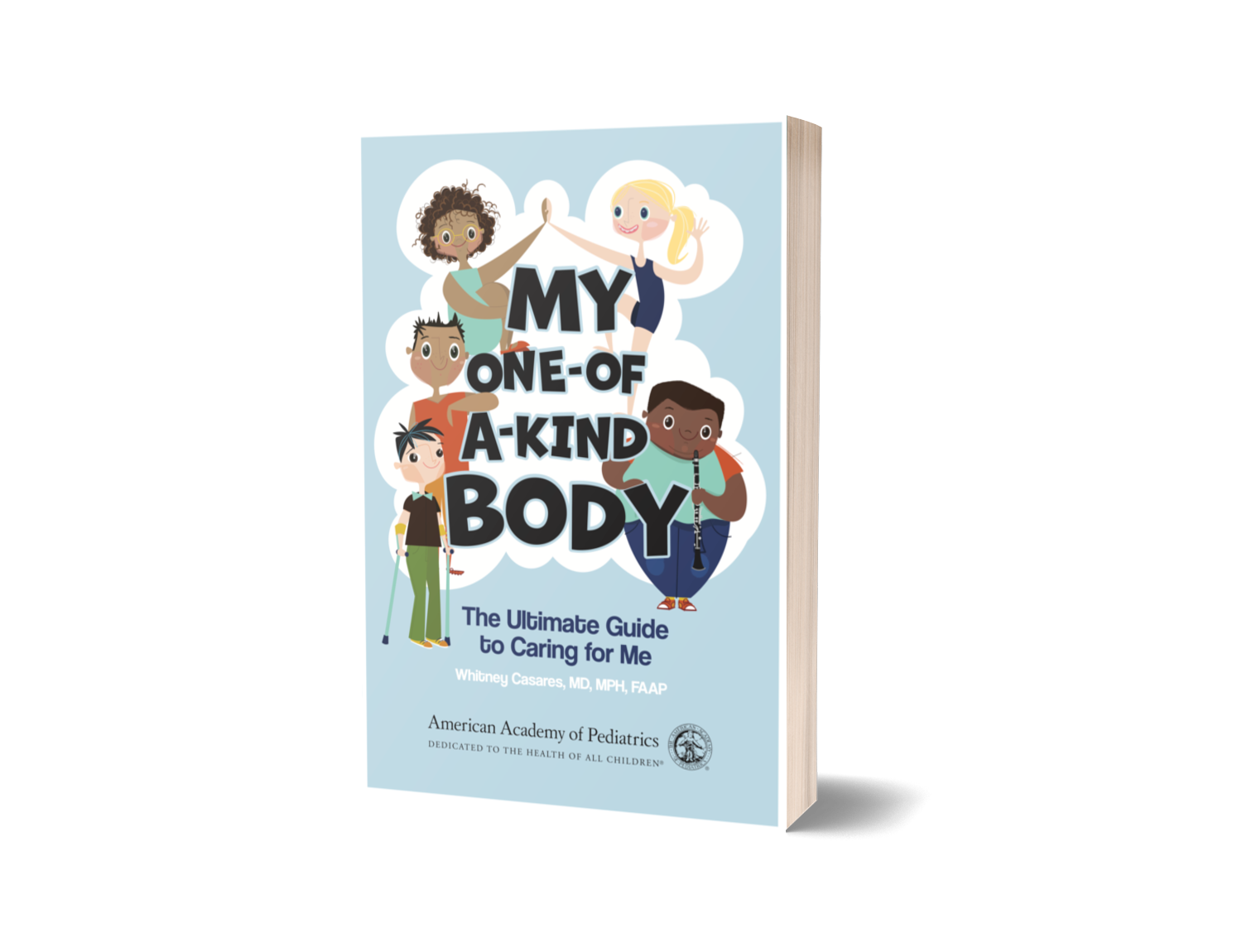
About the Episode: In this episode, Dr. Whitney sits down with Dr. Jay Gargus and Dave Justus from NeuroQure to discuss the power of early clarity when it comes to autism detection and why earlier intervention can fundamentally change outcomes for childre n and families. Dr. Gargus explains the science behind early behavioral therapies and why their impact goes far beyond short-term skill-building. Research shows that early, evidence-based interventions can lead to measurable, lifelong improvements in IQ, so cial skills, independence, and educational placement, often determining whether a child can thrive in mainstream education or requires ongoing specialized support. The conversation also tackles a critical and often overlooked issue: access. Dave Justus shares the personal motivation behind NeuroQure’s work and explains why the test is being launched at cost, with installment plans and employer subsidies, while the team works toward insurance coverage. The goal is to prevent families from losing precious years waiting for answers. Together, they emphasize a hopeful message for parents: families don’t need to wait for a future “silver bullet.” We already have therapies that work and getting kids connected to them earlier can change the course of a lifetime. In this episode, we discuss: Why early autism detection leads to lifelong changes—not just short-term gains What a 17-point IQ difference actually means for education, independence, and quality of life How early intervention can shift developmental trajectories as early as 6 months The science and validation behind current autism therapies Why NeuroQure is pricing testing at cost while pursuing insurance coverage How early clarity can reduce long-term strain on families, schools, and healthcare systems This episode is a powerful reminder that timing matters and that early access to answers can make an extraordinary difference for children and the families who love them. About Our Guest: Dr. Jay Gargus, MD, PhD is a physician-scientist and nationally recognized expert in neurodevelopmental disorders, with decades of experience researching the biological underpinnings of autism. His work has focused on translating well-established science into meaningful, real-world interventions that can improve lifelong outcomes for children. Dr. Gargus emphasizes that early, evidence-based therapies are already available—and that connecting families to them sooner can fundamentally change developmental trajectories. Dave Justus is a parent and the founder of NeuroQure, whose work is driven by personal experience navigating delayed autism diagnosis and intervention. Motivated by the belief that early clarity can spare families years of uncertainty, Dave is focused on expanding access to early testing through cost-based pricing and ongoing efforts to secure insurance coverage. His mission is simple but powerful: ensure families don’t have to wait for answers that could change everything. Want to Start Raising Body-Confident Kids Today? 📘 Order the Book Order your copy of My One-of-a-Kind Body 👉 www.raisingbodyconfidentkids.com/books 🎁 Claim Your Free Bonus When you order on our site, you’ll also get access to a FREE video mini-course with five bite-sized lessons for parents. In just 25 minutes, you’ll walk away with: Simple, script-style ways to respond when your kid says, “I hate my thighs” How to talk about health without weight talk What to do when your own inner critic shows up How to interrupt diet culture at home The first step to raising a body-confident kid, even if you didn’t grow up as one 📩 Subscribe to The Modern Mommy Doc Podcast for more episodes on parenting with confidence and clarity. Leave a review using the hashtag #ModernMommyDoc.
By Dr. Whitney November 13, 2025
Stop being so busy, and start being more present.
By Dr. Whitney November 5, 2025
Starting out right with solids doesn't have to be so scary.
By Dr. Whitney October 29, 2025
What if YOU are the one who needs to calm down first?

Welcome! Get the information you need to win at parenting without losing yourself.

LEARN MORE

My Kids' Book on Body Confidence is Finally Here!


Wish your partner would do more to lessen your mental load?


Want to make self-care a priority but not sure how to?


SIGN UP FOR SUSTAINABLE SELF-CARE. IT'S FREE. CLICK HERE


FRESH

ON THE PODCAST


By Dr. Whitney December 17, 2025
About the Episode: In this episode, Dr. Whitney sits down with Dr. Jay Gargus and Dave Justus from NeuroQure to discuss the power of early clarity when it comes to autism detection and why earlier intervention can fundamentally change outcomes for childre n and families. Dr. Gargus explains the science behind early behavioral therapies and why their impact goes far beyond short-term skill-building. Research shows that early, evidence-based interventions can lead to measurable, lifelong improvements in IQ, so cial skills, independence, and educational placement, often determining whether a child can thrive in mainstream education or requires ongoing specialized support. The conversation also tackles a critical and often overlooked issue: access. Dave Justus shares the personal motivation behind NeuroQure’s work and explains why the test is being launched at cost, with installment plans and employer subsidies, while the team works toward insurance coverage. The goal is to prevent families from losing precious years waiting for answers. Together, they emphasize a hopeful message for parents: families don’t need to wait for a future “silver bullet.” We already have therapies that work and getting kids connected to them earlier can change the course of a lifetime. In this episode, we discuss: Why early autism detection leads to lifelong changes—not just short-term gains What a 17-point IQ difference actually means for education, independence, and quality of life How early intervention can shift developmental trajectories as early as 6 months The science and validation behind current autism therapies Why NeuroQure is pricing testing at cost while pursuing insurance coverage How early clarity can reduce long-term strain on families, schools, and healthcare systems This episode is a powerful reminder that timing matters and that early access to answers can make an extraordinary difference for children and the families who love them. About Our Guest: Dr. Jay Gargus, MD, PhD is a physician-scientist and nationally recognized expert in neurodevelopmental disorders, with decades of experience researching the biological underpinnings of autism. His work has focused on translating well-established science into meaningful, real-world interventions that can improve lifelong outcomes for children. Dr. Gargus emphasizes that early, evidence-based therapies are already available—and that connecting families to them sooner can fundamentally change developmental trajectories. Dave Justus is a parent and the founder of NeuroQure, whose work is driven by personal experience navigating delayed autism diagnosis and intervention. Motivated by the belief that early clarity can spare families years of uncertainty, Dave is focused on expanding access to early testing through cost-based pricing and ongoing efforts to secure insurance coverage. His mission is simple but powerful: ensure families don’t have to wait for answers that could change everything. Want to Start Raising Body-Confident Kids Today? 📘 Order the Book Order your copy of My One-of-a-Kind Body 👉 www.raisingbodyconfidentkids.com/books 🎁 Claim Your Free Bonus When you order on our site, you’ll also get access to a FREE video mini-course with five bite-sized lessons for parents. In just 25 minutes, you’ll walk away with: Simple, script-style ways to respond when your kid says, “I hate my thighs” How to talk about health without weight talk What to do when your own inner critic shows up How to interrupt diet culture at home The first step to raising a body-confident kid, even if you didn’t grow up as one 📩 Subscribe to The Modern Mommy Doc Podcast for more episodes on parenting with confidence and clarity. Leave a review using the hashtag #ModernMommyDoc.
By Dr. Whitney November 13, 2025
Stop being so busy, and start being more present.