MMD BLOG


CATEGORY:

No More Hot Mess Moms

WE LIVE IN AN ATTENTION ECONOMY. IT'S STEALING OUR JOY.

 Modern Mommy Doc


PUBLICATION DATE:

June 13, 2024

WE LIVE IN AN ATTENTION ECONOMY. IT'S STEALING OUR JOY.

 Modern Mommy Doc

CATEGORY: No More Hot Mess Moms

Ding. A friend posts a vacation-envy-inducing family photo on Instagram. 


Ding. A Facebook update that someone’s daughter got into Yale. 


Ding. An Atlantic article on the secret to children’s happiness.


Ding. A text seeing if you can make it to book club tonight. 


Ding. A note from your office manager asking for baby shower gift ideas for your coworker. 


Ding. A TikTok notification that your child just posted . . . during school hours. 😬 


Ding. Ding. Ding. Ding. 


Another notification. Another distraction. Sound familiar? We live in a culture where our attention is constantly pulled in a million different directions. From social media updates to work emails to family obligations, it seems like there's always something vying for our attention. And the more we try to keep up, the more overwhelmed and scattered we feel.


Nobel Laureate Herbert A. Simon once said, "A wealth of information creates a poverty of attention."


How true is that? We have access to more information than ever before, but our attention spans are suffering as a result. Every ding, ping, and buzz pulls us further away from the present moment, making it harder to focus on what truly matters – our families, our work, and ourselves.


The Burden of Attention

As working moms, we often bear the brunt of this attention overload. We're expected to juggle a million different things at once – from work deadlines to school pickups to household chores. While also being reminded to stay fit, but not too thin. To put time and thought into your appearance, but not that kind that draws negative attention. And to work like you’re not a parent, while parenting like you’re not a full-time employee. It's no wonder we feel like we're constantly spinning our wheels, never able to catch up or focus on ANYTHING.


Breaking Free from the Distraction Cycle

So, how do we break free from this cycle of perpetual distraction? How do we reclaim our attention and focus on what truly matters? It starts with awareness. Recognize when you're being pulled in too many directions. When there’s too many things vying for your attention, pulling you like Stretch Armstrong. Only then can you take practical steps to fix it and live a life aligned with your Centered Vision (I’ll talk more about that in a minute.)


When your priorities are really clear, you’re waaaay more likely to be firm about what gets a say for your attention. You can set boundaries around your time and energy, because you don't have to be afraid any longer to say no to things that don't align with your priorities. When your priorities are clear, you get to be the one in control.


When you read that list, it seems like I might be telling you that we can “do it all!” Barf. I’d never do that. Who actually wants to do it all? That sounds exhausting. But when you’re living according to your priorities in your Centered Life, the rest falls into place. You’ve dropped the things that don’t matter. You’ve made room for those that do. You’ve challenged yourself to do the best in all the aspects of your life, but fully embraced that that looks differently for every person in every season.


Finding Balance

Finding balance in the attention economy is all about setting boundaries and prioritizing what truly matters. Take a step back and evaluate where you're spending your time and energy. Are you constantly checking your phone or scrolling through social media? Are you saying yes to every request that comes your way, even if it means sacrificing your own well-being? It's time to take back control of your attention and focus on what truly matters most to you.


The Importance of Self-Care

Another way to really get those attention grabbers in check and to make sure you’re following the priorities you WANT to have, is to ruthlessly include self-care in your routine. Take time for yourself each day to recharge and reset. It doesn’t have to be a whole production! Go for a walk, practice mindfulness, or simply take a few deep breaths–find what works for you and make it a priority. 

Earlier I talked about living according to your Centered Vision. And we talk a lot about that here at Modern Mommy Doc. But living out your Centered Life is one of the absolutely clearest ways to deal with the attention economy. Centered Women prioritize their vision, set personal and professional boundaries, make time for their kids, practice self-compassion, and minimize the impact of distractions.


A More Centered, Less Distracted Approach

You know I’m a huge supporter of girl power and women breaking down barriers and adding their voices into conversations that they’ve always been told didn’t have space for them. But I think one of the downfalls of this mindset is that “we can anything!” quickly turns into “we can do everything!” And then the next thing you know you’re overcommitted, under-supported, and plain worn out.

When we can get really clear on what we actually care about, it makes it so much easier to ignore the ding, ding, ding of everyone and everything thinking they need our eyeballs right this second. When we’re living out our Centered Vision, those distractions get quieted to a dull hum. We know what we want and that’s the life we’re going after.

Raising Body-Confident Kids Starts at the Doctor's Office!

START NOW
By Modern Mommy Doc • October 9, 2026
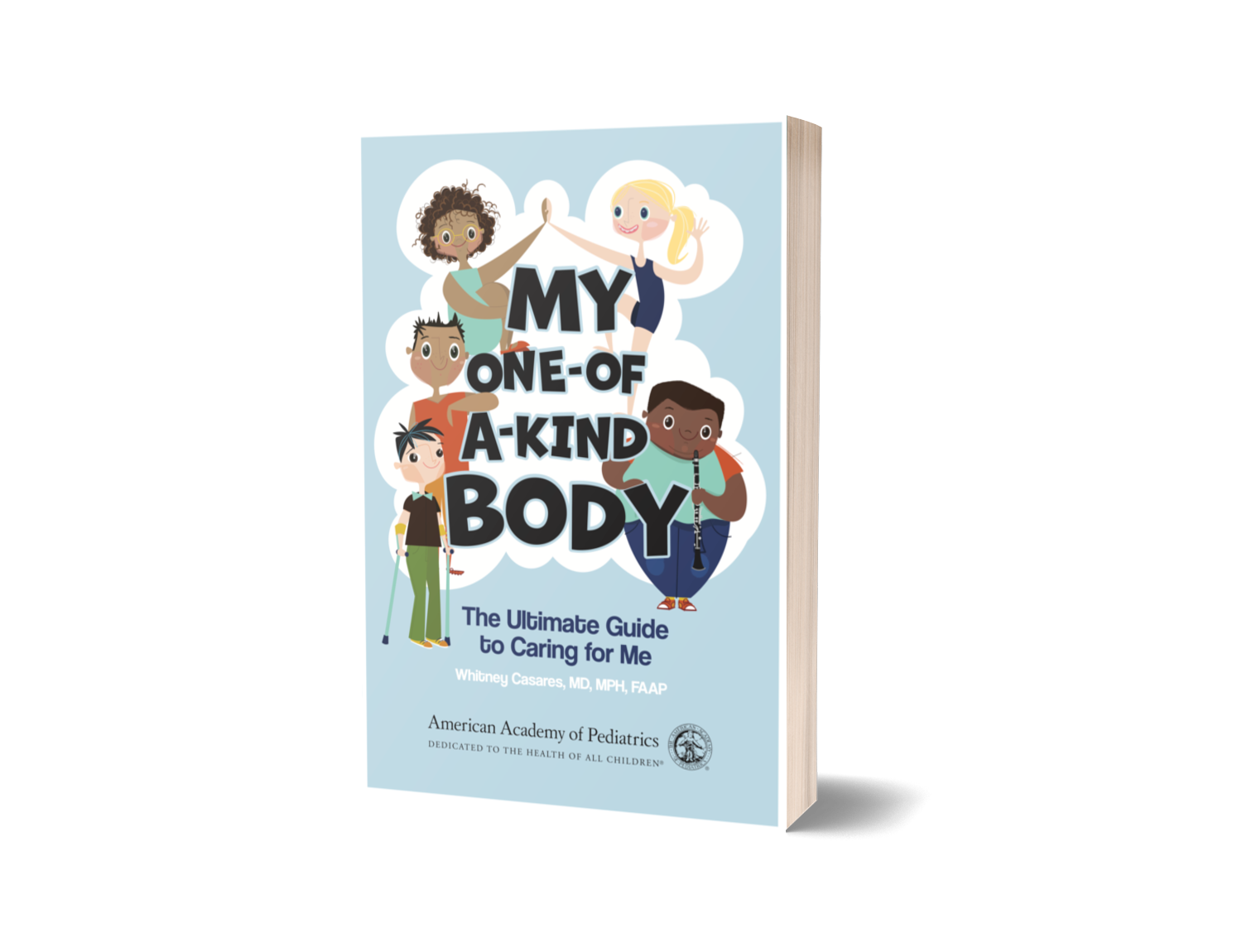
About the Episode: There’s so much parenting advice out there, and most of it doesn’t matter nearly as much as the internet wants you to think. (Seed oils? We have bigger fish to fry.) In this solo episode, Dr. Whitney gets back to basics and shares the six evidence-based parenting principles she focuses on as a pediatrician, the ones she dug into with a leading child development researcher. She also shares how these play out in real life as a mom of two neurodivergent kids, because guidance only helps if it actually fits your family. Key takeaways: Be sensitive and responsive. Simple practices like mirroring your child’s emotions and “serve and return” interactions build a loving, trusting foundation. Dr. Whitney shares how a Halloween decorating session turned into a deep conversation about religion once she slowed down and got curious. Meet kids where they are, especially at their worst. Drawing on Tina Payne Bryson, co-author of The Whole-Brain Child , Dr. Whitney explains that soothing a meltdown isn’t giving in. It’s letting your child know they’re not alone in a big feeling. Model self-regulation, and repair when you lose it. Self-regulation predicts academic success better than IQ. The goal isn’t staying calm all the time, it’s understanding why you got dysregulated, coming back to baseline, and offering yourself some self-compassion. Set limits for your kids and yourself. Every child’s needs are different (screen time affects Dr. Whitney’s two daughters very differently), but all kids need limits, and so do parents. Taking time for yourself models something healthy. Aim for authoritative, not permissive. High expectations paired with warmth and grace is the sweet spot. “Gentle parenting” can blur into permissiveness, which research shows is as harmful as authoritarian parenting. Protect unstructured time. Kids need boredom and free play to become self-directed. For ADHD and autistic kids, Dr. Whitney recommends offering a few options and letting kids choose. Support internal motivation. Using a “mirrors facing outward” image from her own therapist, Dr. Whitney explains why we want kids to trust their own instincts rather than constantly look outward for approval. Want to Start Raising Body-Confident Kids Today? 📘 Order the Books Raising Body-Confident Kids If you've ever caught yourself saying something to your kid about their body that sounded exactly like what your mother said to you, this book is for you. Raising Body-Confident Kids is a research-backed, judgment-free guide for parents who want to break the cycle of diet culture and body shame without swinging into toxic positivity or giving up all structure around food and movement. It answers the real questions parents are actually asking about Ozempic, about picky eaters, about what to say when your kid is being bullied for their body, and about social media influences. This is a practical, values-based game plan you can actually use, even if your own relationship with your body is still a work in progress. My One-of-a-Kind Body My One-of-a-Kind Body gives kids the language and understanding they need to care for their bodies with respect without fear, shame, or appearance-based messaging. Through inclusive illustrations and evidence-based health education, the book teaches body literacy, boundaries, and self-trust in a way kids can actually grasp. 👉 www.raisingbodyconfidentkids.com/books
By Modern Mommy Doc • October 5, 2026
What really matters when it comes to college admissions (for you and for them).
By Modern Mommy Doc • September 17, 2026
Kids going off to college are mean for a reason.
By Modern Mommy Doc • September 10, 2026
Maybe winning back to school isn't what we really want, after all.
By Modern Mommy Doc • August 27, 2026
First-class service has a lot to do with first-class parenting.

Welcome! Get the information you need to win at parenting without losing yourself.

LEARN MORE

My Kids' Book on Body Confidence


Trying to break the cycle of body shame and diet culture?


Overwhelmed by all the parenting advice out there?


SIGN UP FOR THE FREE STARTER KIT: UNBOTHERED. IT'S FREE. CLICK HERE


FRESH

ON THE PODCAST


By Modern Mommy Doc • October 9, 2026
About the Episode: There’s so much parenting advice out there, and most of it doesn’t matter nearly as much as the internet wants you to think. (Seed oils? We have bigger fish to fry.) In this solo episode, Dr. Whitney gets back to basics and shares the six evidence-based parenting principles she focuses on as a pediatrician, the ones she dug into with a leading child development researcher. She also shares how these play out in real life as a mom of two neurodivergent kids, because guidance only helps if it actually fits your family. Key takeaways: Be sensitive and responsive. Simple practices like mirroring your child’s emotions and “serve and return” interactions build a loving, trusting foundation. Dr. Whitney shares how a Halloween decorating session turned into a deep conversation about religion once she slowed down and got curious. Meet kids where they are, especially at their worst. Drawing on Tina Payne Bryson, co-author of The Whole-Brain Child , Dr. Whitney explains that soothing a meltdown isn’t giving in. It’s letting your child know they’re not alone in a big feeling. Model self-regulation, and repair when you lose it. Self-regulation predicts academic success better than IQ. The goal isn’t staying calm all the time, it’s understanding why you got dysregulated, coming back to baseline, and offering yourself some self-compassion. Set limits for your kids and yourself. Every child’s needs are different (screen time affects Dr. Whitney’s two daughters very differently), but all kids need limits, and so do parents. Taking time for yourself models something healthy. Aim for authoritative, not permissive. High expectations paired with warmth and grace is the sweet spot. “Gentle parenting” can blur into permissiveness, which research shows is as harmful as authoritarian parenting. Protect unstructured time. Kids need boredom and free play to become self-directed. For ADHD and autistic kids, Dr. Whitney recommends offering a few options and letting kids choose. Support internal motivation. Using a “mirrors facing outward” image from her own therapist, Dr. Whitney explains why we want kids to trust their own instincts rather than constantly look outward for approval. Want to Start Raising Body-Confident Kids Today? 📘 Order the Books Raising Body-Confident Kids If you've ever caught yourself saying something to your kid about their body that sounded exactly like what your mother said to you, this book is for you. Raising Body-Confident Kids is a research-backed, judgment-free guide for parents who want to break the cycle of diet culture and body shame without swinging into toxic positivity or giving up all structure around food and movement. It answers the real questions parents are actually asking about Ozempic, about picky eaters, about what to say when your kid is being bullied for their body, and about social media influences. This is a practical, values-based game plan you can actually use, even if your own relationship with your body is still a work in progress. My One-of-a-Kind Body My One-of-a-Kind Body gives kids the language and understanding they need to care for their bodies with respect without fear, shame, or appearance-based messaging. Through inclusive illustrations and evidence-based health education, the book teaches body literacy, boundaries, and self-trust in a way kids can actually grasp. 👉 www.raisingbodyconfidentkids.com/books
By Modern Mommy Doc • October 5, 2026
What really matters when it comes to college admissions (for you and for them).
By Modern Mommy Doc • September 17, 2026
Kids going off to college are mean for a reason.