










Search results for 'mama wellness' (107)

This year’s winner burned the candle at both ends. She got up at 5am every day so she could have peace and quiet to herself, made her kids’ breakfasts and lunches each morning, got them to school on time, and worked at her job harder than anyone else – so that there would be no question of her abilities and loyalty when she left to pick her kids up from school every day. She never quite believed that everyone saw how hard she worked, so after she did homework with her kids, got dinner on the table, got them to practice, and did bath and bedtime, she took a few hours before she went to sleep to put in some more time for her job. She had to make sure that all those times she had to duck out a few minutes early for a kid’s appointment or to watch their play at school were not going to keep her from moving up the corporate ladder. As if that all wasn’t enough, this year’s winner was exhausted from the time she woke up to the time she went to bed. She never put any priority on taking care of herself – always making sure everyone else had everything they needed. She’s short with her kids when they ask to spend time with her and she’s so run down, that she definitely doesn’t have time or energy to have a real connection with her husband. What an example for all of us. She is the epitome of what a Burned Out Mom should be. This year’s winner of the World’s Best Burned Out Mom iiiiiiiissss… You. Me. It’s all of us. We know there’s no ceremony like this (and if there was, we’d still be getting the kids ready, running around with half our hair curled, while trying to get our daughter to PLEASE just put on the dress), but yet most of us moms are acting day in and day out as if we were in the running to get this very prestigious award. I have to take a second to remind you that your kids aren’t better off the more burned out you are. Your house isn’t better off. Your marriage isn’t better off. Maybe I’m not burned out. Maybe I’m just tired. Kids are tiring. True. But there’s a difference. And before you can take steps to correct it, you have to identify it as a problem. A burned out mama: -feels short tempered with her kids or partner a LOT. -feels emotionally depleted like she’s got nothing left to give. -feels guilty about her thoughts around her family and how much she does/doesn’t do and their reactions towards her -Has EXTREME mental fatigue or physical exhaustion. Sun up to sun down. -Feels disconnected from those around her, including her family -Never feels like she’s enough There’s lots of ways to combat burnout, including really being open with your partner and those in your village, asking for help, and learning to delegate. But I think the biggest one that moves the needle for moms is finding pockets of time that are just for her. I’m not saying you need to find a quiet hour in your home every day. That’s simply not possible. But can you stay in the bathroom for 5 extra minutes to splash some water on your face? Can you take the first 10 minutes after your kids go to bed to stretch and get in some movement? Can you sit in your car for a few minutes before you head into work, put on your favorite dance jam, and just let go? These extra minutes don’t solve it all. Absolutely not. But they set your day on a course that lets you have more margin. And THAT will take you from burned out to a life you love. Want someone who’s got YEARS of experience in this area to come alongside you and walk you through step by step how to make this happen in your life? Check out my 1:1 Coaching.
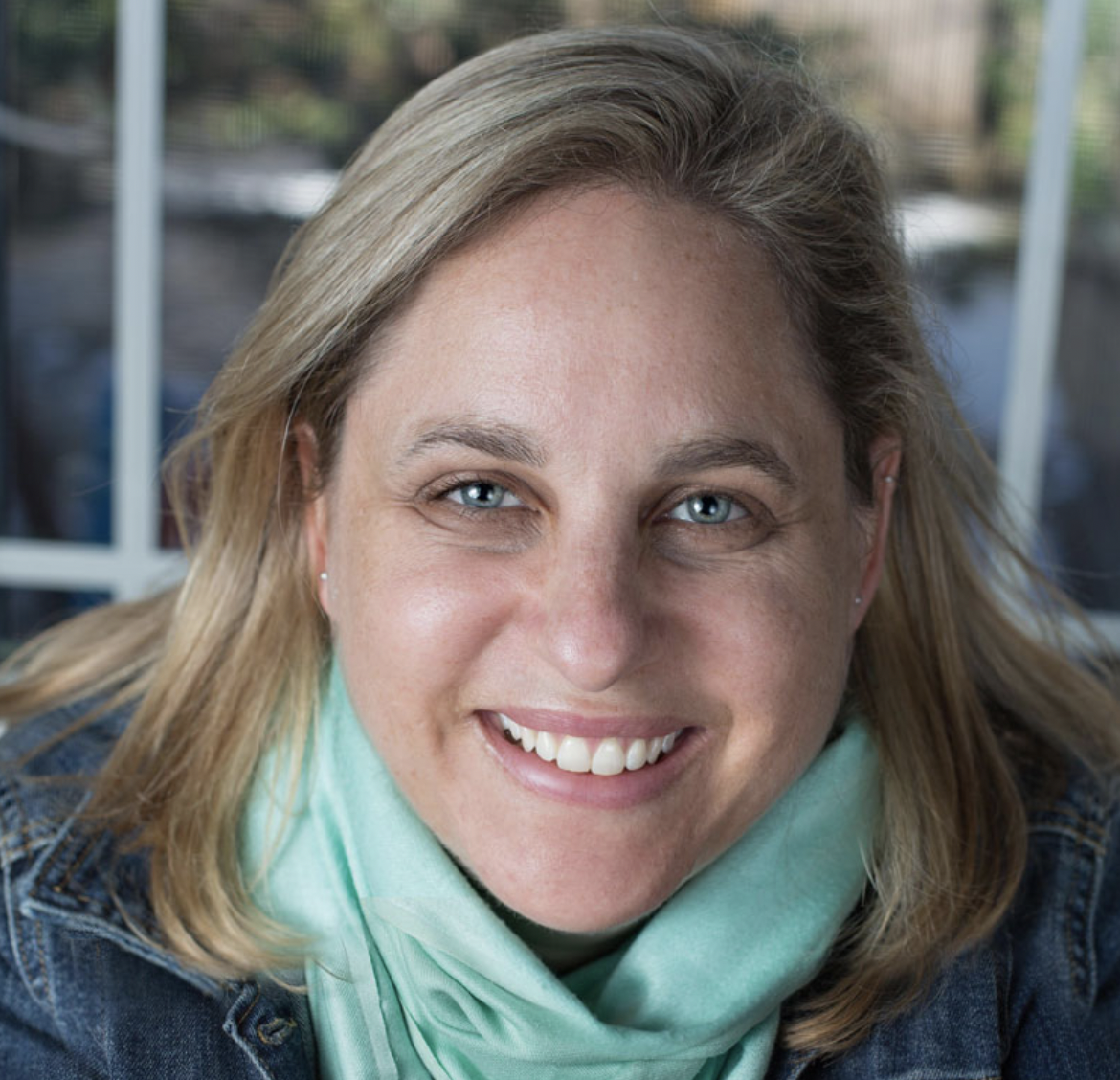
#sponsoredepisode Did you realize how much your gut microbiome influences your metabolism, your weight and your overall health? Dr. Whitney talks with Colleen Cutcliffe, PhD, CEO and Co-Founder of Pendulum Therapeutics about how the gut microbiome works, optimizing the way your body handles the nutrients you consume, and choosing a probiotic that really works. Colleen Cutcliffe, PhD, is the CEO and Co-Founder of Pendulum. She has over 15 years of experience leading and managing biology teams in academia, pharmaceuticals and biotechnology. Prior to starting Pendulum, Colleen was the Senior Manager of Biology at Pacific Biosciences and a Scientist at Elan Pharmaceuticals. Colleen received her Ph.D. in Biochemistry and Molecular Biology from Johns Hopkins University and her B.A. in Biochemistry from Wellesley College. About Pendulum : Pendulum optimizes the metabolism of sugar and carbohydrates, reducing sugar cravings and energy slumps, boosting sugar and carb metabolism, AND supporting a healthy weight. Pendulum understands that whole-body health and wellness is tied to the complex ecosystem of microorganisms that is the microbiome, and that addressing imbalances in the microbiome transform people’s lives from the inside. Their mission is simple: to improve the lives of millions through microbiome products. To that end, they create products that have the power and efficacy of a pharmaceutical with the safety and accessibility of a probiotic. To accomplish their mission, they developed an entirely new product–a medical probiotic. Medical probiotics are the bridge between nature and medicine, helping restore our bodies to their peak balance. To learn more about Pendulum Therapeutics AND to get 20% off your first month of Pendulum membership, go to www.pendulumlife.com and use code MODERN20. PODCAST NOTES: Dr. Whitney: Today we’re talking with Colleen Cutcliffe, PhD from Pendulum and I’m really excited because there’s a personal connection in here for me. Colleen, tell us about Pendulum and how you got started. It’s a really exciting story! Colleen: I’m always excited to talk about the latest and greatest in microbiome research. I have a background in basic science research, I have a PhD in biochemistry and molecular biology from Johns Hopkins, I did a pretty traditional postdoc at NorthWestern, and then I moved out to the San Francisco area where I worked for a pharmaceutical company, developing drugs for Parkinson’s Disease. Then I joined a startup DNA sequencing company that went through rapid growth while also founding this company with two co-founders. At the heart of microbiome science and research is being able to DNA sequence the microbiome, so we had really strong technical knowledge about mapping a person’s microbiome and how that microbiome relates to that person’s body. From a scientific standpoint, it was the ability to create new data and really understand the role that the microbiome can play in health. On a personal level, the more I learned about the microbiome, I learned that my daughter was very likely impacted by her microbiome experience. My first daughter was born almost two months prematurely at 4 and a half pounds. I got to hold her for a few seconds before she was taken to intensive care. She was hooked up to all these machines and monitors for the first month of her life and received multiple treatments of antibiotics–not because she had any type of infection, just because she was so fragile that they were trying to prevent her from getting any type of infection. One of the things that I noticed about her as she got older was that she had these food sensitivities that the rest of our family didn’t have. She had a hard time with dairy and even as a 5 year old, she was looking for plant based foods because she knew that otherwise, it would cause her GI distress. I read this publication that they looked at all these infants and showed that those that had multiple rounds of antibiotics were more susceptible to obesity and diabetes. It started with being sensitive to certain foods but then when the study was repeated by The Mayo Clinic, they showed it went beyond that and obesity and diabetes and also made these children more susceptible to asthma, allergies, and autism. So early in life when you take an antibiotic, you decimate your microbiome and you are set up for a lifetime of depletion. When I was seeing all these connections, paired with the knowledge I had, I saw we could help millions of people, including my daughter. And that’s how we got started in this space a little more than 10 years ago. Dr. Whitney: I love the microbiome because I’m a science nerd but I’ve also been geeking out on how the microbiome influences so many things. Having a c-section can influence a child’s microbiome. If you had antibiotics, if the baby had antibiotics, it can all influence it. There’s so many people that are in this space and trying to help people. What makes what you do at Pendulum different? Colleen: We aren’t all that different in the way that we are approaching things. We’re doing DNA sequencing, biochemical essays, preclinical and clinical trials, and trying to understand what the pathways in the microbiome are that affect human health. Compared to the probiotic companies that are using the already on the market lactobacillus and bifidobacterium strains, we are quite different. We’ve invested a lot of money into clinical trials and creating novel interventions. I’d say the biggest difference is that we’ve honed in on a specific problem, which is how our body metabolizes food and the gut metabolism axis. I care very much about the metabolism of food. We can all remember a time in our lives when we could eat or drink whatever we wanted, but as we age our metabolism is affected differently. We don’t need a doctor to tell us our metabolism has slowed down. But what we aren’t usually aware of is that as we age, we lose certain gut microbes. As we go through times of stress, we lose certain gut microbes. When we travel and our circadian rhythms are messed up, we lose certain microbes. As women, when we go through menopause, we lose certain gut microbes. There are things that we go through or just because we are a human being, that cause us to lose these gut microbes. And it turns out that one of the key things is how our bodies metabolize sugars and carbs, and that’s been the thing we’ve focused on. How does our body metabolize sugars and carbs and how can we help replenish these gut bugs that are literally doing the metabolizing for you? Dr. Whitney: Let me doctor-splain this to our audience that is less nerdy than you and me so they can understand what this means. The first thing I heard you say is that not all probiotics are created equal. They can vary greatly on the effectiveness based on what’s actually in the probiotic. The other thing I heard you say is that what Pendulum is aiming to do is really focusing on metabolism. I’ve heard you explain it this way: you can put great gasoline in your car, but if you have a shitty engine, it’s not going to make much difference as to whether the car runs well. Talk more about the basic components of a probiotic that make it work well and what things are on the mainstream market that have become generic that won’t work as well for people. Colleen: There’s some vocabulary that is sometimes confusing. There’s prebiotics and probiotics. Prebiotics are literally the food that feed the probiotics and probiotics are the bacteria themselves. When you go into the aisle with pre and probiotics, things are usually mixed together. So when you see things like fiber and polyphenols, those are prebiotics. When you see things with “live bacteria strains” or CFUs, those are probiotics. If you start to look at the label of these, you’ll start to notice a pattern, which is that almost everything out there starts with lactobacillus or bifidobacterium. That’s it. That’s a very small category of microbes compared to all the microbes that are actually in our gut biome. Those strains do certain functions. And maybe you’ve looked at these and thought, “What is the difference between these probiotics?” Well, there might not actually be any difference because the ingredients are more or less the same. What we’re really focused on are some of these novel strains that you won’t really find anywhere else. One of the key ones is akkermansia muciniphila which is really emerging as a keystone strain. It’s the only bug that lives in your gut lining–and think of that lining like a fence. There’s all the planks of the fence and then the glue between each of them that keeps it really strong. Overtime and with weather, those planks can really start to weaken, that glue can start to weaken, and planks can fall down. Your gut lining is the same way. You have these planks, these cells that are held together by glue called tight junctions and mucin. And you have this mucin layer, the glue, that has to be regulated. Akkermansia’s job is to sit there at that fence, all day and all night, and strip the old glue off and put new glue on and to keep the planks really strong. So this strain, it’s the only one known to live in the gut lining and the only one known that that’s it’s job–to keep the gut lining healthy and strong. If you are depleted in it, that is correlated to things like obesity, diabetes, increased inflammation, lowered immune response, and even bad skin, which is associated with the inflammatory response. So it’s such an important thing to have a fortified gut lining. I know the word “akkermansia” is such a mouthful, but hopefully, over time, people will realize that’s something they want in their gut. Dr. Whitney: Talk about the piece of how this plays in with metabolizing sugars. I know that at the beginning, you had started to develop this with the thought of helping the diabetes community, but now you’re seeing that it can help the population at large. Colleen: When you think about it, everything that you eat goes to your gut to be digested. So you have these bugs in your gut that literally help you digest your food. There’s certain foods that we all eat that we can’t digest on our own. We need the bugs to digest them. And we found that some people are missing these bugs entirely. So when we think of metabolism, there is metabolic health and trying to be as metabolically healthy as possible, the other end of the spectrum are metabolic disorders or syndrome, which is Type 2 Diabetes. So we started our research with diabetes, where they’re missing these functions where they cannot metabolize sugars. We created a formulation that helped people with diabetes actually be able to metabolize sugars and lower their A1C. And from there, it turns out, we’re all a little bit on the spectrum of metabolic health. And so having those good levels of bug in our gut doesn’t just help those with diabetes but all of us who are wanting to stay as healthy as possible. There’s basically two ways to stay healthy: don’t eat sugars and carbs or find a way for your body to metabolize them. We’re in that second camp. Dr. Whitney: A lot of the work I do here at Modern Mommy Doc is showing moms how to work smarter, not harder. There’s things in life that we can’t control like having to get the kids out the door for school or a pandemic or work I have to do for my job. But there’s things that I can do to make those things more efficient. I can make sure I’m not in a rush in the mornings, I can make sure to take care of myself by taking walks during the pandemic, I can look at productivity hacks to get my notes done faster at work. And I really view this in the same vein. Moms can’t control the hormone shifts you go through after having a baby. You have a different body; that change in metabolism is going to happen and you can’t control it. But you can control what your body does with what you consume. And to be honest, I don’t want to give up sugar! We do the best we can, but life happens. So this is a way to optimize your microbiome in light of those things. Is that what you’re saying? Colleen: Yes! It’s really a life hack to get through those things that are depleting your microbiome and giving yourself back these good bugs and helping your metabolism. If you’ve ever been on a diet where you’re trying to cut back on your sugars and carbs, it’s super hard. But people will tell you that when they do, they experience things they didn’t realize would happen. They had so much more energy, or slept better, or didn’t have as much brain fog. Those are outcomes that are actually of a better metabolism. So we understand that Girl Scout Season comes along every year and we’re going to be consumers of Thin Mints. But this just gives yourself permission to live your life, while also metabolizing things better. We can’t feel when we’re metabolizing things correctly, right? But 70% of our consumers say they have less sugar cravings. Because there’s a connection between our gut and our brains: when we’re metabolizing sugar correctly, we don’t feel the need for more of it. And you no longer have to feel that guilt from hearing that you just don’t have the strong willpower to not consume these products. Biologically, you’re being told that you’re hungry! So giving yourself these hacks to improve that is what we want to bring to the world. Dr. Whitney: Let’s talk about that guilt piece. I know it happens to me and so many moms. Those sugar cravings and just feeling like you’re not strong enough to stop. I was having a discussion about health and weight loss with my husband and what types of workouts to do because I wasn’t seeing the results I wanted and he was–all while I was drinking a smoothie and he was eating fried chicken! So there is something biologically to this! We end up feeling so guilty because we can’t find a solution to fix it. I tried your products and I’m really selective about who I bring on the show to make sure that everything is based in research and science. And I have to say that my energy levels are significantly higher and my sugar cravings are significantly lower. I just feel better. My stomach looks flatter. So I’m not surprised that your customers are saying those same things. Colleen: This is why I think metabolic health is going to be something we talk more and more about because when you solve for that, it shows up in all of these different areas. When we were first creating these products, I wore a continuous glucose monitor so I could really track. And I took placebo pills and I took the real products but told my team not to tell me which was which. And each time, I knew when I was taking the real thing. I had way more energy. My workouts were so much better. And the sugar cravings are such a huge component. I’m not saying it solves all of it, but any little boost we can get on that front is helpful. Dr. Whitney: Tell our listeners about some of the organizations you’ve worked with. I know you worked with Mayo Clinic, so now you have these clinical studies that show that these products can be really beneficial to certain people groups. Colleen: When we started this company, every investor that we took money from, we told them we’ll never commercialize a product unless it actually works. That was a leap that our investors took with us. I decided a long time ago that health was where I wanted to make my mark. We’ve always been really grounded in scientific evidence and wanting to transform health. So as a result, we’ve ended up with really great backers. The first people that invested in us were the Mayo Clinic and they’ve invested in every one of our rounds. We’re in the pharmacy at the Cleveland Clinic so we had several people over there that tried the products and then really wanted to make it available to their patients and have it in their pharmacy. We also are used by Kaiser physicians and collaborators with Johns Hopkins, doing basic science research with them. So we’re very much embedded with medical institutions because this is still a new science and we’re trying to uncover new ways for people to optimize their health. It’s been really great to partner with the best of the best to get all that knowledge out there. Dr. Whitney: This is my plug for all my listeners out there…make sure you know about the products you’re taking. Look at the research behind them and who they’ve collaborated with–not just for these, but any product you’re taking! You have two main products. Tell the listeners about the differences between them and what moms can do to get started optimizing their metabolism. Colleen: Let me actually ask you first, do you have any tips for people as they look through products to find out if it’s actually scientifically proven or science backed or not? I even have a really hard time parsing it out! Dr. Whitney: Number one, if someone is recommending it and you check it out and it ONLY talks about patient experience, that’s a red flag. Patient experience is great, but it’s not the only part. It’s an augmentation of what the data says. So make sure that you’re not only basing it off of customer reviews. Number two, look at what organizations have associated with the product. If it’s associated with The Mayo Clinic, Stanford, Johns Hopkins, it’s at least a company trying to be legitimate. Number three, you can also do your own research and ask the companies for their studies and the links to their research. If you don’t understand the research yourself, ask a doctor. I’ve had plenty of patients ask me to look over something that’s a product for their child. Colleen: That’s super helpful. So in terms of what we’ve created, the first product we created was for people with Type 2 Diabetes. We ran a placebo/control/double blind/randomized trial published in BMJ (which is one of the premier clinical journals) showing that for people with Type 2 Diabetes that were on this product (which we call Pendulum Glucose Control) were able to, compared to placebo, see that they lowered their A1C by 0.6. And, just for a frame of reference, that can be the difference between having diabetes and not having diabetes. So it lowered A1C by 0.6, it lowered blood glucose spikes by 33%. And so if you have Type 2 Diabetes or you've got Pre-Diabetes and you want to kind of avoid crossing over into Type 2 Diabetes, or you're really worried about your A1C and your blood glucose spikes, Pendulum glucose control is the formulation for you. It's a clinical dose that has all of these hard-hitting lowering of A1C and blood glucose spikes people report back. We used to give people free A1C testing when we first started, because we really wanted to see if it was working. And now we advise people to get your A1C tested and I think it's really important to know what you expect to get out of your probiotic. And we have the money back guarantee. If you take this thing and you don't get those outcomes, we're not here to fleece you. We'll give your money back. So that's if you have Diabetes. If you are somebody who wants to just optimize your metabolic health, and you want to metabolize your sugars and carbs better, we have Metabolic Daily. That is literally the exact same formulation as Pendulum Glucose Control, but it's at a lower dose. So if you don't have Type 2 Diabetes and you want to improve the way you're metabolizing sugars though, Metabolic Daily is for you. If you want just this single strain akkermansia that we talked about earlier, because you've taken a gut test and it came back and told you that you're low in akkermansia or you realize you have these issues that you think are associated with your gut lining and you just wanna take that one strain, we also offer akkermansia as a single strain. If you have a physician or registered dietician or somebody that you're working with on your gut health and your whole nutrition system, that's another person that you can ask for what's right for you. But it's really about which problem you're trying to tackle personally. I'm actually on Pendulum Glucose Control, because that's the one that I started with. It's got the highest dose, even though I don't have diabetes. But if I were starting now, I'd probably kick into Metabolic Daily because I think that's a great way to get started. Dr. Whitney: And it's safe for people to take the Pendulum Glucose Control even if they don't have diabetes, right? I just wanna be clear about that for listeners. Colleen: Yes, it is safe for anyone to take, even if you don't have diabetes. It's really just a different dose, but it's still a safe dose for healthy people too. Dr. Whitney: Awesome. And for those of you who are wondering what A1C is, I realize we should back up and talk about that, too. Hemoglobin A1C is basically how much sugar is on your red blood cells over the course of about three months. So people use that to make a diagnosis of diabetes and also to track sugar control, because it's a more accurate view because it’s a wider lens, more long-term lens versus looking at just what your sugar is today before or after a meal. If you are in the general population, you might have never had a Hemoglobin A1C taken in your entire life or maybe one time. Of course if someone has diabetes, they have their Hemoglobin A1Cs tested regularly. So that's what we're talking about, about the Hemoglobin A1C drop. But that's a significant difference. I mean it is really true. The kids who are in my clinic who have Hemoglobin A1Cs and they’re 0.6 below that threshold for saying diabetes, I mean that's the difference between telling them to go to a dietician, keep on exercising and eating healthily, versus going to the endocrinologist and having a diagnosis of diabetes and having to get on insulin. It's a huge difference. So we're talking about significant scientific differences here. Colleen: Thank you for explaining that A1C number. I think at a high level, whenever we eat anything with sugar in it, the name of the game is for your body to metabolize that sugar as quickly as possible. Because when it doesn't do that, the sugar is literally just permeating through your entire body, hanging out, wreaking havoc on all of your organs. Everywhere your bloodstream goes, that's where the sugar is going. So we're constantly trying to figure out how to enable your body to metabolize that sugar, get it to where it's actually going to provide benefit rather than just sort of floating around in your red blood cells, going to all of your organs. And so this is the thing about why when your body is able to reign it in and get those sugars metabolized quickly, you feel so much better on all these different fronts. It's because you don't have all this sugar just circulating in your body. You don't get this really big sugar high followed by this sugar crash, because you're now a lot more regulated. Dr. Whitney: And if it doesn't get used, then it has to be stored somewhere, so it can be stored as fat. So that's a lot of times what makes it so that then we end up holding on to the sugar, then we end up holding onto fat and have more weight gain. So these things are all really scientifically based. I always really hate it when people come out with a new fad diet about, “do this, do that,” because we know the science already. We already know. It's very, very simple, actually, how our body uses foods, uses protein, uses fat, uses carbohydrates, and then what it does with those things when we have an excess in our bloodstream and the body needs to do something with it. So don't be fooled if people are talking about crazy fad diets that seem like they're new, because there's nothing new under the sun when it comes to that. There is something new under the sun that we have now talked about for the last 30 minutes or so when it comes to optimizing the metabolism of those sugars and making it so your body can use them more efficiently. Colleen: Absolutely. Absolutely. And I think there's so much more to uncover around gut health. I think one of the things that people are going to realize is over the next five to ten years, there's going to be so much more that comes out around gut health. And it's not just actually about, “I have GI distress” or “I have bloating.” It's also about your metabolism, which is what we’re focused on. But it's also about your immune response and your inflammation and even your brain function. And so I think it's an exciting time to be in the microbiome because there's new science coming out every day. I mean it's even a target now for Parkinson's disease. It's just an explosion of knowledge coming out and so I'm grateful to you for helping to bring some of this knowledge to everybody and help them understand, because it is a challenge to keep up with it and to know what's true and what's fact and what's fiction. Dr. Whitney: Yeah, absolutely. Alright, so if people are listening to this episode and they want to find out more about you and Pendulum, where should they go? Colleen: We would love for you to come visit our website, pendulumlife.com and it will have all the products on there, but it also goes into the science. You can get access to clinical papers and you can guide your doctor to go to pendulumlife.com , because we actually have a whole section, which is for healthcare professionals that really gives them all the information so that they can then help you understand from a clinician's point of view how these products might benefit you. If you just want to go buy the products, you could also buy them on Amazon. So, pendulumlife.com or Amazon and we actually have a special discount code for all of your listeners. So if you use MOMMY20, you will get 20% off your first month of any membership. So hopefully that helps people get jump started. Dr. Whitney: Awesome. And how long should they expect once they start taking the product to see results, to feel different, or for it to be working within their system? So that way we set expectations appropriately for everybody. Colleen: Well, it varies from person to person. It really has to do with what your starting microbiome is like, and if there's a lot to be gained or if there's only certain things that you're benefiting from. So for some people, they can feel benefits as soon as a couple of days in. But what I tell people is to take a 90 day challenge, because it actually takes about eight to 12 weeks to really, fully change your microbiome. We are not asking anybody to change your diet or do some kind of a cleanse ahead of time, we're just saying start taking the pills and it has to get into your ecosystem. It's like in your garden when you plant something new. It depends on how crowded your garden is, whether that new thing is going to thrive or not. So it varies for different people, but I always say give it 90 days. If you don't feel anything in 90 days, go off the product. Don't take things just to take them, but you should feel something within that period. And for some people, it's really fast. Dr. Whitney: Yeah, I saw results within a week or two. There was a tiny adjustment period, just to be honest. It took a second for my gut–it must have been really mad. It was like, whatcha doing? So definitely an adjustment period. But nothing that was unreasonable. I was actually in Hawaii when I was doing it, so it didn't affect my vacation or anything like that. But it took a second, and then I've absolutely seen results after that. Thank you so much, Colleen, for being here! Again, it's pendulumlife.com . You can put MOMMY20 for the 20% discount.
This week, Dr. Whitney chats with Dr. Carla Naumburg, author of You Are Not a Sh*tty Parent: How to Practice Self-Compassion and Give Yourself a Break and How to Stop Losing Your Sh*T With Your Kids. They talk about the importance of practicing self-compassion as a means to move through hard moments in life.

Your hormones play a huge rule in how you feel...and how you look.

“Mom, I don’t really like these apples. Can I have a different snack?” That was the moment I lost it. I yelled to everyone who was listening (which was actually no one, honestly), “Does anyone see that I’m trying to work? Do you think I have nothing better to do with my time than to constantly find new ways to feed you tiny humans?” If I’m being completely transparent, it wasn’t about the snacks. It wasn’t even really about the work. For me, it was a combination of things that created the perfect mom-storm: I had a really long day at work and still couldn’t complete everything I needed to do at the office, so I had to bring it home. Which made me feel like a bad mom. One of my daughters was blasting some music to drown out the sounds of my other calming herself down with her emotional support robot (which made me feel like a terrible mom that she needed one in the first place and that I couldn’t help her myself…which is dumb because it helps her SO much.) The loud music from her sister was only making it harder for her to calm down. I can’t say I was at my best in the moment that I lost control and started shouting into the cupboards while on the search for the perfect snack. So what can we take away from my “learning experience”? I won’t call it a failure, even though that’s what it would look like to any other observer. I think we need to realize that as moms, we’re kinda fortune tellers; we can basically predict the future. Think about when your kiddo goes to a sleepover. You know the next day they’re going to need a wide berth and might need some extra patience due to their lack of sleep. Or how on Tuesdays, you know your husband has back-to-back meetings that last all day and he’s TOAST when he comes home. So you make sure that you have nothing else arranged for that evening. See? Fortune teller. Let’s look at how we, as moms, can apply the same thing to our lives: Make a list of environmental factors that put you on edge. Go through all of your senses and start to make a list and be as specific as possible. This could include: Too much noise in the car Too much clutter on the counters The feeling of being touched all the time Hearing your kids fighting Shoes and backpacks strewn about after school instead of putting them away where they belong Pay attention to the times that you might be drained already. It’s going to be different for every person and that doesn’t mean that anyone is a better or worse mom because of it. Grace is the name of the game here. On the days where it’s a marathon of meetings When you’re about to start your period When your mother-in-law is visiting When you haven’t had enough sleep Take note about what situations might trigger you emotionally. This one is harder because it’s not as easy to pinpoint when it happens. It’s usually a couple of layers deep. When your kids don’t have clean socks for school in the morning, which makes you feel like you aren’t doing enough. When you run out of your kids’ favorite snacks, which reminds you of the times when money was really tight. Lastly, take a look at when your kids might need some extra grace. They’re going to have harder days, just like us. When they’ve had friends over and are overstimulated After screen time is over First thing in the morning When they’re hungry When you combine things from more than one of those categories, that’s when the action usually happens. But if you’re being really observant and paying attention to the signs beforehand, you might be able to calm the situation before it starts. If we go back to the snack request heard ‘round the world, I could have seen it coming: I was already depleted from work. There was SO much noise happening. Mom guilt. Enough said. Big emotions from my kid. I already knew that each of those separately would hit me hard and I wouldn’t be at my best. But I wasn’t prepared to handle all of them at once. Had I given myself a few extra minutes in the driveway to give myself some breathing room before I went in, my fuse wouldn’t have been as short. If I had walked into my daughter’s room to ask if we could shut the door, there probably wouldn’t have been a chain reaction. But I didn’t do those things because, at the time, I wasn’t aware of the things that could be triggering me. I just assumed everything was the worst. But when you’re aware of all the deposits and withdrawals that are happening with your emotions and energy, you’re going to be so much more prepared to take on the things as they come. We talk a lot about how to manage all of this as working moms in the Modern Mamas Club App ! Join us by downloading the app today.
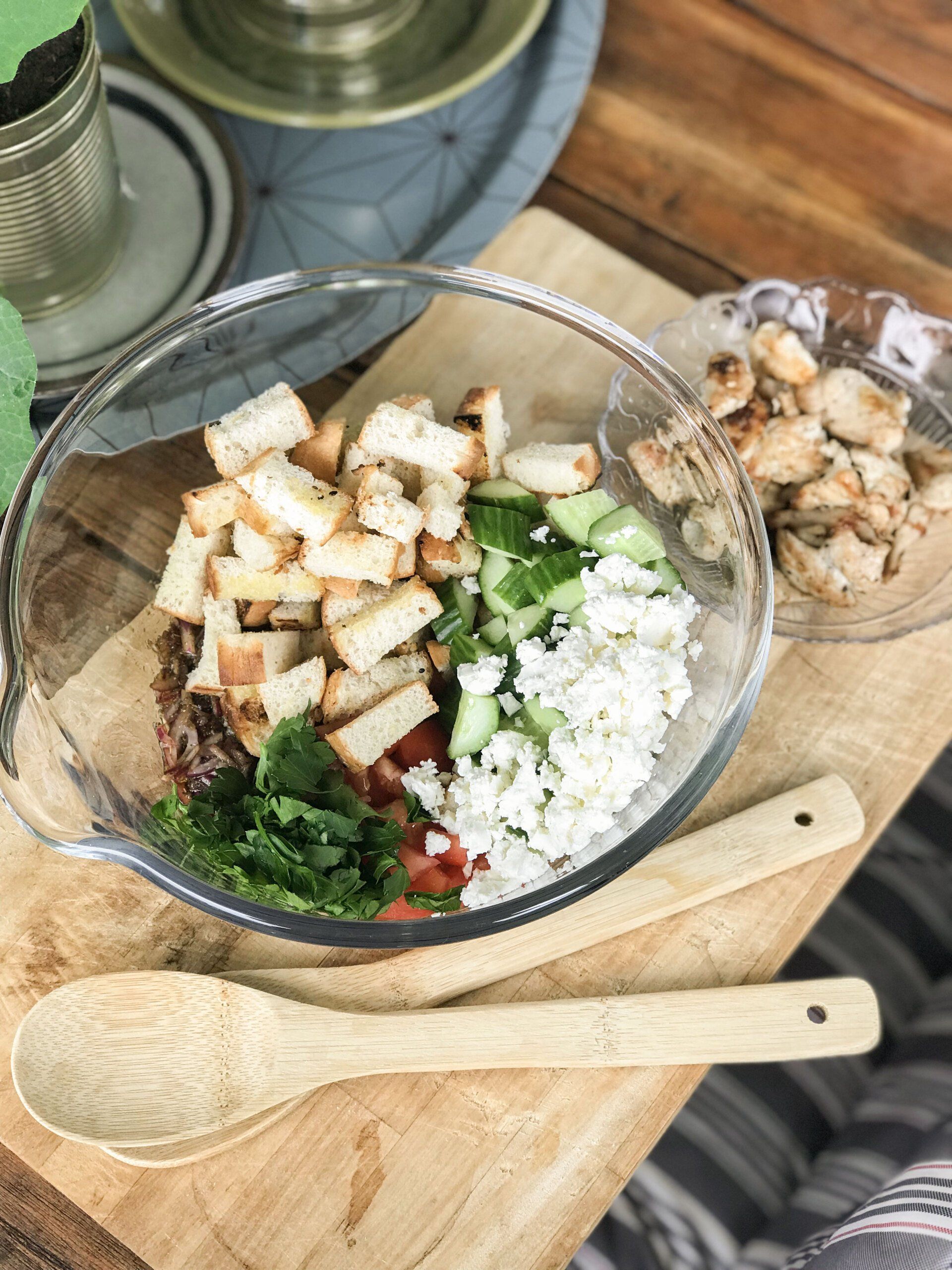
Body awareness is more than a thigh gap and kale smoothies (heaven help us if we get there). It’s about doing what makes your body and mind feel it’s best–and paying attention to what that is! Sometimes that’s a long run. Sometimes that’s a couple glasses of wine at a girls’ night.

Imagine something with me for a sec: You’re in a meeting at work and someone has presented an idea with a potential solution to something you’ve all been working on for awhile. While they’re talking, you can already come up with 5 reasons this would never work. You have a few options: Speak up when the boss asks if anyone has anything to add. Go to the presenter after the meeting and let them know your concerns. Don’t say anything so you don’t rock the boat. If you’ve spent ANY time in ANY workplace as a woman, you know the fear that when you speak your mind, SOMEONE is gonna think you’re just being bitchy. This isn’t even a man versus woman thing, necessarily. I think men and women can both be equally as loose with throwing around the term “bitch” for women that voice their opinions and assert themselves. Let’s look at what they ACTUALLY mean when someone gets called a bitch. Usually it’s because the woman is being penned as domineering, aggressive, trying to climb the corporate ladder, curt, or overly confident. (Sidenote: these are NEVER negative terms when used to describe a man. Ever. I digress.) But nine times out of ten, the woman wasn’t actually being intentionally mean or dismissive to someone else, although it might have been received that way. As women, we have to put aside any people-pleaser tendencies we might have (which is HARD; I get it.) We need to realize that if we’re called a bitch and we can honestly say there was no malice on our part, then from our end, we’re clear. Just like we tell our kids when someone says something mean about them, it says more about the mean kid than it does about them. (And just because it has to be said: no one should put up with repetitive verbal abuse in any environment. Talk to your HR rep if you’re concerned.) So let’s reclaim the word bitch and turn it around. Let’s realize it means that we were confident in ourselves, stood our ground, and let our voice be heard. And someone who was upset, intimidated, or put off by that? Well, that’s a them problem, not a you problem. On the flip side, I think we can actually use this to our advantage as women. Not in a manipulative way or anything; just hear me out. Very broadly speaking (and I’m well aware there are exceptions to this norm), women are much more in touch with other people’s emotions. We can walk into a room and sense that there’s conflict. We can hear a conversation between two people and realize that one person was not speaking up for themselves. That’s just the way that we’re wired. Men, on the other hand, not so much (broad strokes here, folks). Do you remember the episode of The Office where Jim and Pam wear the world’s smallest bluetooth for a day when they had to be apart? They’re in each other’s ears while they’re at work commenting on the other person’s life as if they were right there experiencing it together. One of my favorite parts of that episode (and there are many) is when Kelly is mad at Jim but he has no idea that she’s even upset. Jim: Hey, how are you and Daryl? Kelly: Um, we’re cool. Bye. Pam (in Jim’s ear): That was weird. Jim: What? Pam: Have you ever had a conversation with Kelly where she didn’t go on for 15 minutes without taking a breath? Jim: No, actually. Pam: Did you do something to her? Jim: I don’t think so. Pam: Well, something’s off. Pam wasn’t even in the room (or the same state, lol) and she could tell that Kelly was upset at Jim for something. He had no clue. It’s kind of our superpower, right? As a woman, we have the distinct advantage of being able to be confident and assertive while simultaneously knowing how people will receive it. Or knowing how to phrase something so that our authority still comes across but all the other parties involved still feel validated. Listen, I’m in NO WAY saying we need to tamp down our assertiveness in order to appease someone else. I’m saying that we should feel empowered knowing that we’re able to voice our opinions, stand our ground, and take up space all while presenting it in a way that lets others feel empowered themselves! Being confident in ourselves doesn’t have to mean stepping on others to build ourselves up higher. Real confident women bring others up with them as they grow. So, feel free to call me a bitch. I’m still gonna join arms with you so we can all become stronger together.

A couple years ago when my in-laws were in town, we were trying to decide where we wanted to go to dinner. Figuring that out for 6 people is hard enough, but when two of them are kids, one with neurodivergence, it can feel impossible. One place we knew would be too noisy. One place only served fish which was a no-go for some of the adults. We had to account for allergies. And “healthiness.” And just general pickiness. By the time we sat down for dinner, I realized the restaurant we picked was one of my least faves and there really wasn’t much I wanted to eat there. I hadn’t paid attention to anything iiiiiii wanted. And I think we do that way too often as women. Now, I’m not saying I should’ve told my family, “I want Italian food and that’s our only option!” Obviously there’s different ways to handle that. Plus, we’re all too aware that there are plenty of times as a mom where you simply have to put aside your wants and do what your kiddos need. I think we run into the problem when we’re trying to decide on bigger things in life. Where to live, where to send our kids to school, what we want our career to look like. When we don’t take into consideration what our own needs and wants are, everything feels murky. And honestly, it’s probably because we aren’t even aware of what we actually want. We’re constantly running our decisions through the filter of what everyone else needs, that we don’t know what a “win” would look like for us! Let’s imagine there were two different options I could take in my career: one is a very high-paid hospital administrator where I would oversee the staffing and daily operations at a hospital that’s about 30 miles from our house and the other is working at a clinic down the street from us where I would see patients on a daily basis and interact with their families. With the hospital job, the pay would be so good that we could be really set for the future. We could greatly contribute to college funds for my daughters, the paid vacation days are AMAZING, and we wouldn’t just have margin in our budget, we’d have freedom. But it would mean at least an hour commute both ways and I’d have to hire a full-time nanny because there’s no way I’d be able to pick up my girls or be home by the time dinner was on the table. With the clinical job, it would be significantly less money, but I’d be so close to the girls’ school that I’d be able to do most pickups and drop offs. It would be a higher physical workload than the other job, as I’d be on my feet all day (I’m not saying it’s like I’m working in construction…but still, my poor feet.) If I just looked at it from those angles, it might be really difficult to decide. More pay (which truthfully helps with a lot of things) or more flexibility and time with my family? More drive time or more achy feet? But we haven’t looked at the thing that matters most: what do I actually want out of my career? There’s a huge gap that makes it really easy for me to decide (in this totally hypothetical situation): in one job, I’m not actually practicing medicine. I wouldn’t get to see patients. And that’s what gives me LIFE in my job. Yeah, the money would be GREAT (who wouldn’t be tempted by that?) but if I’m going to be miserable, it’s not worth it. Maybe it’s not a job for you. Maybe it’s whether to have more kids or not. Or how to handle your aging parents. Each one of those decisions can feel absolutely overwhelming if you’re just looking at what everyone else needs in those situations (again, not that we’re discounting that). If you’re just making a pros and cons list, it still might not account for you, your situation, and what you really want. You can’t be afraid to voice your opinion, especially on decisions that are more life changing than where to go for dinner. When you don’t, and a choice is made that ends up being in stark contrast to the vision you had for your life, resentment is SURE to grow. And that only leads to other negative places for you, your mindset, and your relationships. If you’re feeling like, “How the heck do I even figure out what I want out of life in the first place?” go back and read this blog. Because it’s obviously pretty tough to be clear about your needs and wants if you don’t even know what they are. Take this affirmation with you today: my needs are valuable and deserve to be heard.

Becoming a mom is an amazing experience full of joy and gratitude. It also can bring about feelings of shame and guilt that are overwhelming and keep us stuck. Dr. Whitney talks about why moms are feeling more shame than ever, how to handle it, and why walking through those emotions is actually a powerful thing. Key takeaways: Many moms carry around this narrative with us all the time that there is something wrong with us. That we are the only ones who don’t have everything figured out or that we are the only ones who don’t have perfect children, a perfect home, or a perfect marriage. As I was faced with a situation where both of my girls were having a hard time (visibly, vocally, emotionally, all the things) in public, I tried to narrow down what I was feeling. It was embarrassment and shame. Shame that I didn’t have my life “together;” that it’s not perfect. Even though in my executive functioning mind, I know it’s not specifically my fault. And even if it was, it’s been wired into me from generations passed down for years. As moms, we often turn the situations and circumstances regarding our kids and families onto ourselves: It’s my fault. There must be something wrong with me. I must be the reason things aren’t going the right way. This type of thinking perpetuates all the pandemic issues that we’re facing and all the issues that are coming to light with systemic bias. A recent study showed that twice as many women as men were feeling isolated since the pandemic. This only exacerbates the problem because it makes us feel that we are the only one experiencing those feelings. Part of the reason we feel like this is because there’s been a societal expectation that women can just do it all if they just dig deep enough. And if you can’t, there’s something wrong and you wind up feeling immense shame. If you are experiencing shame, things you should know: 1) It’s not your fault. It’s the society that we live in that tells us that motherhood should be a certain way and it’s an unattainable picture. So when you don’t measure up, shame is the byproduct. 2) You have not been taught to practice self-compassion. You’ve been taught to just pull yourself up by your bootstraps and keep going. One of the most powerful lessons to learn is that you can’t get “over” an emotion without going through it. When we feel shame, that doesn’t have to be the thing that defines us. It’s data that comes in and we can learn the tools to combat it. Instead of reacting to it and diving into the shame hole, we can recognize that we’re feeling it because of the circumstances around us, and tell ourselves that we are not alone in this feeling. If you could see behind every post on instagram or behind every person who looks like they have it all together, you’d see that to be human is to have shame. The quicker we are able to get to a place of self-compassion, the sooner we will be able to take that data from a shame input and get to the other side of it while not letting it define us. It also allows us to recognize that negative and false narrative that says that everything going “wrong” with our kids or our marriage is our fault. With this, we’re able to approach the very real issues with grace, self-awareness, and self-kindness as opposed to shame. Hey mama! We'd love to hear from you, Mama! Do you listen each week? Leave a review or share a screenshot of your favorite episode(s) on social. Be sure to tag @modernmommydoc so we can see how much you're loving the podcast!

Over the last couple of weeks, we’ve been talking about how we, as moms, have too much damn stuff on our plates. Some of that is our own fault because we just can’t seem to say no. Some of it has been hoisted on us by societal bias and old-fashioned gender roles that we just can’t shake. Either way, our plates are full. Plural plates. Because one wasn’t enough to handle it all. We’ve talked about what happens when we try to take it all on ourselves , how to divide up the decision making in your house , and ways we can actually give our kids tasks off our list (spoiler alert: it’s not another chore chart.) This week I want to chat about making the things that are STILL on our plate a lot simpler. Let’s talk about ways you can automate some of your tasks so that you can spend way less brain power and energy on them, giving you more margin for the things that actually light you up. Here’s the thing though: I can’t give you a list of 10 things you need to start automating, because everyone’s lives are so different from each other. Our capacities, families, and personalities are all unique. So the thing that drives me up a wall whenever I have to do it (or forget about it until it’s too late!) could be an absolute nothing task to you. And the thing that gets you really stuck in your week could be something that comes naturally to me. So before I give you some ideas on things you can automate, we have to dig a bit deeper to know WHY we want to automate them in the first place. We want to look at things on our to-do list that HAVE to be done, but not necessarily by you. The things that we dread doing because they’re just obnoxious or feel like a time waster. Find the things that are stressing you out the most and look for ways to hand that off to someone else. It’s either not a stress for them or it’s their job to do it. Meet Renae Her problem: She’s a mom of 4 boys who are all in sports Monday-Friday. One of the things that triggered that feeling of “you’re a horrible wife/mom” was when her family didn’t have the laundry they needed. Whether it was her son’s uniform left in the washing machine too long so it smelled like a sour dog, her husband having to pull his wrinkly work shirt out of a pile of other clean clothes left for weeks, or having to give the sniff test to find the “least dirty” pair of socks to send her kid to school, laundry was making her miserable. Her solution: She found a local laundromat that had a laundry drop-off + folding service (YES! There’s such a thing!), so now she spends $45 every week and picks up her practically bow-wrapped laundry. All she has to do is set it in the drawers. Sure, she could have tried another laundry system. She could have made her boys responsible for their own laundry. But what she wanted was something that she didn’t have to think about AT ALL. Now they have one hamper for their family of 6 and once a week she drops the laundry off on her way to work. That’s what made the most sense for her. Meet Tina Her problem: She really wants to make healthy meals and snacks for her family but works long hours, so she has no time to start from zero when she gets home from work. She was spending waaaay too much time prepping and chopping. Her solution: Instead of whole, uncut veggies, she pays the (very small) price increase to only buy pre-chopped veggies so she’s already ahead of the game when it comes to dinner. For her family, a pricey meal service was out of the question, so she wanted to try something else. She knew if she could save that first 20 minutes of prep work each time, she could definitely get things on the table in under 30 minutes. Meet Tonya Her problem: The clutter in her house was getting out of control. And it wasn’t that they had too much stuff, she was actually very minimalistic. It was that things weren’t getting put back where they belong. When she looked at what her biggest trigger was, she realized she was walking past 8 different pairs of shoes…and they were only a family of 3. No one EVER wanted to walk upstairs to put their shoes away and they definitely couldn’t remember where they left them when it was time to go anywhere. Her solution: A simple shoe basket. Right by the front door so that you practically couldn’t get to the next room without stepping over it. All the shoes were contained, less dirt was spread around the house, and there was no more “Mom, have you seen my cleats?!” 5 minutes after they were already supposed to be out the door. Automation doesn’t have to be expensive or some uber fancy system. It can be the smallest shift that allows your brain to not have to be consumed by the thing that’s stressing you out.

Every mom has a different journey in motherhood, which can often feel isolating. But one of the biggest ways to combat that is by being a part of a community. Dr. Whitney talks to founder and CEO of Mindful Mamas Terra LaRock to discuss the “why” behind the community and educational platform she created for moms learning to take back their motherhood through mindfulness and meditation. Key takeaways: Terra LaRock is the founder and CEO of Mindful Mamas and is an educational specialist in child, school, and family psychology. Dr. Whitney: Tell us about the journey you went on and the gap you saw that needed to be filled that led you to create Modern Mamas. Terra: When I became a mom, I was a full-time school psychologist in the public sector, so I was working with other families navigating IEPs for their special needs children looking to thrive in the education system. Mindfulness and meditation were always therapeutic educational approaches that I loved because I felt like I could do it with the little kiddos and it didn’t rely on outside support from their provider or teachers. It was so personal to them and could take that skill with them throughout their day. But as much as I was using it in my professional setting, I wasn’t using it at home for myself. And when I became a mom, I was quickly overwhelmed with how many things I was having to be “new” at and skills I had to learn. Breastfeeding, sleeping, communicating my needs. All things I had to learn. And what we’ve heard from women in our Mindful Mamas community is that knowing that you’re not the only one going through that same experience is so helpful to get out of the hard moment and to the next day. And it helps to know you don’t have to be passive and just accept that the way you’re feeling will always be the way that it is. I distinctly remember a night where things shifted for me. I was rocking my daughter in the middle of the night and looking around her room at all the things I bought that I thought were going to help me be a good mom: a swaddler, noise machine, a glider…and none of those were helping me in that moment. All I had was my breath and my self-talk (which was not great) and if I couldn’t learn how to understand the storm that was inside myself, I was never going to navigate the storm I was experiencing with my daughter and my sleepless nights. And I remind myself of that moment daily to continually tell myself that I HAVE to take care of myself. And postpartum for me came with anxiety, depression, intrusive thoughts, and negative self-talk. It was too much for me to try to navigate the stressful situations of the families I was trying to help alongside the thoughts inside my own mind. My nervous system could not handle it and it came with a lot of shame. I was a mental health practitioner experiencing my own mental health crisis and I felt so guilty that I couldn’t figure it out on my own with all the tools I had at my disposal. I was even afraid I was going to lose my license. So I stayed silent for about 8 months before I told anyone about how I was feeling. And I’m forever grateful that when I DID start talking about it, it was taken seriously and I was able to get professional help. But it was breaking my heart thinking about other mamas that couldn't get the help they needed. And that’s how it got started. Dr. Whitney: So after this experience, you started working on yourself. You started doing the breath work and all the internal things. And then what happened? Terra: I was realizing that mindfulness and meditation was just so underutilized for moms. We want to just multitask and always be busy. So I took a really big deep dive into mindfulness, specifically for medical providers to prevent burn out. And I learned just how uncomfortable I was with stillness! But as I kept trying, it got easier. I didn’t like it, but I did it. And I was able to take in details in micro moments that actually gave me beauty and meaning in my life. And I developed a lot of emotional awareness and self-compassion. But was only able to do that because I sat in the discomfort, sorted through my thoughts, and learned that my thoughts are not always truth tellers–I don’t always have to believe what I think. Dr. Whitney: Let’s talk about this idea that you, as a professional in meditation, paid someone else to walk you through the process of meditating and being mindful. Because I think that a lot of women carry shame that they can’t slow down on their own. That they would need someone or something like an app to help them to do something relatively simple. But you needed that to start the process for you and, even then, it was difficult. Terra: Mothers need mothers. Doctors need doctors. Teachers need teachers. People need people. We are always in that circle of life where we’re the teacher and the student and when it comes to mindfulness and meditation, we’re going to need reminders. We need that reminder to come back to our center. We need that reminder that if your mind is busy, that’s okay. That reminder that what you’re feeling is really normal. Those reminders are usually enough to keep you pushing through and to keep going. They tell you that there’s someone else who’s been through what you’re feeling and they believe in you. It creates accountability in our community! And the cool thing about any emotional regulation technique is that you don’t have to master all of them out there. You only have to master the one or two that are helpful to you. And with moms, we’re so busy. I’m not expecting them to sit in quiet for 20 minutes. That’s unrealistic. But they can take these skills they’ve learned and apply them in their daily lives. Taking a breath before you go into the grocery store. Looking into your kiddos eyes when they talk to you. Noticing things around you. Creating those micro moments instead of going through your entire day on autopilot. Dr. Whitney: We have SO much pulling for our attention right now, especially as women. It makes sense that the hardest thing for us to learn is to sit, pause, and be still. Terra: We are primed for distraction. Our brains love when we’re distracted–it gets us that hit of dopamine. And we’re more primed to notice the threats and danger in our life than to see the beauty as well. So just knowing that about ourselves is a step in the right direction. We’re able to be aware, but then make the choice to pause and the choice to notice good. And that choice allows us to make different choices bringing different outcomes–which range from tiny changes to monumental things! Dr. Whitney: How can people get in touch with you or start their mindfulness journey with you? Terra: You can download our app Mindful Mamas app in the Apple app store and in the Google Play store . We’re on instagram at @mindfulmamasclub . Hey mama! We'd love to hear from you, Mama! Do you listen each week? Leave a review or share a screenshot of your favorite episode(s) on social. Be sure to tag @modernmommydoc so we can see how much you're loving the podcast!

Resentment is something we deal with constantly as working moms. Feeling like we’re undervalued, being stepped all over, or stuck in a career that we don’t want. Dr. Whitney gets to the root of why we feel resentful and how to move forward in your centered life living out the vision you’ve created for yourself. Key takeaways: Why do we have resentment? There are so many systemic forces at play against us as working moms. Nobody out there is coming to save working moms. Traditionally, moms in the workforce haven’t really been respected or even given value. It’s been an old boys club for a long time. It hasn’t been until recently that we’re starting to talk about fairness at both home and our places of work? Is it fair women take on most of the load? Is it fair that women aren't getting paid family leave? It’s been like this for years. That builds resentment. And at home, there’s a lopsided distribution of labor and mental load towards women at home. Traditionally, women are doing all the things that go beyond just taking care of the home like laundry and groceries (think Easter Bunny duties!) In raising kids, as the pendulum has swung from militant, “these are my rules” to more emotionally connected parenting, women are trying to figure out how to not get walked all over in being loving but at the same time to get their kids to listen and follow through with their boundaries. How do we come out of this? We have to set boundaries around ourselves, while also differentiating between them and all of the other aspects of parenting. We have to find the difference between okay-ing the emotion and okay-ing the behavior. For example, I can’t let it slide for my 5 year old to hit me in the face. I can acknowledge that she was angry because I took away her screens, but that her behavior was absolutely not okay and now she won’t be having screens the rest of the week. But if I swung to the emotional side of the pendulum and just told her that I understood that she was angry and being angry is normal and hard but didn’t enforce a boundary, I would be totally resentful. With our partners, we can develop a system where we’re equitably splitting the workload. The biggest help in that area for me has been to learn the communication style of both my husband and me, while simultaneously giving him grace. This past weekend, my youngest got up really early and I took care of ALL the things while my husband laid on the couch. And I started to get really resentful. BUT that’s partly on me because we never set up a system where I took care of one weekend morning and he took another. I just started doing. So after the moment had passed, I let him know how I was feeling and asked how we could divide up parenting so that neither of us feel alone. He came up with a great idea and now we’ve got a system in place. In our careers, we can decide what things are our energy drainers that are breeding resentment. And if there’s too many, maybe that means that you need to look towards a different career. But it’s possible that you can’t just up and leave. So what small, almost microscopic movements could you make that put you on a different path? That’s what we’re all about on The Modern Mommy Club app. We’re helping you to work towards putting yourself at the center of your life and helping you find both solutions that are sustainable and a framework that works for you–and we know that doesn’t happen overnight. It takes time and that’s okay. But when you CHOOSE to make the small changes, it gives you freedom because you’re starting to take ownership and pieces of control in your life. And control is the thing that ultimately makes it so we’re not resentful. And building more control means having a vision for your life of what actually matters to you, and where you want to focus your time, energy, and purpose. and then finding small, incremental ways to deal with the rest. Hey mama! We'd love to hear from you, Mama! Do you listen each week? Leave a review or share a screenshot of your favorite episode(s) on social. Be sure to tag @modernmommydoc so we can see how much you're loving the podcast!

What if we looked at self-care as preventative rather than a reaction to a problem? They’re almost like the vitamins you take to keep your body healthy, rather than the Tylenol you take when you have a headache because your body is worn down.
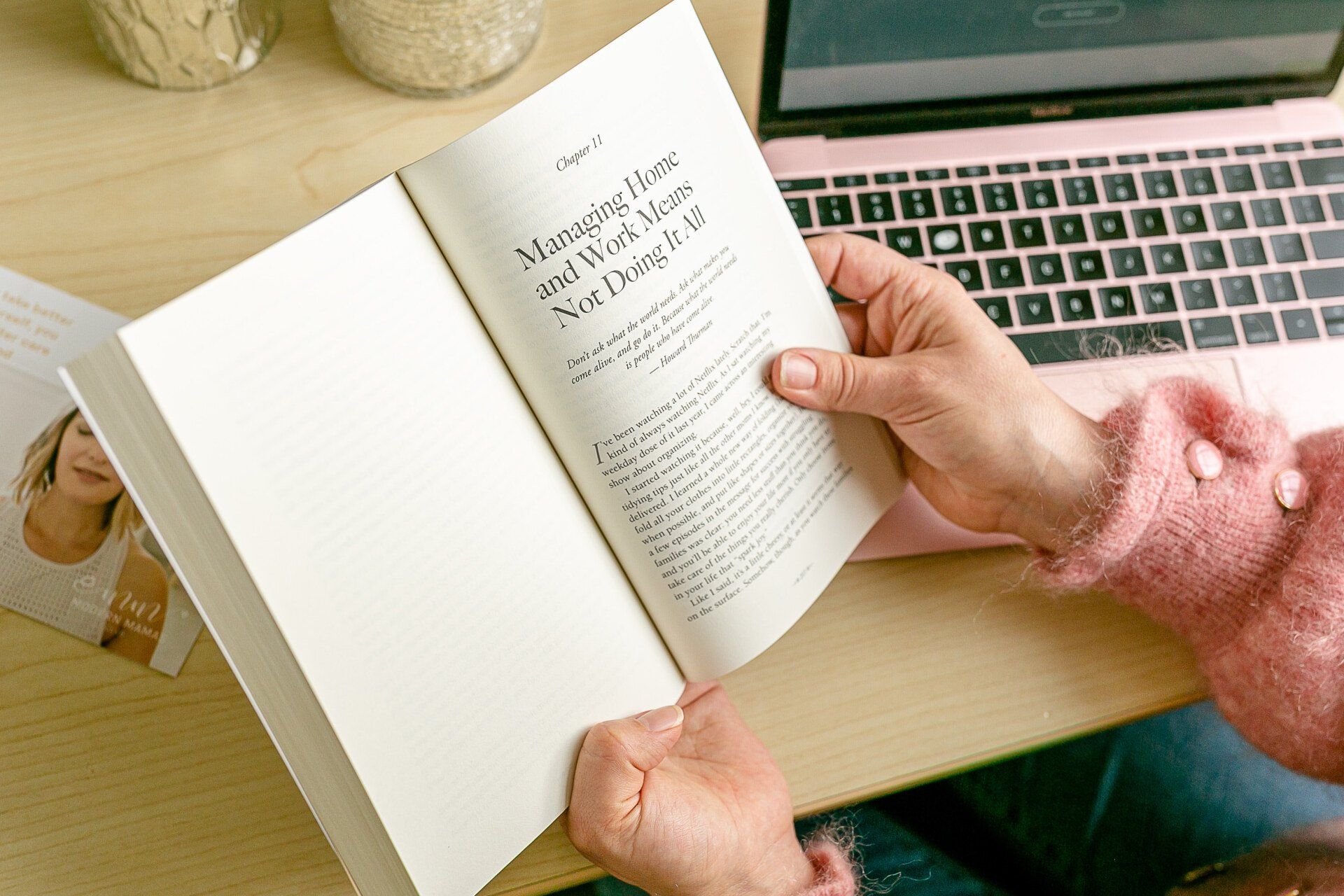
We want to give you a few resources that will help you have more control in your career but you also don’t want to burn out or completely give up on your family life either. Take a look at some of our faves.

When we view joy and living our life with intention as something that’s only a privilege to the upper class, we’re giving away our power. The power to choose our own feelings and outlook. The power to change our life.
Every single human being on the planet faces a million different kinds of stressors. From childhood to adulthood, they’re there. And they range from small inconveniences to something that will knock you off your feet. But the fact remains that we ALL experience hardships and seasons that feel a lot trickier to navigate than others. Or seasons that feel a lot harder for us than for those we see around us.

Has anyone ever accused you of being too controlling? 🙋🏻♀️ While trying to take over a Halloween project isn’t THAT big of a deal (or at least that’s what I tell myself), if I’m honest, it probably had nothing to do with that costume at all.
These places tell us that, as moms, we should be able to do every single thing. And the reality is, we can't. If we actually want to be effective, we have to decide that these are the things we really care about: those five areas in our Centered Life Blueprint. We've talked about these five areas in the past that we want to focus on, that we are going to place all of our time and our energy and attention on. And, if we actually do JUST that, we can do anything.
Hey modern mamas. This week on the podcast, we are talking about a potentially triggering topic: body image, disordered eating, body dysmorphism and eating disorders. I wanted you to have a heads up in case this is really triggering for you, because it is for so many of us. I also wanted to remind you that the podcast and the information we're going to talk about is not a substitution for individual medical advice. So contact your own medical provider for information about how to create a lasting, healthy relationship with yourself and with food.

Today, we're talking about mindfulness and meditation for working moms. And I want to be honest with you. I actually am rerecording this because I recorded an entire episode, like 20 minutes long, on the science of mindfulness--why it's so hard to do it, and why we need to make time for mindfulness.